
Note
TB-500 or GHK-Cu: What's the Difference
TB-500 is a Thymosin Beta-4 fragment and GHK-Cu a copper tripeptide: different origin, structure and what each is researched for.
TB-500 and GHK-Cu are two research peptides that share nothing beyond showing up in the same search queries. TB-500 is a synthetic fragment of Thymosin Beta-4, a protein that regulates the actin cytoskeleton. GHK-Cu is a tripeptide — glycine, histidine, lysine — bound to a copper ion, and the literature on it is concentrated mostly in dermal research models. Different origin, different molecular structure, different research focus.
What TB-500 is and what the literature investigates
TB-500 is the synthetic version of an active fragment of Thymosin Beta-4 (TB4), a protein found naturally in most tissues that participates in regulating the actin cytoskeleton. Actin is the protein that gives a cell its structure and mobility, and that's the axis of nearly all published research on TB-500: cell migration models, in vitro angiogenesis and tissue-repair studies in culture.
Unlike full-length Thymosin Beta-4, which has 43 amino acids, TB-500 replicates only the active fragment (Ac-SDKP and the actin-binding region), which makes it more stable under laboratory conditions and easier to synthesize with a consistent purity profile.
In the catalog, TB-500 doesn't appear as a standalone vial: the published lab report shows it combined with [BPC-157](/en/product/bpc-157/) in the same vial, 10 mg total, 5 mg of each compound. That's the format Janoshik Analytical analyzed for that batch on April 13, 2026, under task 204975.
What GHK-Cu is and what the literature investigates
[GHK-Cu](/en/argentina/ghk-cu/) (glycyl-L-histidyl-L-lysine, bound to copper) is a peptide first identified from studies of human plasma in the 1970s, and it has since become one of the most cited compounds in dermal research. The molecule has a high affinity for copper, and that binding is what the literature points to as responsible for its activity in gene-expression assays, extracellular matrix models and cell-culture collagen studies.
The structural difference from TB-500 is total: GHK-Cu is a three-amino-acid tripeptide with a coordinated metal ion, while TB-500 is a fragment of a much larger protein centered on actin dynamics. They don't share a sequence, they don't share a proposed mechanism, and they aren't studied in the same models.
GHK-Cu has its own lab report: task 204977, also from Janoshik Analytical and also dated April 13, 2026, on a 50 mg vial. The report doesn't include a purity figure in the document, but it does show the declared content quantity, and the result is available for online verification.
Differences in structure and mechanism
Laid out side by side, this is what separates the two compounds:
- Origin: TB-500 is a synthetic fragment of a human protein (Thymosin Beta-4). GHK-Cu is a tripeptide with a coordinated copper ion, originally identified in human plasma.
- Size: TB-500 replicates a portion of a 43-amino-acid protein. GHK-Cu is only three residues plus copper.
- Research focus: TB-500 is studied in actin, cell-migration and angiogenesis models. GHK-Cu is studied in gene-expression, extracellular-matrix and dermal-biology models.
- Catalog format: TB-500 is presented combined with BPC-157 in the same vial. GHK-Cu is presented on its own, in its own vial.
- Published documentation: both have a Janoshik Analytical report dated April 13, 2026, but each corresponds to a separate analysis task, on a separate batch.
Neither compound substitutes for the other in a research protocol: they're molecules with different proposed mechanisms, and choosing one or the other depends on what question the laboratory is investigating.
How they're presented in the catalog
Every compound in PeptoClinic's [catalog](/en/catalog/) ships as a vial of lyophilized powder, with USP-grade diluent quoted separately. The purity standard stated for the research peptides on the site is 99% or higher by HPLC. There's no pen format available to order: it's been announced but isn't orderable yet, only a waitlist exists.
Every batch that has a published lab report carries the date of the analysis, the laboratory that performed it, and the declared content quantity against what's stated on the label. That's what to ask for before moving forward with any supplier — not a photo of a certificate, but the document with a task number that can be cross-checked.
What to check in a certificate of analysis before proceeding
A certificate of analysis (COA) is useful if it has these four elements, and it isn't if any of them is missing:
- The name of the laboratory that issued it, not the supplier publishing it.
- A task or batch number, so the same document can be requested independently and compared.
- The date of the analysis, to confirm it corresponds to the batch about to be received and not an earlier one.
- The declared content quantity against what's on the vial's label — this is the figure that shows whether the batch contains what it claims to.
The [quality page](/en/quality/) on the site walks through how to read a report like this in full, using the four published Janoshik Analytical reports as examples.
Research use only
TB-500 and GHK-Cu are supplied exclusively for in vitro and laboratory research (Research Use Only). They are not medicines, not supplements, and are not approved for human or veterinary consumption, diagnosis or treatment of any condition. No claim about these compounds has been evaluated by the FDA, ANMAT or any equivalent authority. Any request implying a use outside laboratory research falls outside the scope of this site.
Frequently asked questions
Can TB-500 and GHK-Cu be compared on purity?
Not with the data published so far: the lab reports for these two compounds declare content quantity against the label, but the document doesn't include a purity figure for either one. What is available is the task number, the laboratory (Janoshik Analytical), and the analysis date, April 13, 2026, for both.
Why does TB-500 appear combined with BPC-157 instead of on its own?
Because that's how the batch with a published lab report is presented in the catalog: a vial totaling 10 mg, with 5 mg of each compound. That's the format analyzed under task 204975.
Do GHK-Cu and TB-500 share the same proposed mechanism in the literature?
No. TB-500 is studied in relation to actin regulation and cytoskeletal dynamics. GHK-Cu is studied in relation to gene expression and extracellular-matrix biology, mediated by its copper binding. These are separate lines of research with no direct overlap.
Which laboratory analyzed the published batches?
Janoshik Analytical, an external laboratory independent of the supplier. All four reports published on the site — including the TB-500-with-BPC-157 report and the GHK-Cu report — are dated April 13, 2026.
Can the lab report be requested before moving forward with a quote?
Yes. Each report's task number allows it to be requested and checked independently of the supplier publishing it, which is exactly what distinguishes a verifiable certificate from an unsupported image.
What format are these peptides supplied in?
As a vial of lyophilized powder. USP-grade diluent is quoted separately. There's no pen format available to order yet, only a waitlist.
Does PeptoClinic supply TB-500 and GHK-Cu for use in people?
No. Both compounds are supplied strictly for laboratory research (Research Use Only). They are not approved for human or veterinary use, and any request oriented toward a human-use protocol falls outside what's quoted.
Is Argentina among the destinations served for research material?
Yes. Argentina is one of the served destinations, with customs documentation prepared for the material to enter as laboratory reference material. The details of that process are on the site's **[Argentina page](/en/argentina/)**.
Compounds mentioned
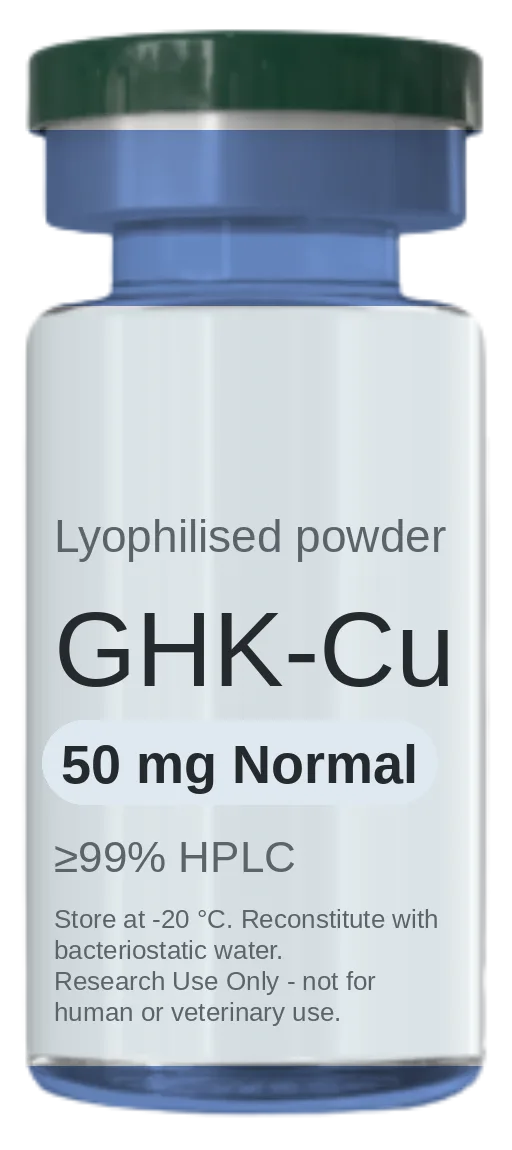
GHK-Cu (Copper Peptide)
Copper-binding tripeptide studied in extracellular matrix and dermal research models.
- Purity:
- ≥99% HPLC
- Sizes available:
- 50 mg Normal – 50 mg Plus
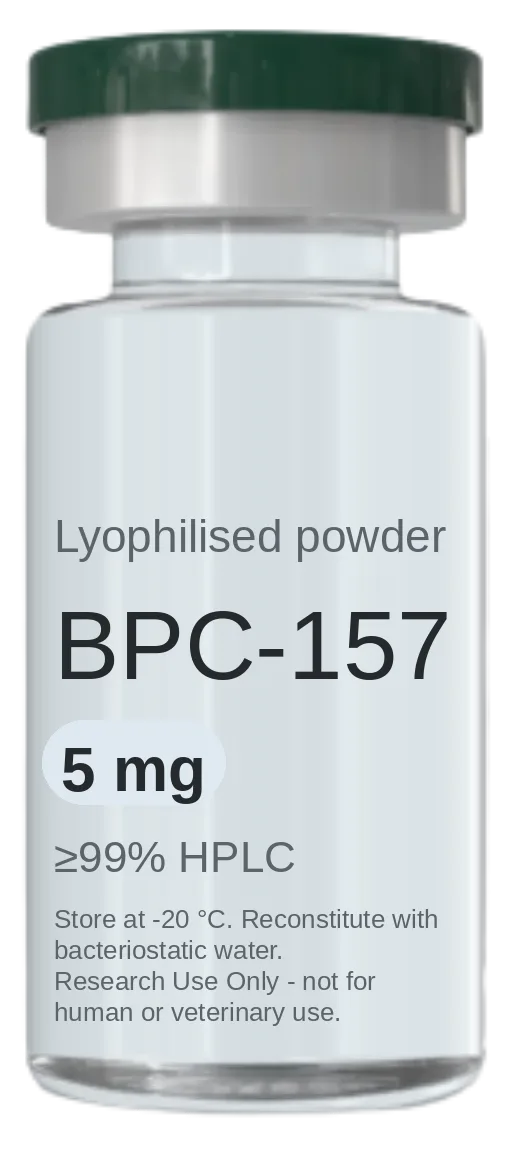
BPC-157 + TB-500
BPC-157 and TB-500 in a single vial — the pairing most studied together in tissue-repair research.
- Purity:
- ≥99% HPLC
- Sizes available:
- 5 mg + 5 mg
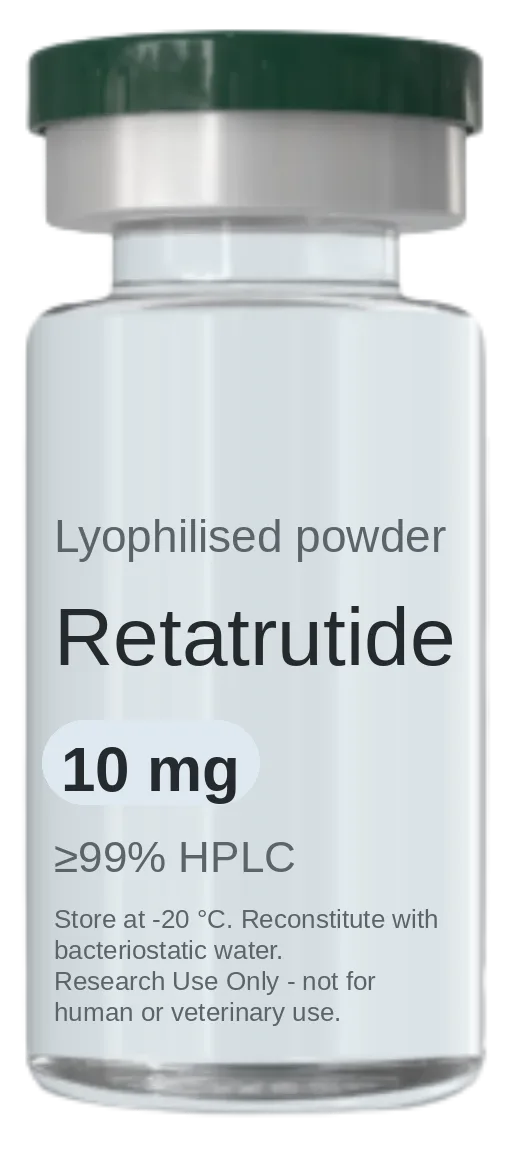
Retatrutide
Triple-agonist metabolic research peptide targeting GLP-1, GIP and glucagon receptors.
- Purity:
- ≥99% HPLC
- Sizes available:
- 10 mg
The consultation
One intake that settles goals, history and contraindications alongside compound, quantity, documentation and route — reviewed by a physician before anything ships.
More notes
-
Temporary Import Regime & Peptides
Temporary import covers goods that leave the country again; a research peptide shipment stays and gets used up.
-
Retatrutide vs GHK-Cu: What's the Difference
Retatrutide and GHK-Cu are different molecules studied for different reasons. Here's what each investigates and what documentation backs a batch.
-
Invoiced vs. Unbilled Peptide Suppliers
What changes when a research peptide supplier invoices the transaction versus one that takes payment and leaves no paper trail.