
Note
Thymosin Alpha 1: What It Is and How It Acts
A 28-amino-acid peptide derived from the thymus, studied for its effects on T cells and innate immunity. What the published literature reports.
Thymosin alpha 1 (Tα1) is an endogenous peptide of 28 amino acids derived from the precursor protein prothymosin alpha. Allan L. Goldstein first isolated it in 1977 from bovine thymic tissue. The mature sequence is released by proteolytic cleavage and is detected in virtually all vertebrate tissues, with the highest concentration found in the thymus. The literature classifies it as a modulator of both innate and adaptive immunity, with documented effects on dendritic cell maturation, T lymphocyte differentiation, and NK cell activation.
Origin and chemical structure
Prothymosin alpha is a 113-amino-acid protein present in the cell nucleus. Thymosin alpha 1 corresponds to residues 1 through 28 of that sequence, with an acetyl group at the N-terminus. That group is necessary for biological activity: the des-acetylated form shows significantly lower potency in published models. The molecular weight of the active form is approximately 3,108 Da.
The sequence is highly conserved across mammals, indicating that this region underwent strong selective pressure throughout evolution. The synthetic form reproduced in the laboratory replicates exactly the human endogenous fraction.
What the scientific literature investigates
Published research on thymosin alpha 1 concentrates in three main areas.
Cell-mediated immunity modulation. In vitro and in vivo studies describe increases in IL-2 receptor expression on T lymphocytes, elevated interferon-γ production by NK cells, and accelerated maturation of dendritic cells. Toll-like receptor 9 (TLR9) and the MyD88/NF-κB signaling pathway appear frequently as mediators in these publications.
Chronic viral infections. Most controlled clinical trials were conducted for chronic hepatitis B and C. Italy's Agenzia Italiana del Farmaco approved a thymosin alpha 1 formulation under the trade name Zadaxin as adjuvant therapy for these indications, though more recent meta-analyses note heterogeneity in the outcomes reported. Systematic reviews by Garaci and collaborators, available on PubMed, document the state of the evidence and its limitations.
COVID-19. Between 2020 and 2021, hospital centers in China included thymosin alpha 1 in experimental protocols for severe cases. Papers published in journals such as *Frontiers in Immunology* showed differences in certain inflammatory markers, but the trials were small and the level of evidence remains preliminary. The literature continues under review.
Researchers who want to access the primary sources can search "thymosin alpha-1" on PubMed, where more than 900 indexed publications are available.
Comparison with related research peptides
The thymus produces several bioactive fractions with similar names that are worth distinguishing. Thymosin beta-4 (Tβ4) shares thymic origin with Tα1 but has a different sequence and distinct research lines: while Tα1 appears primarily in studies of T cell activation, Tβ4 is investigated in models of tissue repair and cell migration.
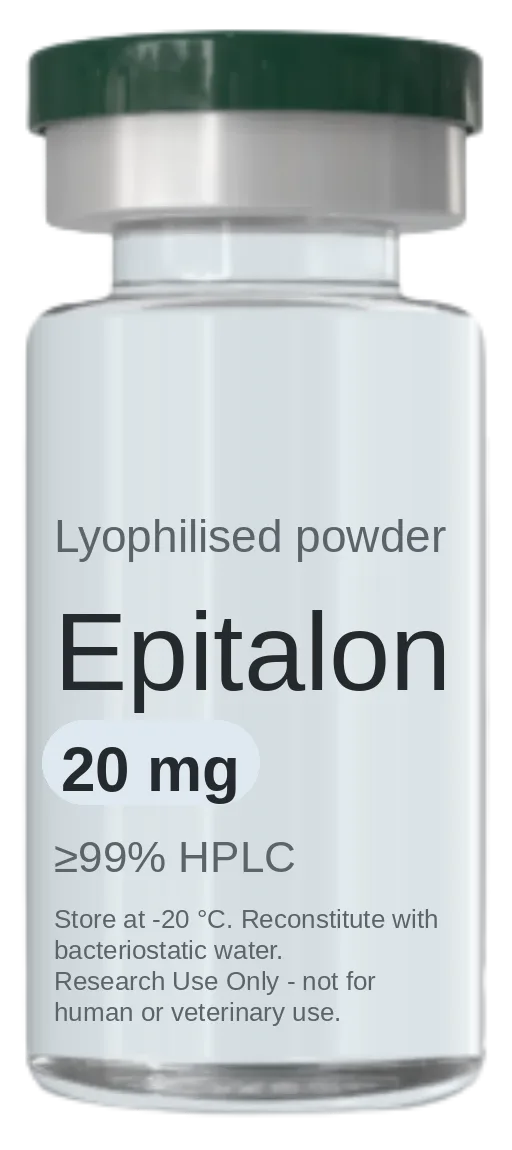
Epitalon is another peptide that appears in searches about immunity and longevity, but it corresponds to a different sequence — derived from epithalamin, a pineal gland extract — and its published bibliography focuses on telomere length and circadian rhythms. The two compounds share neither mechanism nor molecular target.
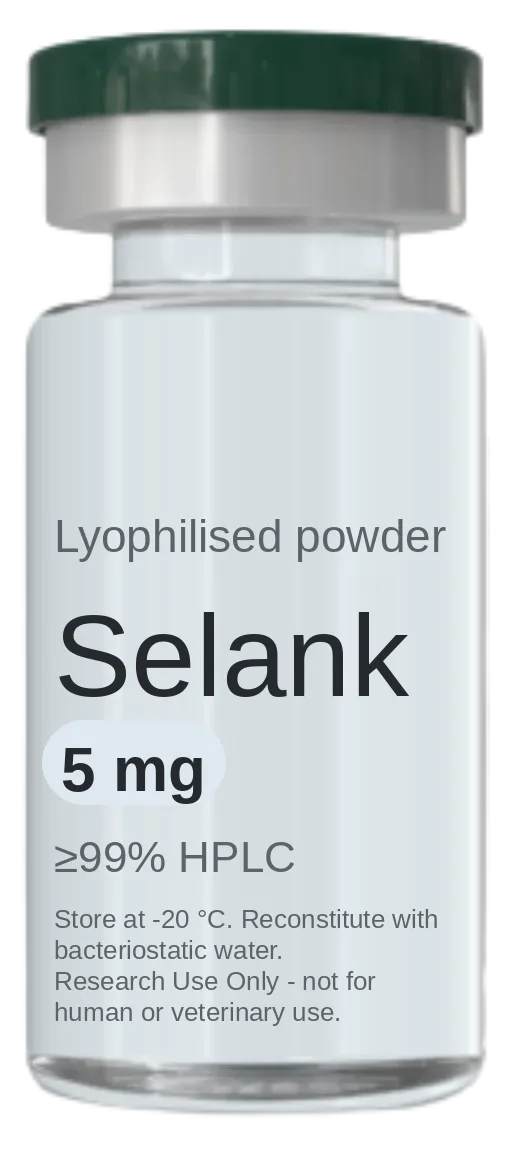
Selank is a hexapeptide with publications on anxiety modulation and immunological markers that also appears in this context, though its research profile differs from Tα1 in both sequence and the molecular targets studied.
Thymosin alpha 1 as laboratory material
In basic and preclinical research, synthetic thymosin alpha 1 is used as a reference tool in immunological activation assays. The most frequent applications appearing in the methods sections of published articles include in vitro lymphocyte proliferation assays, immunosuppression models in rodents, TLR9 signaling studies in monocyte-derived macrophages, and NK cell co-cultures with tumor cell lines.
The minimum purity required as a quality criterion in most of these contexts is ≥99% HPLC. PeptoClinic supplies research peptides with verifiable lot documentation, generated by an independent laboratory. The full catalogue lists the compounds currently available for quotation.
Research use only: what this classification means
All material supplied by PeptoClinic carries a Research Use Only (RUO) classification. This means it is intended exclusively for laboratory research — in vitro or in preclinical models — and is not approved or appropriate for use in humans or animals of any species.
Thymosin alpha 1 is not a drug, a supplement, or a product for human or veterinary consumption. No regulatory authority in any country PeptoClinic ships to has approved a synthetic RUO formulation of this compound for therapeutic use. The material available as a synthetic RUO peptide is not equivalent to the pharmaceutical formulations registered in certain other countries under specific indications.
PeptoClinic does not provide administration protocols, dosing guidance for persons, or assistance using the material outside a laboratory setting. Inquiries from researchers working on institutional projects can be directed to [email protected]. Shipping conditions to Argentina are detailed in the Argentina section.
Frequently asked questions
Is thymosin alpha 1 the same molecule as Zadaxin?
Yes, in terms of active molecule. Zadaxin is the trade name for an injectable formulation of thymosin alpha 1 developed by SciClone Pharmaceuticals for the pharmaceutical market. The sequence of the active peptide is identical to the endogenous peptide and to the synthetic research form. The relevant distinction is that Zadaxin is a registered medicine in certain countries, available by prescription, with indications approved by the regulatory authorities of those markets. The synthetic RUO peptide is laboratory material and operates under entirely different conditions of use.
What distinguishes thymosin alpha 1 from thymosin beta-4?
They are different peptides with distinct sequences, mechanisms, and research bibliographies. Both carry "thymosin" in the name because both were originally isolated from thymic fractions in the 1970s, but that does not mean they act similarly. Thymosin alpha 1 is investigated in the context of T cell-mediated immunity and viral recognition. Thymosin beta-4 appears primarily in studies of tissue repair, cell migration, and angiogenesis.
How many amino acids does thymosin alpha 1 have, and what is its molecular weight?
The mature active form of thymosin alpha 1 has 28 amino acids and is acetylated at the N-terminus. The molecular weight of the active form is approximately 3,108 Da. The des-acetylated form has the same linear sequence but shows significantly lower activity in published models, making the acetyl group functionally relevant rather than merely a structural modification.
Why do some studies on thymosin alpha 1 show inconsistent results?
Systematic reviews identify several factors that make comparisons across studies difficult: heterogeneity in enrolled populations, differences in clinical protocols, variation in inclusion criteria, and lack of standardized endpoints. These are recurring problems in the literature on bioactive peptides broadly. Reading the meta-analyses available on [PubMed](https://pubmed.ncbi.nlm.nih.gov/?term=thymosin+alpha+1+meta-analysis) allows a more rigorous assessment of the weight of evidence than narrative reviews do.
Is thymosin alpha 1 approved as a medicine anywhere?
Zadaxin, the pharmaceutical formulation of thymosin alpha 1, holds regulatory approval in certain European and Asian markets for specific indications. It does not have registration as a therapeutic product in all countries PeptoClinic ships to. The synthetic RUO material PeptoClinic supplies is not equivalent to those registered pharmaceutical formulations and is not for therapeutic use.
Where can I read the original studies on thymosin alpha 1?
The most complete starting point is PubMed, where the term "thymosin alpha-1" returns more than 900 indexed publications. Work by Enrico Garaci and collaborators includes historical reviews of the compound and its clinical development. For the COVID-19 context specifically, restricting the search to "thymosin alpha-1 COVID" narrows results to that subgroup. Open-access articles appear marked "Free full text" in the results.
Is thymosin alpha 1 available for quotation at PeptoClinic?
The PeptoClinic catalogue is updated regularly. The list of compounds currently available appears at [peptoclinic.com/en/catalog/](/en/catalog/). To inquire about the availability of a specific lot or to request a quote for a research project, contact [email protected].
What documentation comes with each lot?
Every lot of research peptide that PeptoClinic supplies includes a certificate of analysis generated by an independent laboratory, with the purity result determined by HPLC and molecular mass verification. Details on the documentation standard and how to interpret a certificate of analysis are in the [quality section](/en/quality/).
Compounds mentioned
The consultation
One intake that settles goals, history and contraindications alongside compound, quantity, documentation and route — reviewed by a physician before anything ships.
More notes
-
Retatrutide vs. Tirzepatide: Differences
Retatrutide adds a third receptor that tirzepatide doesn't activate — here's how the two differ in structure, mechanism, and published research.
-
NAD+ vs Selank: What's the Difference?
NAD+ is a cellular coenzyme; Selank is a synthetic peptide derived from tuftsin. Structure, mechanism, and what each one is studied for.
-
Peptide Customs Clearance Cost in Argentina
What determines customs clearance cost for a research peptide shipment to Argentina, and what documentation PeptoClinic prepares for it.