
Note
Tryptic Digestion in Peptide Analysis
Tryptic digestion breaks a peptide chain into predictable fragments for mass spectrometry identity confirmation — how it works and what it reveals.
Tryptic digestion is an enzymatic procedure that breaks a peptide chain into fragments of predictable size and composition using the enzyme trypsin. In research peptide analysis, it serves as the preparatory step before mass spectrometry: it converts a complex molecule into a set of fragments that the instrument can identify with high resolution.
How Trypsin Works
Trypsin is a serine protease that recognizes two specific sites within a peptide chain: the carboxyl terminus of lysine (K) and that of arginine (R). At each of those residues, the enzyme performs a hydrolytic cleavage that separates the chain into two fragments.
The exception is when the amino acid immediately following K or R is proline (P): at that position, trypsin does not act. This rule — cleave after K or R, except when the next residue is P — defines the enzyme's specificity and is what makes it possible to predict exactly which fragments any known sequence will produce.
Standard laboratory conditions are a pH close to 8, a temperature of 37 °C, and an enzyme-to-substrate ratio of 1:20 to 1:50 by mass. Incubation time ranges from 4 to 18 hours depending on the protocol and sample complexity.
Why the Fragments Are Predictable
Trypsin's cleavage specificity is among the most thoroughly documented in proteomics. Unlike other proteases such as chymotrypsin, which acts on aromatic residues and generates fragments of more variable length, trypsin produces tryptic peptides that typically span 6 to 25 amino acids. That range is the most favorable for detection by tandem mass spectrometry (MS/MS), because the resulting ions carry mass-to-charge ratios within the window that most instruments resolve with the highest precision.
Given the sequence of a research peptide, it is possible to calculate with exactness the expected tryptic fragments and their theoretical molecular masses. If the mass spectrometer detects those fragments at the calculated masses, the identity of the compound is confirmed with direct evidence.
The Complete Analytical Workflow: LC-MS/MS
In practice, tryptic digestion precedes liquid chromatography coupled to tandem mass spectrometry (LC-MS/MS). The procedure runs in four steps:
- The peptide is incubated with trypsin, generating the predictable fragment mixture.
- The mixture is injected into a reverse-phase column, where fragments separate according to hydrophobicity.
- Each fraction exiting the column enters the mass spectrometer, which first records the intact fragment mass (MS1), then fragments it a second time to obtain the sequence ion spectrum (MS2).
- The resulting spectra are compared against a database built from the theoretical fragments calculated for the declared sequence.
For mid-length research peptides such as BPC-157 or retatrutide, this analysis confirms that the sequence matches the declaration exactly, and it detects amino acid substitutions, truncations, or undisclosed chemical modifications.
The Difference from HPLC Purity Analysis
The reverse-phase HPLC analysis that appears on published certificates of analysis measures purity by UV absorbance: it calculates what fraction of the chromatographic area corresponds to the main compound versus related impurities. The figures that Janoshik Analytical reports for verified lots — 99.893 % for retatrutide and 99.669 % for MOTS-c — come from that technique.
Tryptic digestion with LC-MS/MS answers a different question: it does not measure how much of the compound is present, but what exactly is present. The two techniques are complementary. A sample can show 99 % purity by HPLC and still contain an amino acid substitution that UV absorbance cannot resolve; the tryptic fingerprint detects it because it operates at the molecular mass level with sequence resolution.
In characterizing a synthetic peptide batch, the standard workflow is to confirm identity by LC-MS/MS during method development and verify purity batch by batch by HPLC. Some advanced characterization protocols apply both in parallel.
Long-Chain Peptides and Tryptic Digestion
Tryptic digestion is particularly useful when the peptide chain is long. A compound of 10 to 15 amino acids can be ionized and detected directly by mass spectrometry without prior digestion. One with 30 to 50 residues generates multiply-charged ions that complicate spectral interpretation without preparation.
Digestion resolves that: it breaks the chain into manageable peptides, each with its own well-resolved spectral signature. For a short tripeptide like GHK-Cu, digestion adds no information because the molecule is already small and is analyzed directly. For peptides in the 30 to 100 residue range, it is the field's standard method.
Known Limitations of the Method
- Incomplete digestion (missed cleavages): if a K or R site goes unprocessed by the enzyme, a fragment of greater mass appears in the spectrum — one that spans two tryptic peptides joined together. Search algorithms typically allow one or two missed cleavages. A higher count points to insufficient digestion and may require repeating the incubation.
- Very small fragments: a tryptic fragment of one or two amino acids elutes before the chromatographic gradient can separate it properly and is usually lost from the analysis.
- Sample modifications: oxidations at methionine or deamidations at asparagine shift the mass of the affected fragment. The analysis must account for those variations when building the theoretical search database.
- Protein contaminants: if the sample contains other proteins, they are also digested and their fragments appear in the spectrum. A correct analysis identifies them and separates them from the peptide of interest.
A review of these factors applied to high-sensitivity proteomics is available on PubMed.
For Laboratory Research Use Only
The peptides PeptoClinic supplies to the destinations listed on the shipping page are strictly for in vitro laboratory research use. They are not approved or intended for human or veterinary consumption, diagnosis, or treatment of any condition.
Tryptic digestion analysis, as applied by a characterization laboratory, is part of the technical documentation for a research lot. It does not constitute or imply authorization for clinical use. PeptoClinic does not formulate doses, does not write protocols for use in people, and does not operate as a pharmacy, clinic, or telehealth service. For inquiries about technical documentation, contact [email protected].
Frequently asked questions
Does tryptic digestion destroy the peptide being analyzed?
Yes. The original peptide is fragmented at the end of the process, so the analysis runs on an aliquot of the lot rather than the full quantity. The analyzed sample cannot be recovered in its original form.
How long does a tryptic digestion take in the laboratory?
Standard incubation time is 4 to 18 hours at 37 °C and pH around 8. Most short- to mid-length peptides digest fully within 4 to 6 hours. More exhaustive protocols incubate overnight.
What is the difference between trypsin and chymotrypsin for this analysis?
Trypsin cleaves after lysine and arginine, producing fragments of predictable size that are favorable for mass spectrometry. Chymotrypsin cleaves after aromatic amino acids such as phenylalanine, tyrosine, and tryptophan, generating fragments of more variable length. Trypsin is the standard in proteomics because its specificity is better documented and is the most compatible with existing spectral databases.
Does an HPLC certificate of analysis replace tryptic digestion?
No — the two techniques answer different questions. HPLC purity analysis measures what fraction of the sample corresponds to the main compound. Tryptic digestion with LC-MS/MS confirms that the compound carries exactly the declared sequence. For complete batch characterization, they are complementary.
What is a missed cleavage and why does it matter?
A missed cleavage is a tryptic cleavage site the enzyme did not process during incubation. It appears in the spectrum as a higher-mass fragment that includes two tryptic peptides joined together. One or two missed cleavages are typically tolerated in the database search. A higher number indicates incomplete digestion and may require repeating the procedure.
Why does proline block tryptic cleavage?
Proline has a cyclic structure that imposes conformational constraints on the peptide chain. When a proline occupies the position immediately following a K or R residue, the active site of trypsin cannot accommodate the geometry required for catalysis. This behavior is consistent and predictable, which allows it to be excluded from the theoretical fragment map when designing the analysis.
Is tryptic digestion used to verify retatrutide or BPC-157?
For mid- to long-chain research peptides such as [retatrutide](/en/product/retatrutide/) or [BPC-157](/en/product/bpc-157/), tryptic digestion followed by LC-MS/MS is one of the standard identity confirmation tools. It produces a fragment map compared against the declared sequence, and it can detect any substitution or undisclosed truncation.
Did all peptides in the PeptoClinic catalogue undergo tryptic digestion?
The four lots with published certificates were analyzed by Janoshik Analytical. The exact methods the laboratory applied to each lot are described in the signed reports. PeptoClinic does not specify the laboratory's internal protocols beyond what appears in that documentation.
Compounds mentioned
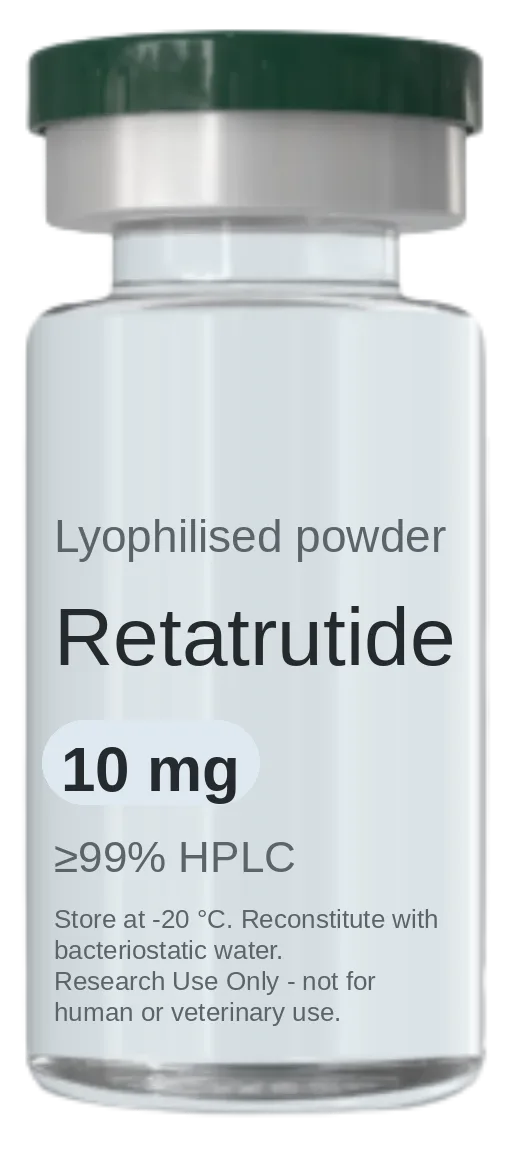
Retatrutide
Triple-agonist metabolic research peptide targeting GLP-1, GIP and glucagon receptors.
- Purity:
- ≥99% HPLC
- Sizes available:
- 10 mg
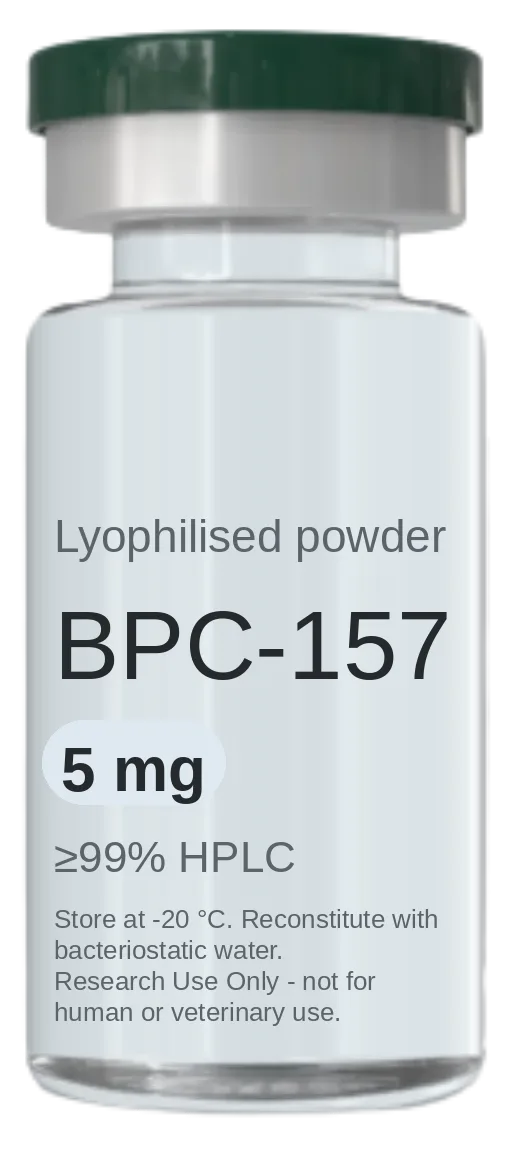
BPC-157 + TB-500
BPC-157 and TB-500 in a single vial — the pairing most studied together in tissue-repair research.
- Purity:
- ≥99% HPLC
- Sizes available:
- 5 mg + 5 mg
GHK-Cu (Copper Peptide)
Copper-binding tripeptide studied in extracellular matrix and dermal research models.
- Purity:
- ≥99% HPLC
- Sizes available:
- 50 mg Normal – 50 mg Plus
The consultation
One intake that settles goals, history and contraindications alongside compound, quantity, documentation and route — reviewed by a physician before anything ships.
More notes
-
Retatrutide vs. Tirzepatide: Differences
Retatrutide adds a third receptor that tirzepatide doesn't activate — here's how the two differ in structure, mechanism, and published research.
-
NAD+ vs Selank: What's the Difference?
NAD+ is a cellular coenzyme; Selank is a synthetic peptide derived from tuftsin. Structure, mechanism, and what each one is studied for.
-
Peptide Customs Clearance Cost in Argentina
What determines customs clearance cost for a research peptide shipment to Argentina, and what documentation PeptoClinic prepares for it.