
Note
Documents in a Research Peptide Shipment
PeptoClinic includes a Janoshik CoA, SDS, RUO declaration, and customs file with every research peptide shipment. Here is what each document contains.
Every PeptoClinic shipment of research peptide includes four documents: a certificate of analysis from an independent laboratory, a safety data sheet, a Research Use Only declaration, and a customs package prepared for import as laboratory reference material. Each serves a distinct function; together they give the receiving laboratory what it needs to confirm that what arrived matches what was quoted.
The Certificate of Analysis
The CoA is the central document in any research peptide shipment. It identifies the compound by name and CAS number, records the lot number, the date of analysis, and the analytical method used, and states the purity measured on that specific sample.
PeptoClinic uses Janoshik Analytical for all third-party testing. Janoshik specializes in synthetic peptides, and the four published reports in the quality section of this site were all processed on April 13, 2026. Task numbers allow direct verification on the laboratory's own site:
- **Retatrutide** — task 136921, purity 99.893%, content 11.96 mg on a 10 mg label.
- MOTS-c — task 136923, purity 99.669%, content 11.31 mg.
- GHK-Cu — task 204977, 50 mg verifiable online.
- BPC-157 + TB-500 — task 204975, 10 mg total, 5 mg of each peptide.
The lowest published purity to date is 99.669%. That is the figure worth citing — not the best result in the set.
A Janoshik report includes the mass spectrum and the HPLC chromatogram as part of the certificate. Those files let any laboratory with access to the relevant instruments compare the reported result against its own measurement on the same compound type. A certificate that states a percentage without delivering the underlying chromatogram and spectrum provides a number but not the data behind it.
Independent analysis versus in-house testing
Many suppliers include a certificate of quality issued by themselves. That document records what the supplier measured using their own instruments on their own sample. It is not necessarily wrong, but the independence is different: the party selling the compound is the same party that determined the purity.
A certificate from an independent analytical laboratory separates the measurement from the commercial interest. The analytical laboratory has no stake in the result; its business is the analysis, not the compound.
The Safety Data Sheet
The SDS describes the physicochemical properties of the compound, safe handling procedures, recommended storage conditions, and protocols for accidental exposure. It is a standard document in the chemical industry and a common requirement for receiving laboratories incorporating any new material.
For lyophilized peptides, the SDS covers handling under fine-powder conditions, temperature and humidity ranges for storage, and compatibility with storage materials. It does not prescribe any use — it describes the compound as a laboratory chemical.
The SDS is compound-specific. A supplier delivering the same SDS across every product in its catalogue is delivering a generic document. Peptides differ in sequence, molecular mass, and stability, and their handling and storage requirements are not interchangeable.
The Research Use Only Declaration
PeptoClinic supplies material classified strictly as Research Use Only. Every shipment includes a written declaration confirming that framing: the material is intended for in vitro and laboratory research, it has not been approved for human or veterinary use, and the recipient accepts responsibility for compliance with applicable regulations in the destination country.
That document establishes the regulatory context from the point of origin. For the receiving laboratory, it becomes part of the incoming materials record. For the supplier, it documents that the shipment was made under the only framework within which these compounds can legally move without registration as a pharmaceutical product.
Customs Documentation for Argentina
International shipments of research peptides require a complete customs file. For shipments to Argentina, PeptoClinic prepares documentation for import as laboratory reference material — the customs classification applicable to analytical-grade chemical compounds without a pharmaceutical product license.
The file includes a commercial invoice with the technical description of the compound, quantity in milligrams, lot number, and declared value; a packing list with the physical contents; and a carrier declaration specifying that the shipment contains research material rather than a medicinal product.
The classification matters. A shipment with ambiguous documentation may be held for inspection even when the contents are consistent with the RUO framing. The document chain — CoA plus SDS plus RUO declaration plus technical invoice — is what establishes that consistency for customs authorities. The Argentina page covers the specific conditions for that import route.
Temperature: What Is Documented and What Is Not
Lyophilized peptides ship as sealed powder, which is the form that tolerates ambient transit: there is no cold-chain file, because the material does not require one. What the supplier does document is the vial seal, the desiccant travelling with it and the storage conditions the certificate of analysis specifies for the destination. A temperature record only makes sense when what travels is thermolabile — a reconstituted solution, for instance — which lyophilized material is not.
Without those records, there is no way to establish whether a stability issue occurred before or after delivery. In a research context, that distinction is part of the protocol's traceability.
Why the Complete Document Set Matters
A laboratory that receives peptides without complete documentation faces a practical problem: it cannot verify the identity or purity of the material, it has no support for an internal or external audit, and in many settings it cannot incorporate the compound into an experimental design without a valid independent laboratory CoA.
Documentation is not a supplement to the shipment — it is part of what is quoted. A peptide without a verifiable CoA is, from the receiving laboratory's standpoint, a peptide with unknown purity. The PeptoClinic catalog lists available compounds; those with published reports carry the report on their product page.
For Laboratory Research Only
All material PeptoClinic supplies is classified as Research Use Only. That means in vitro and laboratory research. Not human use. Not veterinary use.
The compounds in the catalog are not medicines, not supplements, and have not been evaluated by the FDA, ANMAT, or any equivalent authority for clinical applications. No published purity report on this site constitutes evidence of safety or efficacy in people. Requests for administration protocols, dosing guidance, or reconstitution volumes framed for a person are outside the scope of this operation.
If your program requires material with a pharmaceutical license — a registered medicinal product, a clinically indicated compound — the supplier you need is a registered pharmaceutical manufacturer. PeptoClinic is not that supplier.
Frequently asked questions
Can the Janoshik reports be independently verified?
For two of the four published lots, yes. The reports for retatrutide (task 136921) and MOTS-c (task 136923) carry working verification links to the Janoshik Analytical site. Tasks 204977 and 204975 include a verification key, but the laboratory's online verifier returned errors at the time of publication. PeptoClinic does not link to those pages: a broken verifier confirms nothing, and directing a reader to an address that returns an error is not a verification.
Does the CoA arrive as a physical document or a digital file?
The certificate of analysis is delivered digitally as a PDF alongside the shipment. That is the format receiving laboratories use to enter it into their materials management systems. Each file includes the HPLC chromatogram and mass spectrum as part of the certificate, not as separate attachments.
Does the customs documentation identify the compound by scientific name?
Yes. The commercial invoice and carrier declaration identify the compound by scientific name and CAS number where applicable. That identification is what makes the file coherent: the name on the CoA, on the invoice, and in the declaration must match. A discrepancy between documents is a common basis for a customs hold pending inspection.
Is the SDS specific to each peptide or generic across the product line?
The SDS is compound-specific, covering the physical properties, storage conditions, and handling procedures for that peptide. A supplier that delivers the same SDS across its entire product line is delivering a generic document. Peptides with different sequences, molecular masses, and stability profiles have different handling and storage requirements and cannot share a single data sheet.
Does the lot number on the CoA match the vial?
Yes. The lot number on the CoA identifies the same lot that ships, and that match is what ties the analysis to the physical material delivered. If the numbers differ, the CoA does not certify what is in the vial. It is one of the first checks worth making on receipt of any reference material shipment.
Can documentation be requested before placing an order?
Yes. The CoA and SDS can be shared before dispatch, on request, as part of the quotation process. Researchers who need to review technical documentation before approving a purchase can request both when making an enquiry through the [shipping page](/en/shipping/).
What happens if a shipment arrives with a document missing?
If a shipment arrives with incomplete or inconsistent documentation, the route is to contact [email protected] before incorporating the material into any protocol. A CoA can be resent digitally. An inconsistency in the customs file may require supplementary paperwork depending on what the relevant authority requires in the specific case.
How long after analysis is the material dispatched?
Lots are analyzed before dispatch. The analysis date is recorded on the CoA and is part of the lot's traceability. The recipient can compare that date with the dispatch date to assess how recent the analysis was at the time of receipt.
Compounds mentioned
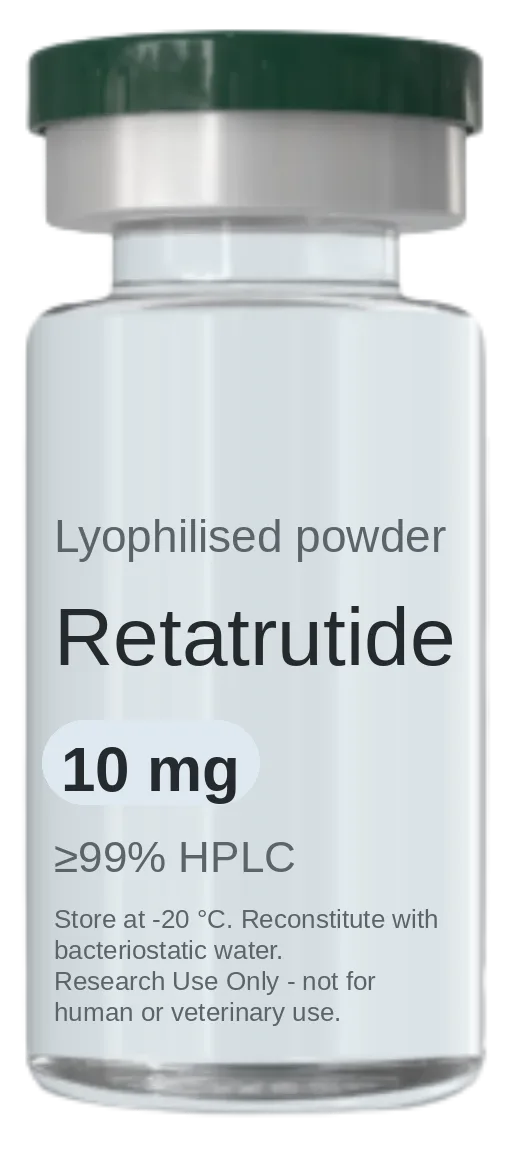
Retatrutide
Triple-agonist metabolic research peptide targeting GLP-1, GIP and glucagon receptors.
- Purity:
- ≥99% HPLC
- Sizes available:
- 10 mg
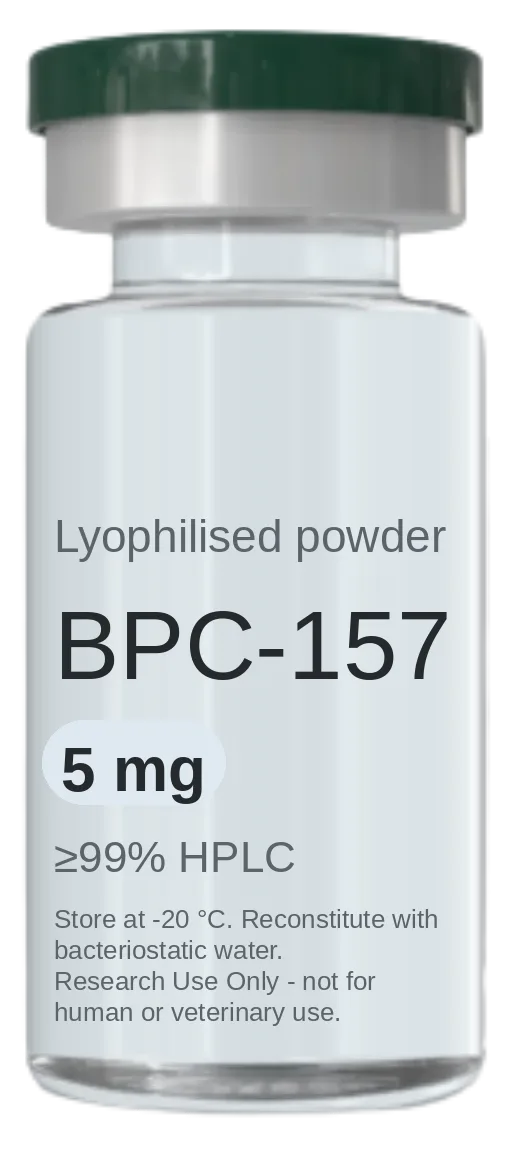
BPC-157 + TB-500
BPC-157 and TB-500 in a single vial — the pairing most studied together in tissue-repair research.
- Purity:
- ≥99% HPLC
- Sizes available:
- 5 mg + 5 mg
GHK-Cu (Copper Peptide)
Copper-binding tripeptide studied in extracellular matrix and dermal research models.
- Purity:
- ≥99% HPLC
- Sizes available:
- 50 mg Normal – 50 mg Plus
The consultation
One intake that settles goals, history and contraindications alongside compound, quantity, documentation and route — reviewed by a physician before anything ships.
More notes
-
Retatrutide vs. Tirzepatide: Differences
Retatrutide adds a third receptor that tirzepatide doesn't activate — here's how the two differ in structure, mechanism, and published research.
-
NAD+ vs Selank: What's the Difference?
NAD+ is a cellular coenzyme; Selank is a synthetic peptide derived from tuftsin. Structure, mechanism, and what each one is studied for.
-
Peptide Customs Clearance Cost in Argentina
What determines customs clearance cost for a research peptide shipment to Argentina, and what documentation PeptoClinic prepares for it.