
Note
Documents to Import Peptides into Argentina
To import a peptide into Argentina as laboratory reference material, you need a CoA, SDS, commercial invoice, and a research use declaration.
A peptide entering Argentina as laboratory reference material requires four core documents: the batch Certificate of Analysis (CoA), the Safety Data Sheet (SDS), a commercial invoice with the correct customs description, and a written research use declaration. Missing any one of them can result in customs holding the shipment or requesting additional paperwork that adds weeks to the process.
This guide explains what each document is for, who issues it, what information it must contain, and how they fit together when a shipment arrives at Ezeiza.
The Certificate of Analysis
The CoA is the document that proves a vial contains what the label says. Customs uses it to identify the substance; the receiving laboratory needs it for its materials register; any audit of the research program will ask for the batch number and the analytical results recorded in that certificate.
A CoA that works for import includes:
- The substance name with CAS number or amino acid sequence
- Batch number
- Analytical method (HPLC, MS, FTIR, or another)
- Purity result with the value obtained — not just the specification limit
- Date of analysis and expiration date
- Signature or stamp from the analytical laboratory
The laboratory that issued the CoA matters. A result of 99.7% signed by an independent laboratory with a traceable task number is not equivalent to the same number printed by whoever manufactured the product. The manufacturer has an obvious interest in the result; the third-party laboratory does not.
PeptoClinic works with Janoshik Analytical, a third-party analytical laboratory based in the Czech Republic. Four published batch reports include the one for Retatrutide (task 136921, purity 99.893%) and MOTS-c (task 136923, purity 99.669%). The lowest purity PeptoClinic has ever published is 99.669%. That is the conservative figure, and the one that matters when evaluating batch consistency.
The detail of each report is at /en/quality/.
The Safety Data Sheet
The SDS serves a different function from the CoA: it describes how to handle the material safely, not how pure it is. Customs requests it to classify the shipment's risk during transport.
A complete SDS follows the 16-section GHS format: composition, first aid, handling and storage, physicochemical properties, toxicological information. For research peptides, the toxicological information draws on published scientific literature, and the SDS should state that explicitly rather than extrapolate to human use.
The SDS is issued per compound, not per batch. A shipment containing four different compounds needs four SDSs.
The Commercial Invoice and Tariff Position
The commercial invoice is not just a price record: it is the customs declaration of what is entering the country. Two elements must be correct.
Material description. It must use precise technical language: "synthetic peptide for laboratory research use" or "reference material for in vitro research." A vague description such as "supplement" or "vitamin" is the most common reason research material is held at customs.
NCM position. Argentina uses the Mercosur Common Nomenclature. Synthetic research peptides are often classified under chapter 29 (organic chemical products) or, depending on the compound's structure, under position 2937, which covers hormones and analogues. The wrong position can change the applicable import duty or cause customs to classify the material as a medicinal product when it is not — which triggers additional ANMAT controls.
A customs broker with experience in research chemicals confirms the correct position before the shipment leaves, not after the cargo arrives on hold.
The Research Use Declaration
This document is issued by the importer — the receiving laboratory — and declares under its responsibility that the material enters exclusively for research: not for human or animal consumption, not for resale, and not for incorporation into a production process without the appropriate authorization.
The format is not standardized by regulation. What matters is that it is signed, bears the institution's letterhead, identifies the batch and the compound, and specifies the type of research it will be used for. Some customs offices accept a simple letter; others require the institution to be registered as a research materials importer before the first order.
Temperature in Transit: What Gets Documented
Lyophilized peptides tolerate ambient transport: as a powder they stay stable for weeks, so the shipment neither travels in a cold chain nor declares one. Temperature documentation — a data logger travelling with the package and its transit report — belongs to thermolabile material, such as a reconstituted solution. That is not the case for lyophilized powder.
Customs does not require this for all peptides, but if a shipment arrives without the report and the agent decides to verify, the cargo can be held until it is provided. PeptoClinic assembles the import file per shipment — CoA, SDS, invoice, and use declaration — according to the destination and the compound. The process for each shipment is described at /en/shipping/.
What ANMAT Reviews and What It Doesn't
ANMAT regulates medicines, food, and medical technology. A peptide correctly declared as laboratory reference material does not fall into any of those three categories and, in principle, does not require ANMAT authorization to enter.
The problem arises when the declaration is inconsistent with the material. An invoice that describes the contents as "hormone for clinical use" automatically activates the ANMAT regulatory channel. Research material declared as such, with a CoA and SDS in order and the correct NCM position, follows the general customs process for chemical products.
SENASA may intervene if the compound includes excipients of animal or plant origin. Synthetic laboratory peptides generally do not have that condition, but it is worth verifying compound by compound.
Research Material, Not for Consumption
Everything PeptoClinic supplies to Argentina is material for exclusive use in in vitro laboratory research. It is not approved or intended for human or veterinary consumption. It is not a medicine, a supplement, or a food. No statement on this site has been evaluated by ANMAT, the FDA, or any equivalent authority.
PeptoClinic is not a pharmacy, not a clinic, and does not issue prescriptions. Material is quoted for research programs; whoever requests a quote describes the program, and the technical team reviews compound, purity specification, quantity, and logistics route before responding. Requests for protocols or administration guidance are declined.
The catalogue with documentation for each compound is at /en/catalog/.
Frequently asked questions
What is a CoA and why does customs ask for it?
A Certificate of Analysis is the report from a laboratory detailing the purity and composition of a specific batch. Customs uses it to identify the substance and confirm it matches what the commercial invoice describes. Without it, the agent cannot verify what is entering the country, and the shipment can be held until one is provided.
Do I need ANMAT authorization to import a research peptide?
A peptide correctly declared as laboratory reference material, with a CoA and SDS in order, does not require prior ANMAT authorization in most cases. The situation changes if the compound falls into the category of a controlled substance or if the declaration frames it as a medicinal product. A customs broker specializing in research inputs can confirm the specific process for each compound before the shipment leaves.
What is the correct NCM position for research peptides?
It depends on the compound's structure. Synthetic peptides are often classified under position 2937 (hormones and analogues) or under other positions in chapter 29 based on their chemical function. The wrong position can result in a different duty rate than expected, or cause customs to classify the material as a medicine. The broker sets the position before the package ships, not after it arrives on hold.
Does PeptoClinic prepare the import documentation?
Yes. PeptoClinic assembles the import file per shipment: the commercial invoice with the correct customs description, the batch CoA, the compound SDS, and the research use declaration. The buyer receives the complete document package alongside the material.
What happens if a shipment arrives without an SDS?
Customs can hold the shipment until the missing documentation is provided. The release process varies depending on the port of entry and the agent's judgment: sometimes a digital SDS is accepted; other times an original paper copy is required. Arriving with complete documentation is always faster than managing the release of a held package.
Do lyophilized peptides require cold-chain documentation?
No. In dry form the powder tolerates ambient transport for weeks, so the shipment does not travel in a cold chain and there is no temperature report to present. What accompanies the lot is the laboratory's certificate of analysis and the import documentation.
What is the difference between a manufacturer's CoA and one from a third-party laboratory?
A manufacturer that analyzes its own product has an obvious interest in the results. An independent laboratory analyzes because that is its business, and its reputation depends on results being correct and traceable. Janoshik Analytical, the third-party laboratory PeptoClinic works with, assigns a task number to each analysis. Two of the four published reports carry a working verification link on the laboratory's platform; the other two are verified by presenting the PDF with the task number directly.
Are there restrictions depending on the type of peptide?
Some hormonal analogues have stricter import conditions than a purely investigational peptide with no regulated counterpart. SENASA may intervene if the compound carries excipients of biological origin. PeptoClinic reviews the route and compound before confirming a shipment to Argentina. If an order cannot be managed within the correct regulatory framework, PeptoClinic declines to quote rather than advise outside the applicable regulations.
Compounds mentioned
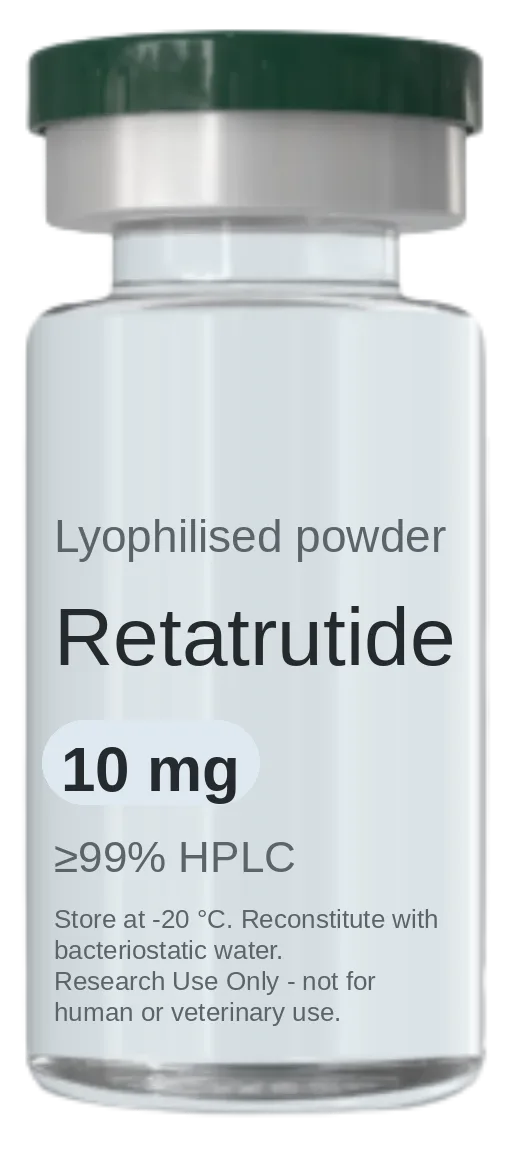
Retatrutide
Triple-agonist metabolic research peptide targeting GLP-1, GIP and glucagon receptors.
- Purity:
- ≥99% HPLC
- Sizes available:
- 10 mg
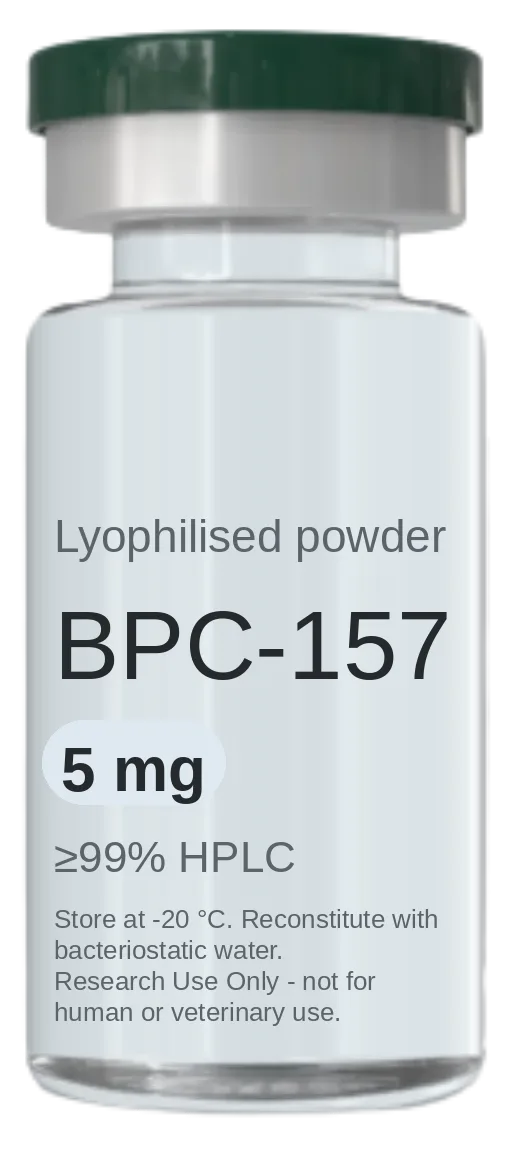
BPC-157 + TB-500
BPC-157 and TB-500 in a single vial — the pairing most studied together in tissue-repair research.
- Purity:
- ≥99% HPLC
- Sizes available:
- 5 mg + 5 mg
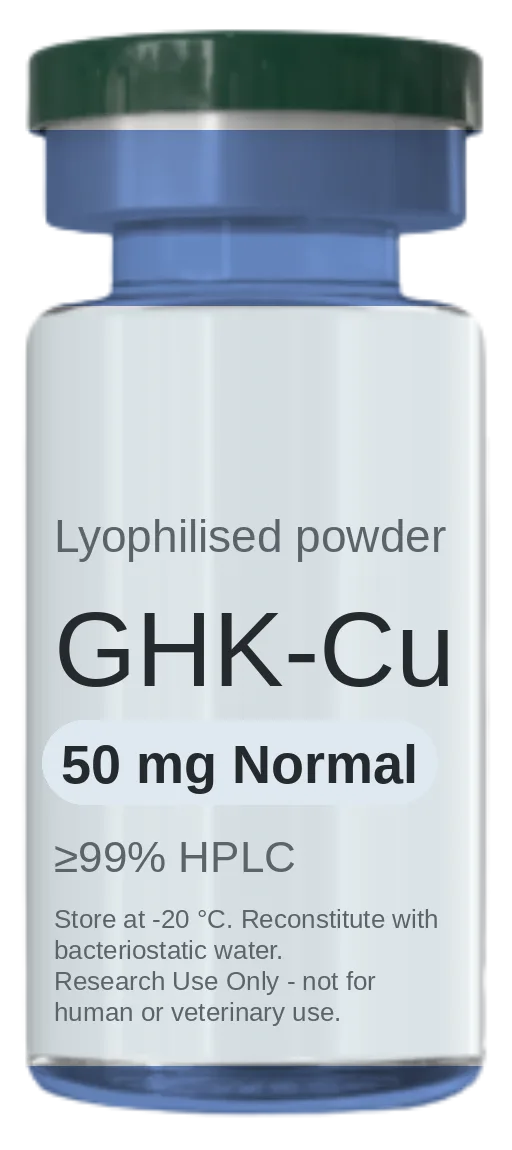
GHK-Cu (Copper Peptide)
Copper-binding tripeptide studied in extracellular matrix and dermal research models.
- Purity:
- ≥99% HPLC
- Sizes available:
- 50 mg Normal – 50 mg Plus
The consultation
One intake that settles goals, history and contraindications alongside compound, quantity, documentation and route — reviewed by a physician before anything ships.
More notes
-
Temporary Import Regime & Peptides
Temporary import covers goods that leave the country again; a research peptide shipment stays and gets used up.
-
Retatrutide vs GHK-Cu: What's the Difference
Retatrutide and GHK-Cu are different molecules studied for different reasons. Here's what each investigates and what documentation backs a batch.
-
Invoiced vs. Unbilled Peptide Suppliers
What changes when a research peptide supplier invoices the transaction versus one that takes payment and leaves no paper trail.