
Note
What Is a Lot Number and Why Does It Matter
A lot number connects each vial to an independent certificate of analysis. Without it, a stated purity figure has nowhere to point.
A lot is a set of units produced in a single synthesis run — same raw materials, same conditions, same time window. The lot number (also called a batch number) is the unique identifier assigned to that run. It functions as an address: it points to the production protocol, the internal quality control records, and the external certificate of analysis that document exactly what is in those vials.
Without that number, traceability ends. A purity claim without an associated lot number cannot be verified because there is no document to point it at.
Why the lot number matters
Three reasons that determine whether a supplier's documentation has real weight or is merely decorative.
Verifiable traceability, not declared traceability. A lot number that appears on an independent laboratory's certificate of analysis (CoA) makes the report openable: you can read the analytical technique, the purity percentage found, the date of analysis, the laboratory's internal task number, and the analyst's signature. That is traceability. A "third-party tested" badge without an associated lot number is not — it is an assertion with no address.
Each lot has its own result. The same molecule can show purity differences between lots, even from the same supplier. Janoshik Analytical analyzed a lot of retatrutide on April 13, 2026 — task 136921 — and found 99.893% purity. That result applies to that lot. The next lot requires its own analysis, its own task number, its own date. Using a previous lot's CoA to back a new one removes the only guarantee the document was meant to provide.
It allows problems to be contained. If a quality deviation surfaces after a lot has been distributed — an out-of-range impurity, an incorrect concentration — the lot number is the only mechanism that identifies which units are affected. Without it, any quality alert must be treated as if it covers all production.
What a lot number connects
With a supplier that keeps complete records, the lot number gives access to several documentation layers:
- Synthesis protocol: raw materials used, reaction date, purification conditions.
- Internal quality control: measurements the manufacturer made before releasing the lot.
- External certificate of analysis (CoA): the report from an independent laboratory that analyzed a representative sample of the lot. This carries the greatest probative weight because it comes from a party without a financial stake in the result.
- Date of analysis: distinct from the synthesis date. A report from years ago presented alongside a current vial says nothing about the present material.
- Recommended storage conditions: temperature, humidity, estimated stability window.
When a supplier cites a purity figure, the immediate question is: which lot? If they cannot answer that, the figure has no backing.
How to read a certificate of analysis
A properly issued CoA contains specific fields, each serving a distinct function.
Compound name with scientific nomenclature, not only a commercial name. "Retatrutide" alone is not sufficient; the amino acid sequence or CAS number pinpoints the exact molecule.
Supplier lot number — the reference identifying the production run.
Laboratory task number — the reference the independent laboratory assigns when it receives and analyzes a sample. This is the field that converts a PDF into a verifiable data point. Without it, the document carries no more weight than the supplier's own declaration.
Analytical technique: reversed-phase HPLC is the standard for peptide purity. A CoA that only reports "passed" without naming the technique or giving a numerical value is not useful. High-performance liquid chromatography and its application to synthetic peptides is thoroughly documented in the open-access literature at PubMed.
Purity reported with a numerical value and decimal places. The threshold a supplier declares — for example, "≥99% HPLC" — and the value actually found in a given lot are two separate data points. The relevant one is the second: 99.7% and 97.0% are different results with different implications for a research protocol.
Date of analysis: it must postdate the synthesis and be reasonably close to the purchase date.
Analyst signature or identifier: it assigns personal responsibility for the result and allows the laboratory to stand behind it if the report is challenged.
PeptoClinic's lot reports are published on the quality page, where each CoA includes the corresponding Janoshik Analytical task number.
The lots PeptoClinic has published
Four reports have been published, all from Janoshik Analytical, a laboratory that specializes in research peptide analysis. All four analyses were conducted on April 13, 2026:
- Task 136921 — Retatrutide: purity found 99.893%. The vial labeled 10 mg contained 11.96 mg.
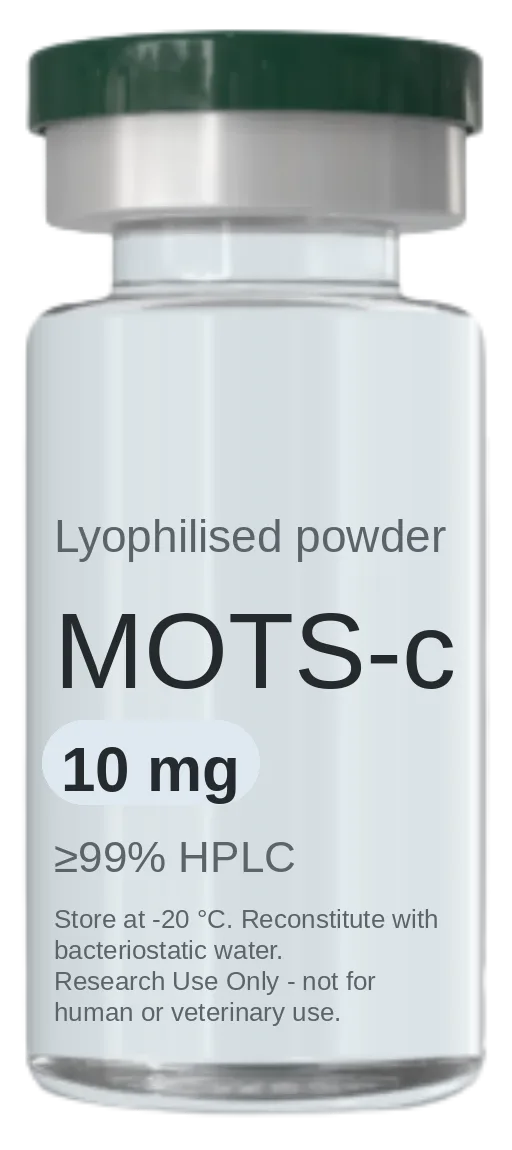
- Task 136923 — MOTS-c: purity found 99.669%. The vial contained 11.31 mg.
- Task 204977 — GHK-Cu: 50 mg vial, verifiable in the laboratory's portal.
- Task 204975 — BPC-157 + TB-500: 10 mg total, 5 mg of each compound.
The lowest purity on record across these four reports is 99.669%. That is the figure to cite as a minimum guarantee — the worst result among the lots analyzed, not the best. A headline built on the highest lot breaks the day a lower result is published. For compounds in the catalog, each quote includes the available lot reference and the corresponding CoA.
What happens when there is no lot number
The absence of a lot number in a supplier's documentation is not only an administrative gap. It signals that the record system cannot connect the vial to any specific analysis. In that case, a buyer cannot:
- Link the material received to the analysis the supplier cites.
- Confirm that the analysis covers a sample from the lot actually in hand.
- Verify the date of the analysis or compare against prior lots from the same supplier.
- Obtain additional documentation if the research protocol requires it.
For a researcher who needs to know precisely what compound they are working with, this disqualifies the material as a controlled reference. PeptoClinic's quality policy documents how each shipment is tied to a lot and a CoA — the detail is on the quality page.
For laboratory research only
All material PeptoClinic supplies to Argentina and the other destinations in its catalog is strictly for in vitro and laboratory research, under the Research Use Only (RUO) designation. It is not a medicine, not a supplement, and is not approved or intended for human or veterinary use. No regulatory authority — ANMAT, the FDA, or any equivalent — has evaluated these compounds for the diagnosis, treatment, or prevention of any condition.
PeptoClinic is not a pharmacy, a clinic, or a prescribing entity. Requests for protocols for use in people are declined. The full description of how PeptoClinic operates is on the about page.
Frequently asked questions
What is the difference between a lot number and a laboratory task number?
The lot number is the manufacturer's internal reference and identifies the production run. The task number is assigned by the independent laboratory when it receives and analyzes a sample from that lot. A properly issued CoA includes both: the first identifies the material, the second identifies the analysis and allows it to be found in the laboratory's verification portal.
Can a CoA be verified without a task number?
It depends on the laboratory. Some index their reports under the client's lot number; others under their own task number. If a CoA carries no externally verifiable reference, the document has no more weight than a unilateral supplier declaration. The task number is the field that makes the PDF checkable.
Does each lot require its own analysis?
Yes. Every lot should carry its own independent analysis, regardless of previous results. Reusing a prior lot's CoA for a new batch removes all traceability: the original analysis describes a sample from that lot, not from the new one.
What does ≥99% purity by HPLC mean for a research peptide?
It means the peak area corresponding to the target compound represents 99% or more of the total area detected by the chromatograph. Visible impurities together account for less than 1%. For research peptides, this threshold is the standard benchmark. The exact value found is always more informative than the threshold: 99.669% and 99.0% are different results with different implications for a research protocol.
Does a lot number guarantee that the vial received was part of the analyzed lot?
The lot number links a set of vials to a specific analysis. If the lot number in the shipping documentation matches the one on the CoA, the analysis applies to that material. This is why a supplier must specify the lot number in the documentation that accompanies each shipment — not only on a generic page of their website.
Why does PeptoClinic cite the lowest purity on record rather than the highest?
Because it is the most conservative figure. A headline built on the best historical result becomes inaccurate the moment a lot with lower purity is published. The current floor — 99.669% — is the worst result among the lots analyzed to date. That is what makes sense to cite as a minimum guarantee: not the best outcome, but what the least-performing documented lot achieved.
How can I request documentation for a specific lot?
Every quote from PeptoClinic includes the available lot reference and the corresponding CoA. To start a consultation, the entry point is the [catalog](/en/catalog/) or writing to [email protected] with the compound and specification needed.
Does the analysis date matter when evaluating a lot?
Yes. A report that is years old cannot guarantee the current state of the material if the elapsed time exceeds the compound's stability conditions. Lyophilized peptides have good stability under correct storage, but that does not make an old analysis applicable to a current lot. The analysis date on the CoA is one of the first fields to check.
Compounds mentioned
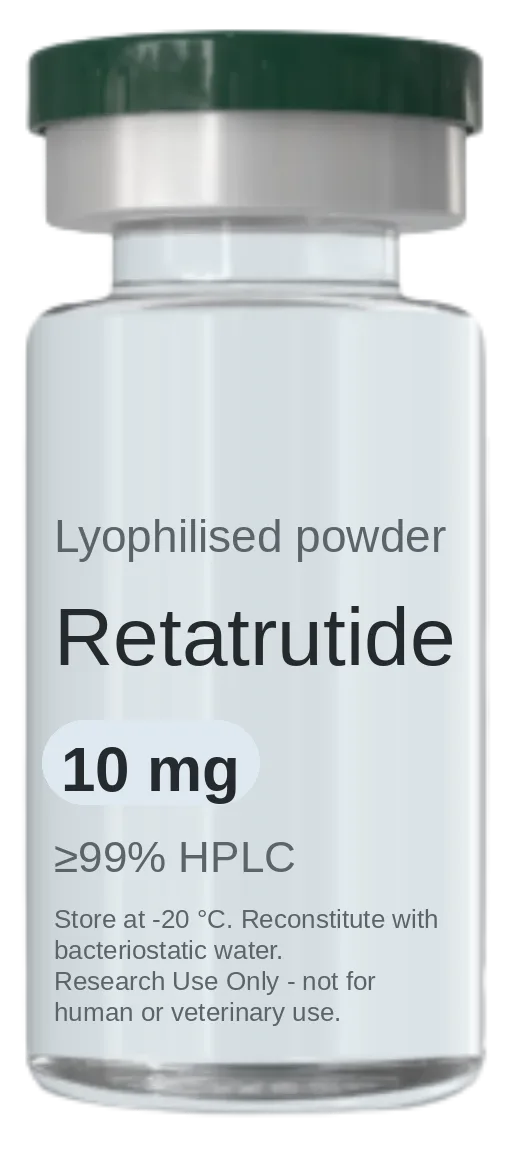
Retatrutide
Triple-agonist metabolic research peptide targeting GLP-1, GIP and glucagon receptors.
- Purity:
- ≥99% HPLC
- Sizes available:
- 10 mg
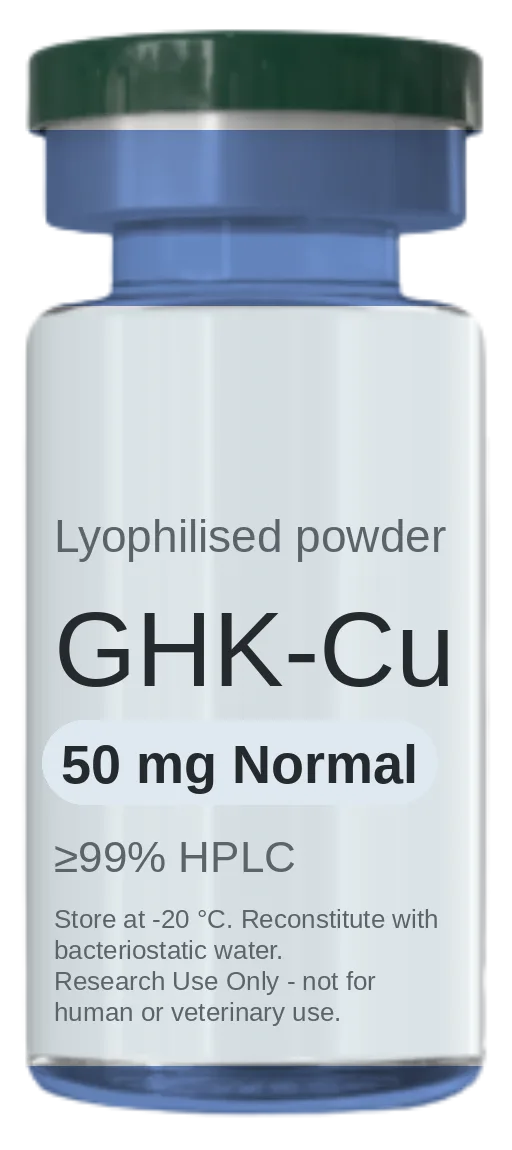
GHK-Cu (Copper Peptide)
Copper-binding tripeptide studied in extracellular matrix and dermal research models.
- Purity:
- ≥99% HPLC
- Sizes available:
- 50 mg Normal – 50 mg Plus
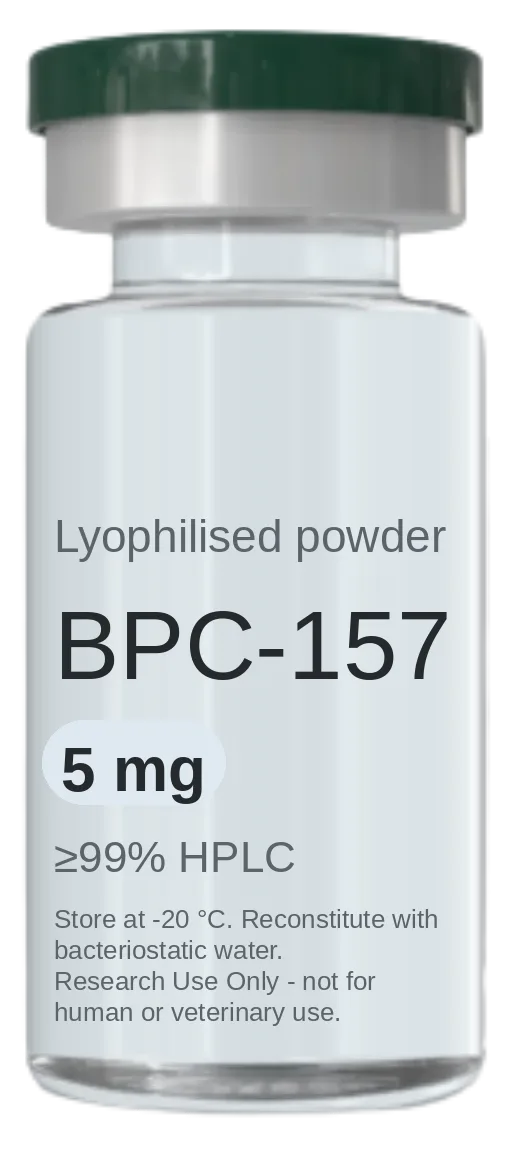
BPC-157 + TB-500
BPC-157 and TB-500 in a single vial — the pairing most studied together in tissue-repair research.
- Purity:
- ≥99% HPLC
- Sizes available:
- 5 mg + 5 mg
The consultation
One intake that settles goals, history and contraindications alongside compound, quantity, documentation and route — reviewed by a physician before anything ships.
More notes
-
Temporary Import Regime & Peptides
Temporary import covers goods that leave the country again; a research peptide shipment stays and gets used up.
-
Retatrutide vs GHK-Cu: What's the Difference
Retatrutide and GHK-Cu are different molecules studied for different reasons. Here's what each investigates and what documentation backs a batch.
-
Invoiced vs. Unbilled Peptide Suppliers
What changes when a research peptide supplier invoices the transaction versus one that takes payment and leaves no paper trail.