Note
What Is a Material Safety Data Sheet
An SDS documents the handling hazards of a research material: storage conditions, personal protection, and emergency response.
A Safety Data Sheet (SDS, formerly called MSDS or Material Safety Data Sheet) is a standardized document that accompanies any chemical reagent or research material. It describes hazard properties, storage conditions, personal protection requirements, and emergency procedures in the event of exposure or spill. For a research-use material, the SDS is the first document a researcher should review before opening a vial.
SDS and CoA: different documents, non-overlapping functions
The most common point of confusion is between the SDS and the Certificate of Analysis (CoA). They are complementary documents with distinct purposes:
- The CoA reports identity, purity, and composition of the analyzed lot. It documents what is inside and in what proportion.
- The SDS describes how to work with that material without incident. It covers storage requirements, recommended protective equipment, procedures for accidental contact, and how to dispose of the material and its containers.
A credible supplier delivers both. A lot with a CoA but no SDS is incomplete for any laboratory operating under safety standards. For a detailed explanation of how to read a CoA and what figures to verify in it, the quality section at PeptoClinic covers the process step by step.
The international standard: 16 sections in fixed order
The Globally Harmonized System of Classification and Labelling of Chemicals (GHS), established by the United Nations, defines a 16-section format in fixed order for all SDS documents. This format was adopted by the European Union, by OSHA in the United States under the HazCom 2012 standard, and by occupational health and safety legislation across much of Latin America.
When a research material arrives from a supplier working under international standards, the SDS must include all 16 of the following sections:
Section 1 — Product and supplier identification. Material name, CAS number, recommended use, and the supplier's emergency contact.
Section 2 — Hazard identification. GHS classification, hazard pictograms, H-statements (hazard statements), and P-statements (precautionary statements).
Section 3 — Composition and information on components. For a pure research peptide, this includes the compound with its CAS number and any excipients from the lyophilization process, if present.
Section 4 — First aid measures. Procedures for skin contact, eye contact, ingestion, and inhalation, and when to seek medical attention.
Section 5 — Firefighting measures. Appropriate extinguishing agents and combustion hazards. Lyophilized peptides are low-flammability materials.
Section 6 — Accidental release measures. How to contain and clean a spill, with the protective equipment required for that operation.
Section 7 — Handling and storage. Temperature, humidity, and compatibility conditions. For most research peptides, this section specifies storage at −20 °C or −80 °C in lyophilized form to preserve structural integrity between synthesis and use.
Section 8 — Exposure controls and personal protection. Occupational exposure limit values, recommended glove type, eye protection, and required ventilation.
Section 9 — Physical and chemical properties. Physical state, color, odor, solubility, molecular weight, and melting point.
Section 10 — Stability and reactivity. Conditions to avoid, incompatible materials, and relevant decomposition products.
Section 11 — Toxicological information. Routes of exposure, known acute and chronic effects, LD50 data where available. For many research peptides, this section cites limited data, which reflects the state of the scientific literature for compounds under active study — not a guarantee of harmlessness.
Section 12 — Ecological information. Aquatic toxicity and bioaccumulation potential.
Section 13 — Disposal considerations. Methods for disposing of the material and its containers in accordance with applicable regulations.
Section 14 — Transport information. UN number, proper shipping name, hazard class, and packing group under ADR (European road), IMDG (maritime), and IATA DGR (air). This section determines which logistics operators can move the material and under what conditions — a practical consideration covered in detail on the PeptoClinic shipping page.
Section 15 — Regulatory information. Regulations specific to the country or region that apply to the material.
Section 16 — Other information. Date of preparation, document revisions, and bibliographic sources.
Why Section 7 carries the most weight for research peptides
Of the 16 sections, Section 7 has the most direct impact on experimental outcomes. A peptide stored outside the specified conditions can degrade before use without any visible sign: no change in color, no precipitation, no difference in odor. The SDS defines the minimum conditions; a supplier should also be able to confirm that a given lot was maintained within those conditions from synthesis to dispatch.
For the compounds in the PeptoClinic catalogue, storage requirements are derived directly from the SDS and CoA of each individual lot.
SDS versus product data sheet
Some suppliers use "product data sheet" to describe a different kind of document. A product data sheet is generally a summary of the material's characteristics: amino acid sequence, molecular weight, typical purity, published research applications. That is distinct from an SDS. A product data sheet is product information; an SDS is a safety document with a legally defined structure. A credible supplier provides both, and neither substitutes for the other.
Where to find the SDS for a research compound
Suppliers with established documentation include the SDS with each order. For CAS-number-based searches, the NIH's PubChem database publishes safety information for thousands of compounds with data verifiable online.
A supplier that cannot produce an SDS for the material being quoted is a signal worth acting on: it indicates the documentation chain is incomplete.
Research use only
All of the handling guidance on this page applies to materials for laboratory research use only (RUO). The research peptides that PeptoClinic supplies are not approved for and are not intended for human or veterinary consumption. They are not medicines, supplements, or food. No regulatory authority has evaluated these materials for clinical use. No information in an SDS, or on this site, constitutes dosing guidance, a therapeutic protocol, or a recommendation for use in persons. For more on how PeptoClinic operates and what documentation accompanies each lot, the about page describes the process in full.
Frequently asked questions
What is the difference between SDS and MSDS?
MSDS (Material Safety Data Sheet) is the name that predates the GHS standard. When the globally harmonized system was adopted, the document was renamed SDS and standardized to exactly 16 sections in fixed order. An MSDS from before the GHS transition may have between 8 and 16 sections in variable order; content may be similar, but structure is not guaranteed, which complicates systematic comparison across suppliers.
Who is responsible for preparing the SDS?
Responsibility rests with the manufacturer or distributor placing the product on the market. For custom-synthesized peptides or small research lots, the supplier prepares the SDS from the material's composition and available safety information for that compound, or for structurally related analogues with published data.
How often should an SDS be revised?
The GHS standard recommends revision when new hazard information becomes available or when the material's classification changes. In practice, research material suppliers update the SDS when relevant new toxicological data is published or when transport regulations affecting Section 14 change.
Does a low-toxicity material still require an SDS?
Yes. The SDS format is not exclusive to highly hazardous materials. The 16-section structure applies to any chemical substance a worker may handle, regardless of its hazard classification. Most lyophilized research peptides carry a low to moderate hazard classification but still require the complete 16-section document.
What protective equipment is typically listed for lyophilized peptide powders?
Most SDS documents for lyophilized peptide powders specify nitrile gloves, safety glasses, and work in a ventilated area. Fine powder from any material can cause irritation upon inhalation regardless of composition, so respiratory protection is recommended in operations that generate aerosols or resuspend particles.
Does the SDS cover international transport of the material?
Section 14 of the SDS includes the transport classification under ADR, IMDG, and IATA DGR. For international shipments of research materials, that classification determines which logistics operators can carry the material, what transport documentation is required, and what packaging conditions apply.
Does the SDS replace the CoA for verifying compound identity?
No. The SDS does not certify the identity or purity of a specific lot. That is the function of the CoA, issued by the laboratory that performed the measurements on that specific lot. The SDS describes the compound in general terms; the CoA documents the particular lot. Both documents are necessary, and neither replaces the other.
Where should the SDS be kept in a laboratory?
Regulations in most jurisdictions require the SDS to be accessible to personnel working with the material in the area where it is used. In practice, laboratories maintain current archives — physical and digital — with version control, to ensure the current revision of each document is always in use rather than a superseded version.
Compounds mentioned
BPC-157 + TB-500
BPC-157 and TB-500 in a single vial — the pairing most studied together in tissue-repair research.
- Purity:
- ≥99% HPLC
- Sizes available:
- 5 mg + 5 mg
Retatrutide
Triple-agonist metabolic research peptide targeting GLP-1, GIP and glucagon receptors.
- Purity:
- ≥99% HPLC
- Sizes available:
- 10 mg
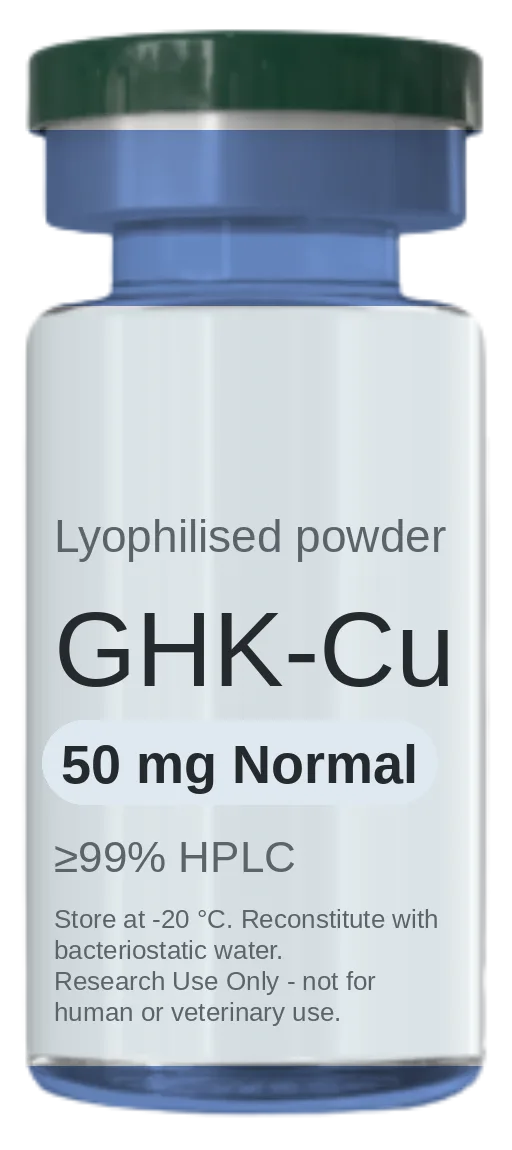
GHK-Cu (Copper Peptide)
Copper-binding tripeptide studied in extracellular matrix and dermal research models.
- Purity:
- ≥99% HPLC
- Sizes available:
- 50 mg Normal – 50 mg Plus
The consultation
One intake that settles goals, history and contraindications alongside compound, quantity, documentation and route — reviewed by a physician before anything ships.
More notes
-
GHK-Cu vs Epithalon: What's the Difference
GHK-Cu and Epithalon are distinct research peptides in structure and in what the literature studies on each. Here's the difference.
-
Freight Forwarder vs Courier to Argentina
Can a freight forwarder replace a courier to import research peptides into Argentina? What changes, and what the practical answer is.
-
No One Home for Your Argentina Shipment?
What happens when a research peptide shipment to Argentina arrives at an address with no one there to sign for it.