
Note
What Is Edman Sequencing in Peptides
Edman sequencing reads a peptide's amino acid sequence one residue at a time from the N-terminus. Why it matters in RUO lot quality control.
Edman sequencing is an analytical method that determines the amino acid sequence of a peptide by reading one residue at a time from the N-terminal end. Swedish biochemist Pehr Edman developed the chemistry starting in 1950 and automated it with Geoffrey Begg in 1967. In the context of research peptides, its primary function is to confirm that the sequence of a synthesized lot matches exactly what was specified — something a purity analysis by HPLC cannot do on its own.
The Chemistry of the Edman Cycle
The method runs in three steps that repeat in sequence.
Coupling. Phenylisothiocyanate (PITC) reacts with the free amino group of the N-terminal residue under mildly alkaline conditions (pH 8–9). The product is a phenylthiocarbamyl (PTC) derivative attached to the first amino acid in the chain.
Cleavage. The addition of anhydrous acid — typically trifluoroacetic acid — selectively breaks the bond between that first residue and the second, releasing it as a thiazolinone derivative. The remaining peptide stays intact with a new free N-terminus, ready for the next cycle. That is the central feature of the method: the chain is not destroyed, only shortened by one residue.
Identification. The thiazolinone derivative converts to its stable phenylthiohydantoin form (PTH-amino acid). Each of the 20 canonical amino acids produces a PTH with a specific retention time in reversed-phase high-performance liquid chromatography (HPLC). The instrument assigns the residue directly.
The cycle restarts with the peptide now one residue shorter. The sequence is built cycle by cycle. Edman and Begg formalized automated gas-phase execution in 1967, in the paper that forms the basis of the instruments in use today.
How It Works in Practice
Modern gas-phase sequencers deposit the peptide onto a PVDF (polyvinylidene fluoride) membrane and introduce reagents as controlled vapors. The PTH derivative from each cycle transfers inline to an HPLC module that identifies and records the peak area.
Sample amounts are in the picomole range. A 20-cycle run can be completed in a few hours.
There is a practical ceiling: accumulated lag from incomplete peptide chains in earlier cycles progressively degrades the signal. For peptides of 5 to 30 residues — the usual range in RUO material catalogs — complete sequence coverage is obtainable before that degradation becomes a problem. For chains of 50 residues or more, the readout becomes ambiguous in later cycles and complementary strategies are required.
Its Role in Research Peptide Verification
In quality control for RUO material, Edman sequencing covers a function that purity analysis cannot.
An HPLC purity analysis measures what fraction of the material elutes at the expected compound's peak. It does not indicate whether that peak corresponds to the correct sequence or to a variant with a similar retention time. Two peptides with identical amino acid composition but different residue order can be indistinguishable in a standard purity chromatogram.
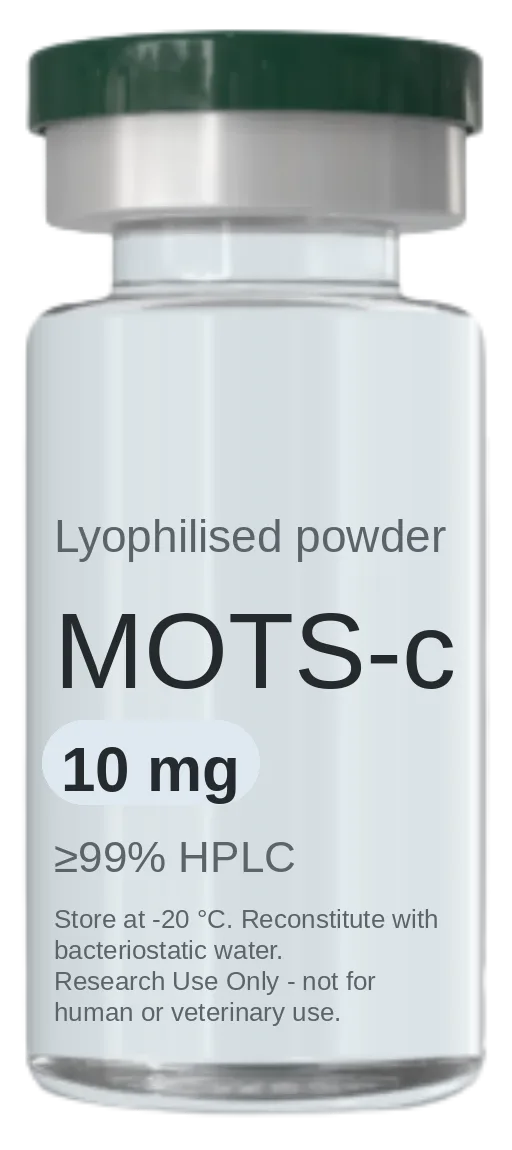
Edman reads the order. For a lot of BPC-157, it confirms that the N-terminal residues correspond to Gly-Glu-Pro-Pro-Pro, the sequence of the pentadecapeptide described in the published literature. For a lot of MOTS-c, it verifies that the initial residues match the sequence derived from the mitochondrial 16S rRNA open reading frame.
This matters because the biological activity of a peptide in in vitro assays depends on its exact sequence. A transposition error during synthesis — two residues swapped — produces a compound with the same molecular mass as the specification and a very similar HPLC profile, but a different identity.
The batch documentation PeptoClinic makes available specifies which analyses support each lot and which laboratory performed them. Reports from Janoshik Analytical include the methodology used and the results obtained, with online verification available for the lots that carry it.
Limitations to Know
Blocked N-terminus. PITC requires access to the free amino group at the N-terminus. If that group has been modified — by acetylation, by spontaneous cyclization to pyroglutamate, or by other modifications — the coupling reaction does not occur and the method produces no signal. Many biologically active peptides have a modified N-terminus; in those cases, prior enzymatic digestion or tandem mass spectrometry is required.
Read length. Accumulated lag limits reliable reading to the first 30–50 cycles. For short chemically synthesized peptides this is not a constraint. For full-length proteins, prior enzymatic digestion into shorter fragments is necessary before analysis.
Side-chain modification resolution. The method identifies the canonical amino acid. It does not routinely distinguish between, for example, a phosphorylated serine and a free serine. Post-synthesis modifications require supplementary analysis.
Analysis time. A 20-cycle run can take several hours. For laboratories with high throughput and access to mass spectrometry, Edman sequencing may occupy a secondary position in the workflow.
Comparison with Tandem Mass Spectrometry
Tandem mass spectrometry (MS/MS) displaced Edman sequencing in large-scale proteomics because it handles complex mixtures, works with femtomole-level amounts, and runs faster.
For individual chemically synthesized peptides, the comparison is more nuanced. Edman produces a direct residue-by-residue sequence readout without ambiguity about order. MS/MS infers sequence from ion fragmentation patterns and faces a structural limitation: leucine (Leu) and isoleucine (Ile) have identical mass, and in many standard experiments they cannot be distinguished from each other.
For peptides of 10 to 30 residues without complex modifications and with a free N-terminus, Edman resolves the sequence directly. For mixtures, for post-translational modification mapping, or for peptides with a blocked N-terminus, MS/MS is the more appropriate tool.
Some RUO quality control laboratories combine both approaches: HPLC purity plus Edman for sequence identity, or HPLC plus MS/MS when peptide complexity requires it. The PeptoClinic catalog indicates which analyses support each available compound.
Research Use Only
All material described in this article, and all material PeptoClinic supplies, is for Research Use Only (RUO): in vitro and controlled laboratory research.
No compound supplied by PeptoClinic is approved or intended for human or veterinary consumption, diagnosis or treatment. No regulatory authority — the FDA, ANMAT or any equivalent — has evaluated these materials for any of those purposes.
PeptoClinic is not a pharmacy, a clinic or a provider of dosing, administration or protocol guidance. Requests for information about use in humans are declined.
Frequently asked questions
What is the difference between Edman sequencing and Edman degradation?
There is no substantive difference: both terms name the same method. "Edman degradation" describes the chemical process — the successive cleavage of the N-terminal residue — while "Edman sequencing" describes the result that process produces. Both appear interchangeably in the analytical literature and in laboratory protocols.
Can a peptide have high HPLC purity and still have the wrong sequence?
Yes. Reversed-phase HPLC separates by hydrophobicity and reports the proportion of area at the expected compound's peak. Two isomeric sequences — with the same amino acids in different order — can have retention times close enough to be unresolved in the chromatogram. Purity can be high while identity is incorrect. Edman reads the actual residue order and resolves that ambiguity.
How many cycles can a modern sequencer run before the signal becomes unreadable?
The typical range under standard analytical conditions is 30 to 50 cycles with reliable assignment. For chemically synthesized peptides under 20 residues — the common range in synthetic peptide research — that coverage is sufficient to read the full sequence without ambiguity.
What is a PTH-amino acid and what does it do in identification?
PTH stands for phenylthiohydantoin. It is the stable form to which the thiazolinone derivative cleaved in each cycle is converted. Each canonical amino acid produces a PTH with a specific retention time in reversed-phase HPLC, enabling direct assignment. The stability of the PTH is what makes the analysis practical: the intermediate thiazolinone derivative is labile and would hydrolyze if not rapidly converted.
Does the method work with lyophilized peptides?
Yes. Lyophilized peptide is reconstituted in a compatible solvent — typically dilute acetic acid — and deposited onto the sequencer's PVDF membrane. The physical state of the starting material does not affect the chemistry of the Edman cycle.
Is sequence verification by Edman sequencing required for RUO material?
No single standard establishes it as a universal requirement. The minimum specification many suppliers offer includes only HPLC purity and molecular mass. Sequence verification adds an identity evidence layer that may be necessary to document a compound in a publication or in a project protocol. For details on which analyses support each available lot, the [PeptoClinic quality page](/en/quality/) lists them alongside the corresponding reports.
What does a blocked N-terminus mean and why does it prevent analysis?
A blocked N-terminus is one where the free amino group (–NH₂) has been chemically modified: the most common cases are acetylation (–NH–CO–CH₃) and spontaneous cyclization of a terminal glutamine or glutamate to form pyroglutamate. PITC needs that free group to react. Without it, coupling does not occur and the method produces no signal. In those cases the approach is either prior enzymatic digestion to expose fragments with free N-termini, or direct use of MS/MS.
Can Leu and Ile be confused in Edman analysis?
Under standard HPLC conditions this is a known limitation. Leucine and isoleucine produce PTH-derivatives with very similar retention times that many systems do not resolve reliably. Some instruments with high-resolution columns and optimized gradients can distinguish them, but that is not a standard configuration. For chemically synthesized peptides where the designed sequence is documented, the Leu/Ile ambiguity is resolved by context: if the specification places Leu at position 4 and the PTH elutes in that region, the assignment is direct. Tandem mass spectrometry faces the same limitation by identical mass, and resolution requires additional experiments.
Compounds mentioned
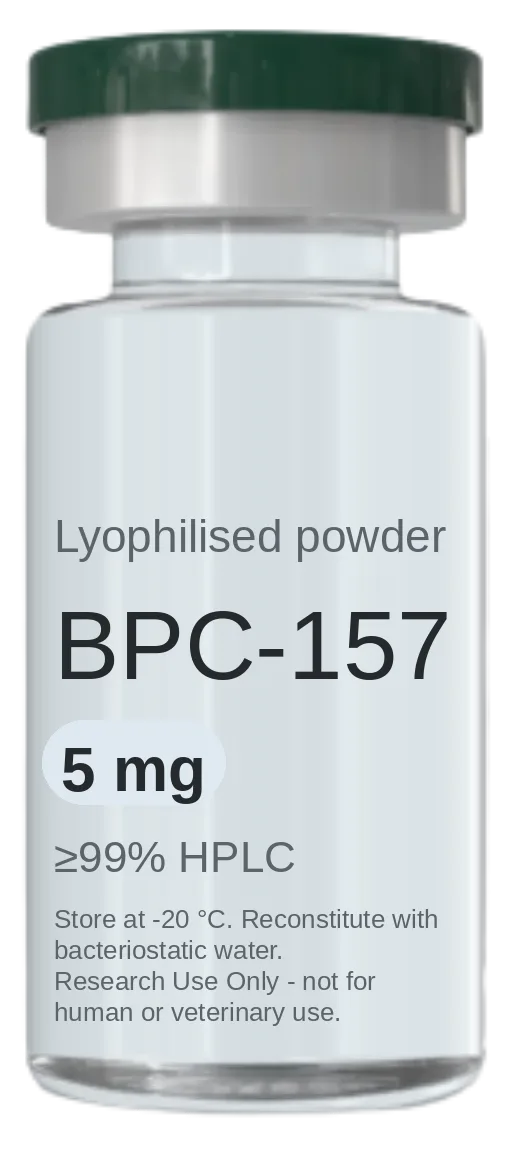
BPC-157 + TB-500
BPC-157 and TB-500 in a single vial — the pairing most studied together in tissue-repair research.
- Purity:
- ≥99% HPLC
- Sizes available:
- 5 mg + 5 mg
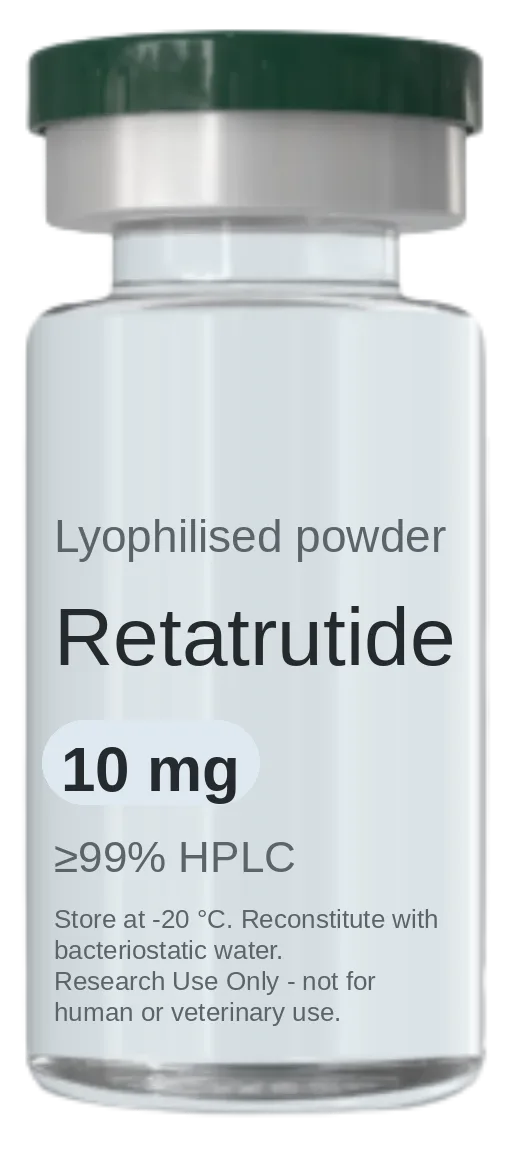
Retatrutide
Triple-agonist metabolic research peptide targeting GLP-1, GIP and glucagon receptors.
- Purity:
- ≥99% HPLC
- Sizes available:
- 10 mg
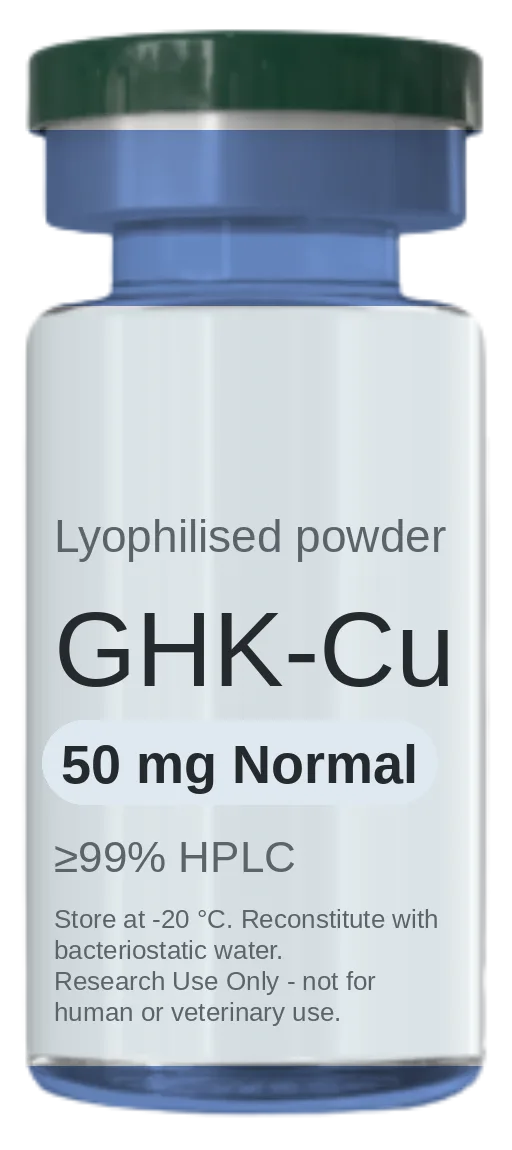
GHK-Cu (Copper Peptide)
Copper-binding tripeptide studied in extracellular matrix and dermal research models.
- Purity:
- ≥99% HPLC
- Sizes available:
- 50 mg Normal – 50 mg Plus
The consultation
One intake that settles goals, history and contraindications alongside compound, quantity, documentation and route — reviewed by a physician before anything ships.
More notes
-
Peptide Consigned to a Company in Argentina
What changes at Argentine customs when a research peptide is consigned to a company instead of an individual, and what paperwork ships with it.
-
Retatrutide vs. Tirzepatide: Differences
Retatrutide adds a third receptor that tirzepatide doesn't activate — here's how the two differ in structure, mechanism, and published research.
-
NAD+ vs Selank: What's the Difference?
NAD+ is a cellular coenzyme; Selank is a synthetic peptide derived from tuftsin. Structure, mechanism, and what each one is studied for.