
Note
MALDI-TOF in Peptide Analysis: How It Works
MALDI-TOF confirms peptide identity by mass spectrometry — what it measures, what it does not, and how to read a certificate of analysis.
MALDI-TOF is a mass spectrometry technique that determines the molecular mass of a peptide with enough precision to confirm whether the amino acid sequence matches what the supplier declared. It does not measure purity — that is what HPLC chromatography does — but where HPLC tells you how much of the compound is present, MALDI-TOF tells you whether the compound is actually what it claims to be.
For anyone sourcing research peptides, the distinction matters. A batch can read 99% on HPLC and still contain the wrong peptide if there was a synthesis or labeling error. Both methods together close that gap, which is why certificates of analysis from serious laboratories report both.
How it works: MALDI and TOF separately
The name encodes the mechanism in two parts.
MALDI is the ionization method. The sample — the peptide — is mixed with an organic matrix that absorbs ultraviolet light strongly. That mixture is deposited on a metal plate and allowed to crystallize. When the laser fires on the crystal, the matrix absorbs the energy and transfers it to the peptide, which ionizes without fragmenting. That is the advantage: the ionization is soft. Peptides are fragile molecules that break apart under more aggressive techniques; MALDI carries them into the gas phase with a charge but without destroying them.
TOF — Time of Flight — is the mass analyzer. Ions accelerate through a vacuum tube. Every ion receives the same electrical impulse at entry, so lighter ones reach the detector first and heavier ones arrive later. Flight time is proportional to mass. The instrument converts those flight times into a mass-to-charge ratio (m/z) and draws a spectrum: one axis for m/z values, another for signal intensity.
The main peak in the spectrum falls at the molecular mass of the peptide. If that value matches the theoretical mass calculated from the declared amino acid sequence, identity is confirmed.
What MALDI-TOF tells you — and what it does not
MALDI-TOF confirms molecular identity. That is what it does well and what you should ask of it.
What it does tell you:
- Whether the peptide's mass matches the declared sequence.
- Whether additional peaks suggest contaminants with a mass different from the target compound.
- Whether the ionic forms — sodium adducts, potassium adducts, doubly charged species — are consistent with what is expected.
What it does not tell you:
- What percentage of the vial's contents is the correct peptide. That requires HPLC with UV detection.
- Whether isomeric impurities are present — molecules with the same mass but a different structure, such as a peptide with the same amino acids in a different order. MALDI-TOF cannot separate them because they are indistinguishable by mass alone.
- The total content in milligrams. That requires dry-weight quantification or HPLC peak area.
This is why certificates of analysis from reputable laboratories include both methods. The Janoshik Analytical report on retatrutide (task 136921, analyzed April 13, 2026) reports 99.893% by HPLC and includes the MALDI-TOF spectrum confirming the correct molecular mass. One without the other is incomplete. Those reports — and the ones for other compounds in the catalogue — are published on the PeptoClinic quality page.
How to read the spectrum on a certificate of analysis
A well-prepared certificate attaches the spectrum as an image or as a table. Three numbers are always worth checking.
Theoretical mass (monoisotopic or average): the value calculated by summing the atomic weights of each amino acid in the declared sequence. This number is public and calculable with any bioinformatics tool. If the supplier does not show it, you can calculate it independently and compare.
Observed mass (experimental m/z): the peak the instrument recorded. If it matches the theoretical value within the instrument's error margin — typically ±0.1% to ±0.5% depending on calibration — identity is confirmed.
Mass error (ppm or Da): the difference between theoretical and observed, expressed in parts per million. For small peptides, an error below 0.1 Da is expected on a calibrated instrument. For larger peptides, up to 0.5 Da is normal.
If a certificate does not show all three of these, or shows only a pass/fail without the spectrum, it is a declaration, not a certificate of analysis.
MALDI-TOF and HPLC: two methods that answer different questions
For a research peptide lot to be properly documented, a certificate needs to answer two distinct questions.
The first: is this the correct peptide? That is what MALDI-TOF answers.
The second: how pure is it? That is what HPLC answers.
Neither replaces the other. HPLC can show a clean 99% peak and that peak can still belong to the wrong compound. MALDI-TOF can confirm the mass and the lot can still carry impurities that share that same mass.
The compounds in the PeptoClinic catalogue are documented with Janoshik Analytical reports that include both determinations. The lowest purity published across lots with complete reports is 99.669%, corresponding to MOTS-c (task 136923).
Monoisotopic mass versus average mass
MALDI-TOF instruments can report two types of mass, and the distinction appears in certificates.
Monoisotopic mass uses the lightest isotope of each element — carbon-12, nitrogen-14, oxygen-16 — and gives a value that is exact and calculable. For small peptides (below roughly 2,000 Da) where the instrument resolves individual isotope peaks, this is the more precise value.
Average mass weights isotopes according to their natural abundance. For larger peptides, the isotope peaks overlap and the instrument reports the centroid of that envelope — the average mass. A well-prepared report specifies which one it is using and why.
If you compare the experimental mass against the theoretical using the wrong type — monoisotopic experimental against average theoretical, or the reverse — you will get an apparent error that does not exist. That systematic discrepancy appears in certificates where the laboratory did not specify its convention.
Known limitations of the method
MALDI-TOF is not the first choice for every situation.
- Very small peptides (below 500 Da) can fall within the matrix signal region and be difficult to detect.
- Complex mixtures with many components of similar mass resolve better with chromatography coupled to mass spectrometry (LC-MS).
- Absolute quantification requires calibrated internal standards; standard-mode MALDI-TOF is not quantitative.
For identity confirmation of research peptides between 500 and 10,000 Da — the large majority of those used in biomedical research — MALDI-TOF remains the standard technique for its speed, sensitivity, and relative operating cost.
For laboratory research only
All material PeptoClinic supplies is intended exclusively for in vitro and laboratory research. It is not approved or suitable for human or veterinary use. No regulatory authority — the FDA, ANMAT, or any equivalent — has evaluated these compounds for clinical or therapeutic applications.
MALDI-TOF is a laboratory analytical technique, and the peptides it characterizes are reference material for research programs. If you have questions about the regulatory framing or the documentation available for a specific compound, the PeptoClinic technical team can advise.
Frequently asked questions
Does MALDI-TOF measure the same thing as HPLC?
No. HPLC measures chromatographic purity: what percentage of the contents is the compound of interest. MALDI-TOF measures molecular mass: whether that compound has the correct sequence. They answer different questions, and a complete certificate of analysis answers both.
What do additional peaks in a MALDI-TOF spectrum mean?
Additional peaks can indicate impurities with a mass different from the main peptide, adducts formed with salts such as sodium or potassium, or signal from the matrix itself. An analytical laboratory with peptide experience identifies which peaks are method artifacts and which are real impurities. A report that does not make that distinction is not interpretable.
How much mass error is acceptable in a MALDI-TOF report?
It depends on the instrument and the peptide's mass. For peptides up to 3,000 Da, an error below 0.5 Da is expected on a calibrated instrument. For larger peptides, 1–2 Da is normal without indicating a problem. What matters is that the error falls within the range the laboratory declares for that instrument and that the identity assignment is unambiguous.
Can I verify a supplier's MALDI-TOF report without my own equipment?
Partially, yes. You can calculate the theoretical mass of the peptide using a tool such as the ExPASy mass calculator and compare that value against what the spectrum reports. If the numbers do not match within the expected margin, the report has a problem. You cannot reproduce the experiment without the instrument, but you can check the internal consistency of the report.
Is MALDI-TOF used to sequence peptides?
In a limited way. Standard MALDI-TOF confirms the total mass but does not directly read out the amino acid sequence. Variants such as MALDI-TOF/TOF fragment the peptide and allow partial sequence reconstruction. For complete de novo sequencing, the standard technique is LC-MS/MS. For confirming that a synthesized peptide has the expected mass of a known sequence, MALDI-TOF is sufficient and considerably faster.
What is the difference between monoisotopic and average mass on a certificate?
Monoisotopic mass uses the lightest isotope of each element and gives an exact, calculable value. Average mass weights isotopes by natural abundance. For small peptides where the instrument resolves individual isotope peaks, the monoisotopic value is reported. For larger peptides where peaks overlap, the average is reported. If the certificate does not specify which one it uses, comparing against the theoretical value may produce an apparent discrepancy that does not reflect a real problem.
Can MALDI-TOF detect if the same amino acids are in the wrong order?
No. Two peptides with the same amino acid composition but a different sequence have identical molecular masses and produce overlapping peaks in MALDI-TOF. Distinguishing them requires a method that fragments the peptide and reads the sequence — typically LC-MS/MS. For confirming that a correctly synthesized peptide is present, MALDI-TOF is the right tool. For ruling out sequence scrambling, it is not.
Where can I find real MALDI-TOF reports for peptide lots?
Janoshik Analytical reports for [retatrutide](/en/product/retatrutide/) and other compounds in the PeptoClinic catalogue are published on the [quality page](/en/quality/). Each one includes the MALDI-TOF spectrum and the HPLC chromatogram.
Compounds mentioned
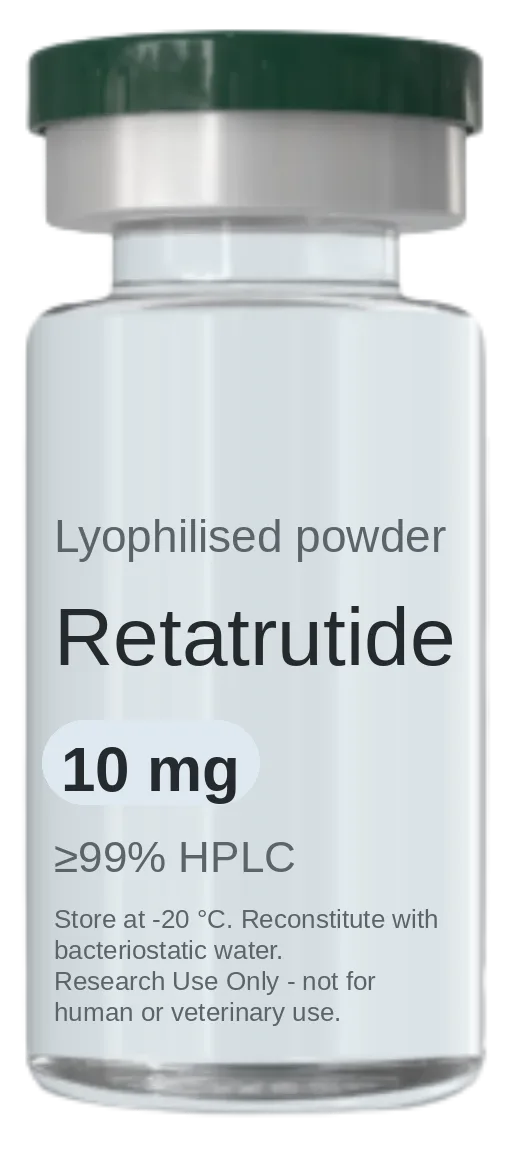
Retatrutide
Triple-agonist metabolic research peptide targeting GLP-1, GIP and glucagon receptors.
- Purity:
- ≥99% HPLC
- Sizes available:
- 10 mg

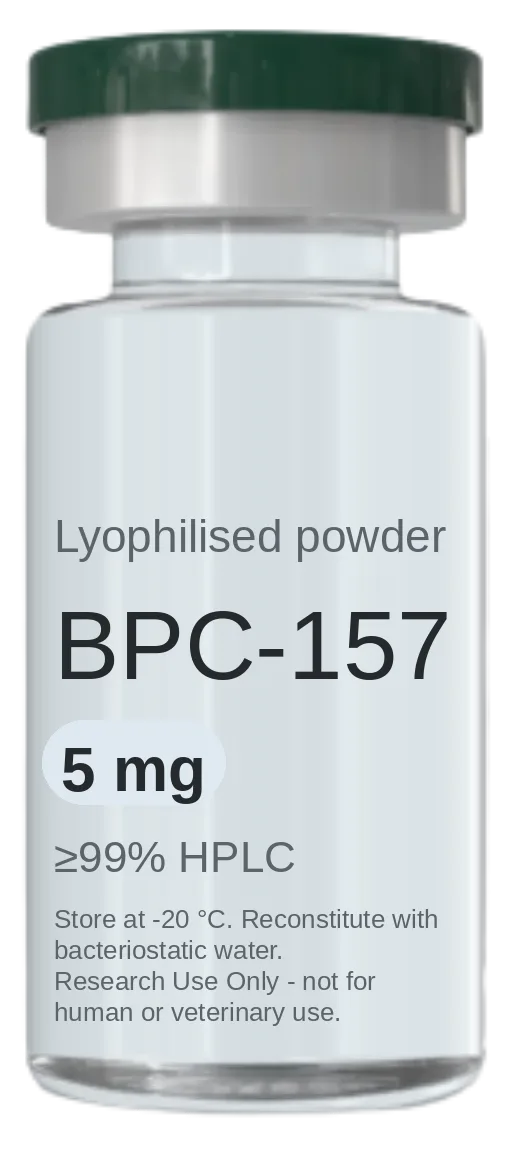
BPC-157 + TB-500
BPC-157 and TB-500 in a single vial — the pairing most studied together in tissue-repair research.
- Purity:
- ≥99% HPLC
- Sizes available:
- 5 mg + 5 mg
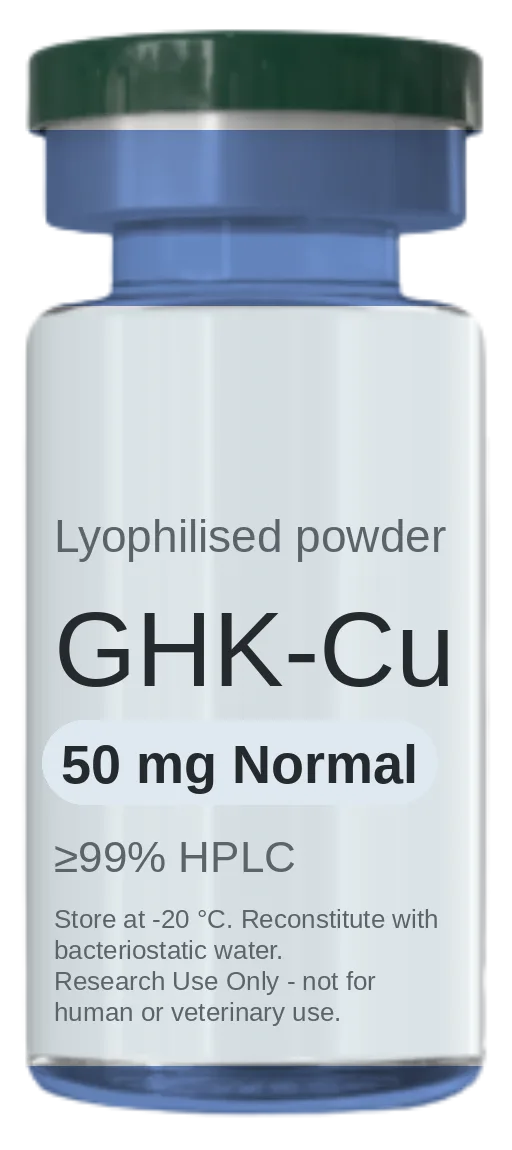
GHK-Cu (Copper Peptide)
Copper-binding tripeptide studied in extracellular matrix and dermal research models.
- Purity:
- ≥99% HPLC
- Sizes available:
- 50 mg Normal – 50 mg Plus
The consultation
One intake that settles goals, history and contraindications alongside compound, quantity, documentation and route — reviewed by a physician before anything ships.
More notes
-
Retatrutide vs. Tesamorelin: What's Different
Retatrutide and tesamorelin target different receptors and different research questions — here's what the documentation shows.
-
KPV vs. Selank: What's the Difference
KPV is an anti-inflammatory tripeptide; Selank is a nootropic peptide. We compare origin, research focus and documentation for each.
-
Importing Selank to Argentina for Research
Selank can be imported into Argentina as laboratory research material, with customs paperwork prepared for that purpose.