
Note
What Is Solid-Phase Peptide Synthesis
SPPS assembles amino acids on a solid resin, step by step. Research peptides verified by HPLC and certificate of analysis.
Solid-phase peptide synthesis (SPPS) is the method by which chains of amino acids are assembled sequentially, with each residue anchored to an insoluble polymer support called a resin. The growing chain stays fixed to that support for the entire process; excess reagents are washed away without losing the peptide. That is where the name comes from: the assembly work happens on a solid phase.
The origin: Merrifield and the resin
Bruce Merrifield described the first SPPS protocol in 1963 at Rockefeller University. Before his work, synthesizing a ten-amino-acid peptide in solution could take years: each step required an intermediate separation of the product, with accumulated losses at every stage. Merrifield proposed anchoring the first amino acid to a resin and adding the rest without separating anything between cycles. Excesses were washed away; the chain stayed put.
In 1984 he received the Nobel Prize in Chemistry for that contribution.
How each cycle works
The process repeats as many times as the target peptide has amino acids. Each cycle has four stages:
- Deprotection. The amino acid attached to the resin carries a protecting group on its alpha-amino terminus. That group is removed with a specific reagent — a base or an acid, depending on the chemistry chosen — leaving the terminus free for the next bond.
- Coupling. The next amino acid, with its side chains protected, is activated with a coupling agent and joined to the free amino terminus. A peptide bond forms.
- Washing. Excess reagents and unreacted amino acid are removed by filtering and washing the resin. Because the chain remains anchored to the support, no product is lost at this step.
- Repetition. The cycle restarts from the deprotection of the newly formed amino terminus.
Once the full sequence is complete, the chain is cleaved from the resin with an acid solution — typically trifluoroacetic acid — and the side-chain protecting groups are removed at the same time.
Fmoc chemistry and Boc chemistry
Two protection strategies dominate modern SPPS:
- Fmoc chemistry (fluorenylmethyloxycarbonyl). The alpha-amino protecting group is removed with piperidine, a relatively mild base. Side chains are protected with acid-labile groups stripped at the end. This is the most widely used approach in research laboratories because it scales well on automated synthesizers and the reagents are less hazardous than those in the alternative.
- Boc chemistry (tert-butyloxycarbonyl). Alpha-amino deprotection is done with repeated trifluoroacetic acid treatments; final resin cleavage requires hydrogen fluoride. That requirement limits its use to laboratories with specialized infrastructure, but Boc chemistry remains the option for sequences that Fmoc cannot synthesize with acceptable efficiency.
The choice between the two depends on the peptide sequence, the scale, and the equipment available.
The resin as support
The resin is an insoluble polymer — typically crosslinked polystyrene — functionalized with groups that allow the first amino acid to be anchored. The degree of crosslinking determines how much the polymer swells in the organic solvents used throughout the process. Adequate swelling facilitates reagent diffusion and improves coupling efficiency.
Resins are designed for different C-terminal end groups: some release the peptide as a free acid; others release it as an amide. That difference matters because many natural peptides carry a C-terminal amide, and synthesizing them as a carboxylic acid changes their behavior in an experiment.
Purification by HPLC
The crude synthesis mixture is not a single compound. It contains the target peptide alongside truncated sequences — chains that missed one or more amino acid incorporations — deletion products, and byproducts from side reactions such as aspartimide formation or racemization. Purification is done by high-performance liquid chromatography (HPLC) in reversed-phase mode.
The sample passes through a column that separates molecules by hydrophobicity. The target peptide elutes at its characteristic retention time and is collected in that fraction. Purity is calculated as the area of the main peak as a proportion of the total chromatogram area.
For research peptides, the industry standard requires a minimum of 95%; more specialized laboratories work to specifications above 99%. PeptoClinic supplies peptides to a purity specification of ≥99% by HPLC. The lot chromatogram is included with each order.
The certificate of analysis
A certificate of analysis (COA) reports the analytical results for a specific lot. A valid COA includes: compound name, laboratory task number, declared and measured weight, HPLC purity percentage, and — in most cases — molecular mass confirmation by mass spectrometry. Correct mass is evidence that the sequence is the expected one; purity is evidence that the dominant sequence is that one.
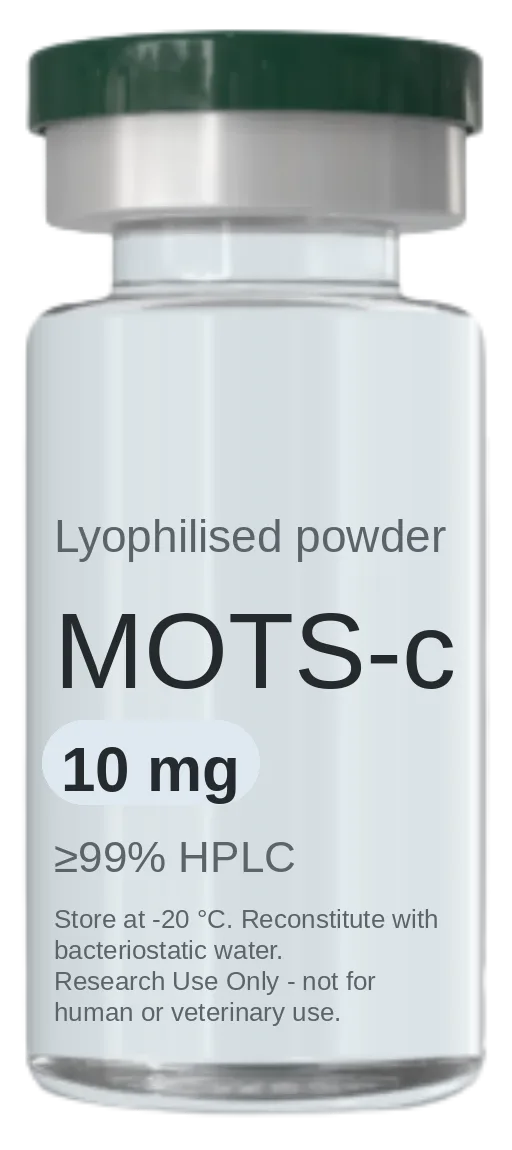
A COA is only meaningful if the laboratory that issued it can be verified independently. Janoshik Analytical, which analysed PeptoClinic lots on April 13, 2026, is a recognized reference in research peptide documentation. Task 136921, covering retatrutide, returned a purity of 99.893% with an actual content of 11.96 mg in a vial labelled as 10 mg. Task 136923, covering MOTS-c, reported 99.669% purity. Full reports are published on the PeptoClinic quality page.
Lyophilization and storage
After purification, the peptide in aqueous solution is frozen and placed under vacuum. Water passes directly from solid to vapor without going through the liquid phase. The result is a dry powder — the lyophilisate — that is more stable than a solution during shipping and storage.
Lyophilization does not alter the peptide sequence. The powder is reconstituted in the laboratory with the solvent appropriate to the experiment. PeptoClinic ships peptides as lyophilised powder in vials, the standard format for research material: as a powder it tolerates the ambient temperature of transit, so it does not travel in a cold chain. Shipping details are on the shipping page.
For laboratory research only
All material supplied by PeptoClinic is intended exclusively for in vitro research and laboratory use — Research Use Only (RUO). It is not a medicine, a supplement, or a food. It is not approved or intended for use in humans or animals.
PeptoClinic is not a pharmacy, a clinic, or a healthcare provider. No prescription is issued or required. Inquiries about human-use protocols are declined without exception.
If your program needs a characterized synthesis peptide, a written quote can be requested through the PeptoClinic catalog.
Frequently asked questions
Why is it called "solid-phase" synthesis?
Because the growing peptide chain remains anchored to a solid support — the resin — throughout the entire assembly. Reagents circulate in solution; the product does not. That arrangement allows excess reagents to be washed away without losing the peptide at each step, which is what makes the process practical at laboratory scale.
How many amino acids can an SPPS peptide have?
Most peptides synthesized by SPPS have between 2 and 50 amino acids. Beyond that range, accumulated coupling errors reduce crude purity and complicate downstream purification. For longer proteins, other strategies are used — such as recombinant expression in bacteria or yeast.
What is the difference between SPPS and solution-phase synthesis?
In solution-phase synthesis, both the growing peptide and the reagents are dissolved: the product must be separated from excess reagents after each step, with intermediate purifications that accumulate losses. In SPPS the chain is fixed to the resin; washing removes the excess, and the process is much faster to scale.
What is a protecting group?
A protecting group is a molecular fragment added temporarily to an amino acid to block the reactive sites that should not participate in a given coupling step. Without protection, an amino acid with multiple reactive groups would form bonds in the wrong place and corrupt the sequence. Protecting groups are selectively removed when the synthesis requires it.
What impurities typically appear in crude SPPS material?
The most common are truncated peptides — chains that missed one or more amino acid incorporations — deletion products, aspartimide, and incomplete-coupling residues. Preparative HPLC separates these impurities from the target compound. The COA confirms that the final lot purity meets the declared specification.
Does SPPS produce the same peptide the body makes?
For sequences without special modifications, the amino acid chain is identical. What can differ is stereochemistry: natural amino acids are L-configuration, but SPPS can also incorporate D-amino acids for designed peptides. When a natural peptide carries post-translational modifications — such as side-chain acylation — those modifications are added in steps outside the standard cycle.
What documentation should I ask for from a research peptide supplier?
The minimum is: lot number, HPLC chromatogram with purity percentage, mass spectrometry report confirming molecular mass, and a laboratory task number that can be verified independently. A supplier that does not provide that documentation cannot prove that what it ships matches the label. PeptoClinic lot reports are published on the quality page.
Why does a vial sometimes contain more than the labelled weight?
Weighing lyophilised powder accumulates variation from tare, residual moisture, and adherence to the vial walls. Manufacturers typically add an overfill to ensure the vial contains at least the declared amount. The COA for PeptoClinic task 136921 recorded 11.96 mg in a vial labelled as 10 mg. The COA figure is the one that matters for designing an experiment; the label figure is nominal.
Compounds mentioned
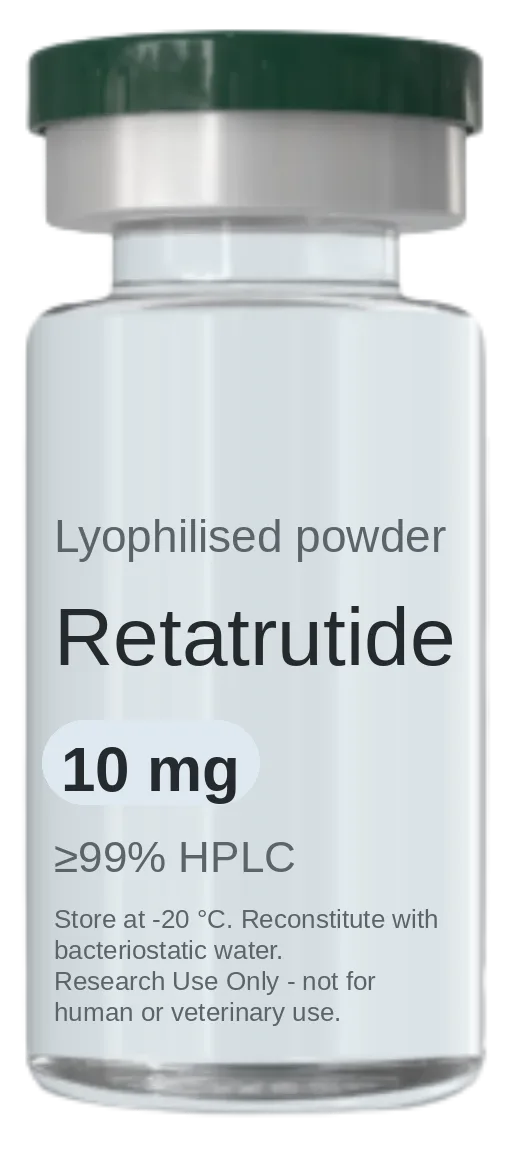
Retatrutide
Triple-agonist metabolic research peptide targeting GLP-1, GIP and glucagon receptors.
- Purity:
- ≥99% HPLC
- Sizes available:
- 10 mg
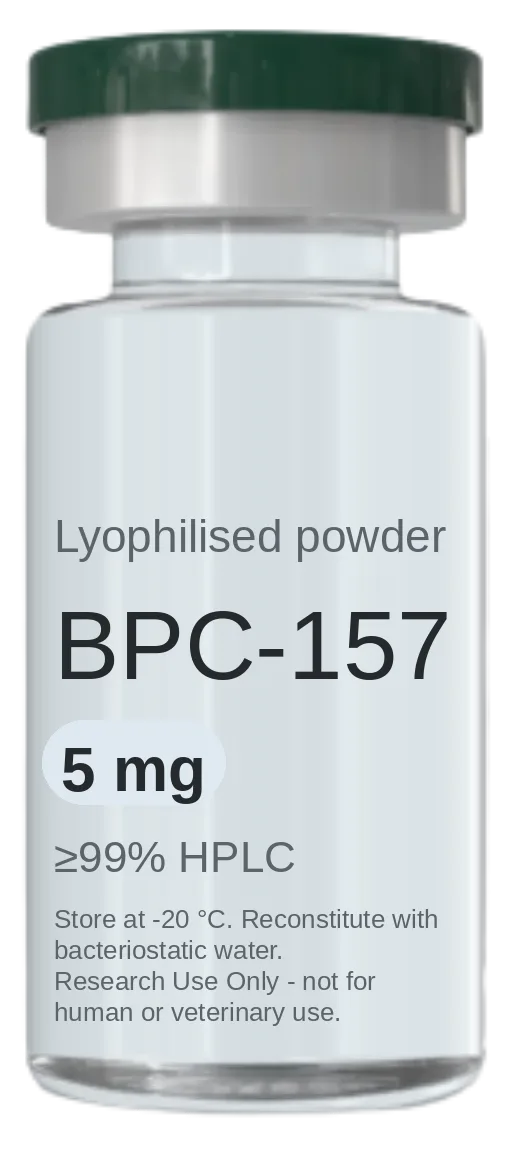
BPC-157 + TB-500
BPC-157 and TB-500 in a single vial — the pairing most studied together in tissue-repair research.
- Purity:
- ≥99% HPLC
- Sizes available:
- 5 mg + 5 mg
The consultation
One intake that settles goals, history and contraindications alongside compound, quantity, documentation and route — reviewed by a physician before anything ships.
More notes
-
Can You Ship Peptides as a "Sample"?
Why declaring a paid research peptide shipment as a duty-free commercial sample is invalid in Argentina, and what paperwork works instead.
-
Semax vs LL-37: What's the Difference
Semax is a synthetic heptapeptide; LL-37 is a human cathelicidin. Different origin, structure and research field, side by side.
-
Peptide Package Under Someone Else's Name
What happens if a research peptide shipment reaches Argentina labeled to someone other than the declared importer.