
Note
What Is the CAS Number of a Peptide?
The CAS number identifies a molecule unambiguously. Here is how to use it to verify that a research peptide is what the label says.
A CAS number (Chemical Abstracts Service number) is a unique numerical identifier assigned by CAS — a division of the American Chemical Society — to every registered chemical substance. For a research peptide, that number identifies the exact molecule: not the brand, not the trade name, not the batch. Two products sharing the same CAS number are the same molecule. Two products claiming to be the same compound but carrying different CAS numbers are not.
How a CAS number is structured
A CAS number follows a fixed format: groups of digits separated by hyphens, with a single check digit at the end. The first group can hold up to seven digits, the second always has two, and the third is one digit calculated as a checksum from the preceding sequence.
BPC-157 carries the CAS number 137525-51-0. Ipamorelin is 170851-70-4. Neither of those numbers is assigned to any other molecule anywhere in the world. If a supplier lists "compound CAS 137525-51-0," they are listing BPC-157 regardless of whatever name appears on the front of the label.
The checksum is not decorative. It is calculated from a published formula and lets anyone catch a typo in the number without a database lookup. A registry that accepts a CAS number with a failing checksum has dirty data. This says nothing about purity, but it says something about the integrity of the record.
What a CAS number does not guarantee
A CAS number says nothing about the quality of a batch. It confirms identity — that the molecule in the vial is the one declared, when the analysis backs that up — but it does not say whether a peptide is 95% pure or 99%. Purity is established by the chromatogram in the certificate of analysis (CoA).
Reading a certificate of analysis is the step that follows identity verification. The two checks work together: the CAS identifies what the compound is, the CoA reports what condition it is in. Neither is sufficient on its own.
What it does in a research material purchase
In practice, the CAS number is the first verification step available before material arrives.
When a supplier publishes a certificate of analysis, that document must list the CAS number of the compound that was analysed. If it does not, the traceability is incomplete. If it does but the number does not match the label, the document is either an error or a fabrication.
The check takes under a minute: search the number on PubChem — the National Institutes of Health database, free and open — and confirm that the name, molecular formula, and molecular weight match what the label states. Three data points need to align on every purchase:
- The CAS number on the supplier's label.
- The CAS number in the certificate of analysis issued by the testing laboratory.
- The CAS number that PubChem returns for that compound.
When all three match, the identity of the compound has documentary support. When any one differs, the discrepancy needs an answer before anything moves forward.
The CAS number in a Janoshik certificate
The certificates published by PeptoClinic are issued by Janoshik Analytical, a European reference laboratory for research peptides. Janoshik reports include the compound name, the CAS number, the task number assigned to that analysis, and the assay results.
The certificate for the Retatrutide batch (task 136921) records 99.893% purity. The certificate for MOTS-c (task 136923) records 99.669% purity. Both include the CAS number for each compound. That number can be cross-referenced with PubChem, and the task number can be used to confirm the certificate corresponds to the real analysis rather than an edited copy.
That cross-reference — CAS on the label, CAS in the certificate, CAS in the public registry, task number verifiable at the issuing laboratory — is the minimum chain of verification PeptoClinic applies to every batch and recommends for any research material purchase, its own or otherwise.
CAS numbers for compounds in the catalogue
The PeptoClinic catalogue covers peptides with verifiable records in public databases. A few of the most searched:
- BPC-157: CAS 137525-51-0. A pentadecapeptide derived from the human gastric acid-binding protein. Verifiable on PubChem.
- Ipamorelin: CAS 170851-70-4. A pentapeptide growth hormone secretagogue in the peptidomimetic family. Verifiable on PubChem.
- GHK-Cu: CAS 89030-95-5. The copper complex of the tripeptide glycyl-L-histidyl-L-lysine. Verifiable on PubChem.
For newer compounds or recently synthesised analogues, the PubChem record may be incomplete or not yet exist. In those cases, the primary source is the scientific publication that first described the synthesis — where the CAS number is formally declared. A compound with no verifiable entry in any open database also has a thinner bibliographic footprint, which is information in itself.
Where to verify a CAS number
[PubChem](https://pubchem.ncbi.nlm.nih.gov) is the most comprehensive database for research peptides. Maintained by the NIH, it covers the IUPAC name, molecular formula, molecular weight, synonyms, and bibliographic references. Access is free with no account required.
[ChemSpider](https://chemspider.com), maintained by the Royal Society of Chemistry, is useful as a second source when a compound has multiple CAS numbers associated with different forms or salts of the same base molecule.
PeptoClinic shipments include compound identification documentation, the batch's analysis task number, and the laboratory certificate. That documentation travels with the material from origin and allows verification at destination without depending on any additional data from the supplier.
This material is for laboratory research
All material supplied by PeptoClinic — including the compounds identified by the CAS numbers mentioned in this post — is intended exclusively for laboratory research (Research Use Only, RUO): in vitro studies and use in controlled research environments.
None of these compounds is approved or intended for human or veterinary consumption. They are not medicines, they are not supplements, and they hold no approval from any regulatory authority — FDA, ANMAT, or equivalent — for any therapeutic use. PeptoClinic does not issue use protocols, does not provide administration guidance, and does not answer clinical inquiries.
A CAS number does not change that framing. It identifies a molecule with global precision. It says nothing about regulatory status or safety for any particular application.
Frequently asked questions
What if a supplier does not publish a CAS number for their compound?
A supplier without a published CAS number offers no mechanism for identity verification. You can ask for it, but if they cannot provide it alongside a certificate of analysis carrying the same number, there is no way to confirm what molecule is in the vial. The absence of a verifiable CAS number is itself information about the supplier.
Can a CAS number on a label be wrong?
Yes. Typographic errors, CAS numbers for related but distinct forms — the free base versus a salt, for example — and outright invented numbers all appear in the market. That is precisely why the cross-reference with PubChem and with the certificate of analysis is the control, not the number printed on the label by itself.
Does the CAS number change between batches or suppliers?
No. The CAS number identifies the molecule, not the batch or the manufacturer. BPC-157 carries the same CAS number regardless of who synthesised it or when. What varies between batches is purity and impurity profile, which is what the certificate of analysis documents.
Do all research peptides have a CAS number?
Most research peptides with published literature have a CAS number. Modified analogues with limited publication history, specific conjugated forms, or very recent compounds may not have a registry entry yet, or may have incomplete records in public databases.
Does a CAS number mean the material is pure?
No. It means the material is the molecule it claims to be — if the analysis supports that — not that it meets any particular quality standard. Purity is the quantitative result in the certificate of analysis. The two data points are complementary; one without the other is incomplete.
How do I know a certificate of analysis has not been altered?
Janoshik Analytical allows certificate verification using the task number assigned to each analysis. That number appears on every certificate published by PeptoClinic. A supplier who cannot provide a task number verifiable directly at the issuing laboratory cannot demonstrate the certificate is original.
Does the CAS number appear in customs documentation for international shipments?
The CAS number is part of the standard technical documentation for international research material shipments. It does not replace shipment-specific customs documents, but it is part of the compound identification package. Documentation accompanying PeptoClinic shipments includes the CAS number and the analysis task number for each batch.
Where can I find PeptoClinic's certificates of analysis?
[In the quality section of the site](/en/quality/), with the task number for each batch analysed by Janoshik Analytical. From there, the task number can be taken directly to the laboratory's platform to confirm the certificate corresponds to the actual analysis.
Compounds mentioned
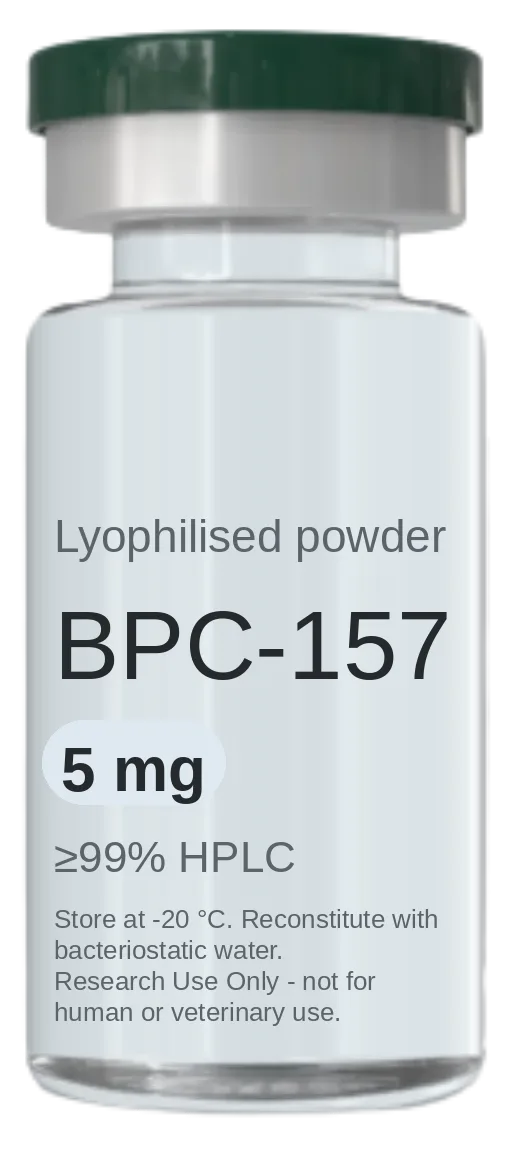
BPC-157 + TB-500
BPC-157 and TB-500 in a single vial — the pairing most studied together in tissue-repair research.
- Purity:
- ≥99% HPLC
- Sizes available:
- 5 mg + 5 mg
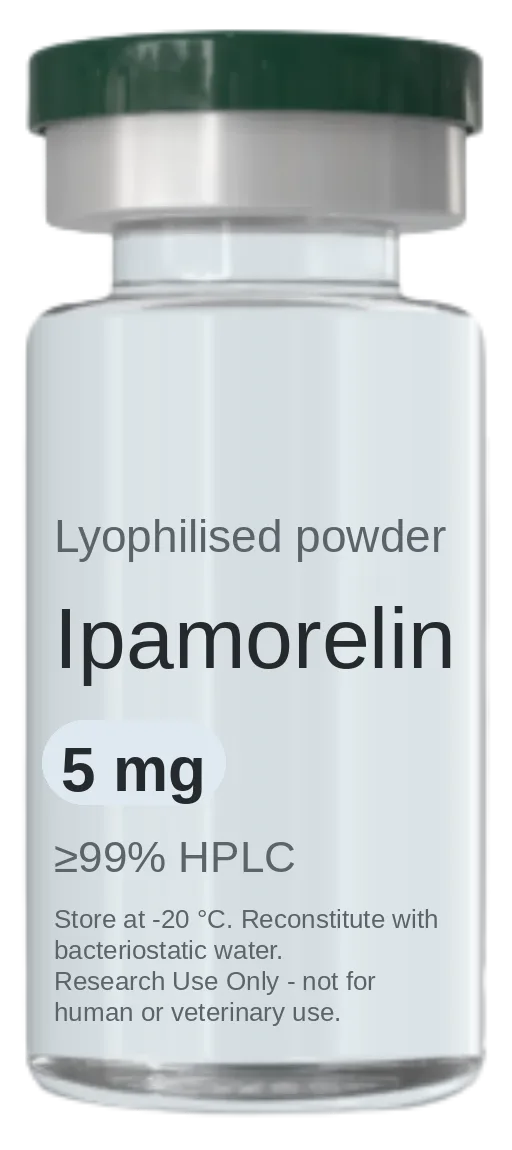
Ipamorelin
Selective ghrelin receptor (GHS-R1a) agonist pentapeptide.
- Purity:
- ≥99% HPLC
- Sizes available:
- 5 mg – 20 mg
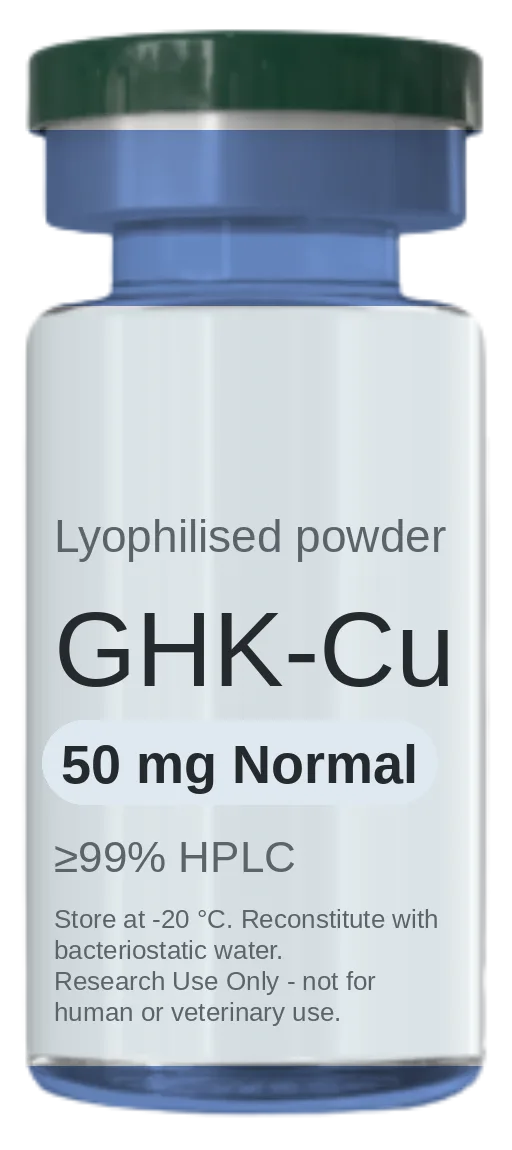
GHK-Cu (Copper Peptide)
Copper-binding tripeptide studied in extracellular matrix and dermal research models.
- Purity:
- ≥99% HPLC
- Sizes available:
- 50 mg Normal – 50 mg Plus
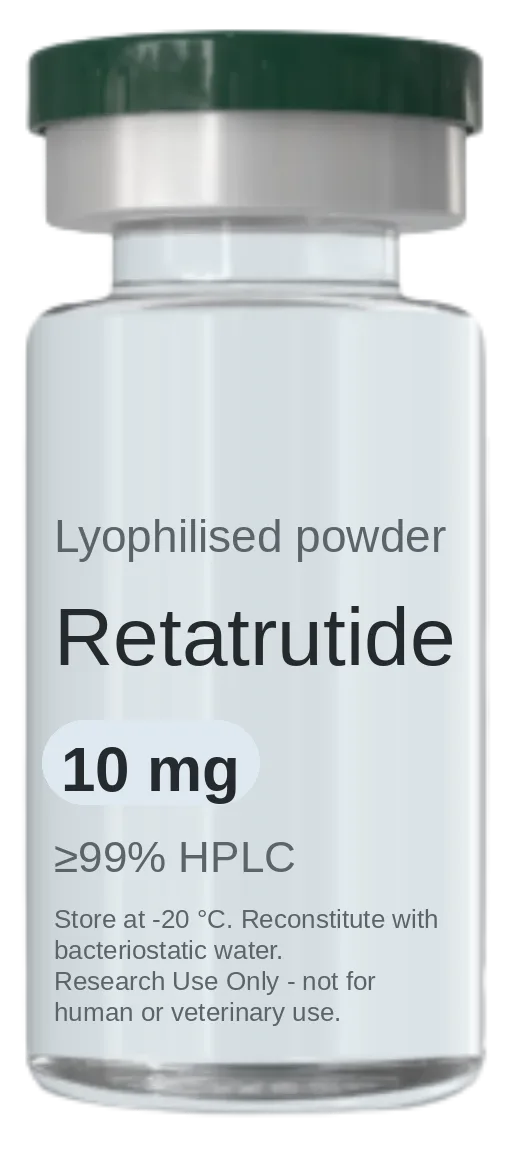
Retatrutide
Triple-agonist metabolic research peptide targeting GLP-1, GIP and glucagon receptors.
- Purity:
- ≥99% HPLC
- Sizes available:
- 10 mg
The consultation
One intake that settles goals, history and contraindications alongside compound, quantity, documentation and route — reviewed by a physician before anything ships.
More notes
-
Retatrutide vs. Tesamorelin: What's Different
Retatrutide and tesamorelin target different receptors and different research questions — here's what the documentation shows.
-
KPV vs. Selank: What's the Difference
KPV is an anti-inflammatory tripeptide; Selank is a nootropic peptide. We compare origin, research focus and documentation for each.
-
Can You Import KPV Into Argentina?
Yes — KPV ships to Argentina as laboratory research material, with the customs paperwork prepared for that purpose.