
Note
Why Lyophilized Peptide Ships as Powder
A lyophilized peptide ships as powder because removing water stops chemical degradation. Stability, preservation, and international transport.
A lyophilized peptide ships as powder because water is the primary driver of its degradation. Remove the water, and the two main destruction pathways — hydrolysis of peptide bonds and oxidation of vulnerable amino acids — slow to a rate that is effectively negligible under standard transport and storage conditions. Lyophilization removes that water while leaving the molecular structure intact. What arrives at the receiving laboratory is chemically equivalent to what left the production facility.
How water degrades a peptide in solution
A peptide dissolved in aqueous solution faces two simultaneous degradation processes:
- Hydrolysis: water molecules attack peptide bonds directly. The rate depends on pH, temperature, and the specific amino acid sequence, but the process runs continuously regardless of those variables.
- Oxidation: dissolved oxygen reacts with amino acids including methionine, cysteine, and tryptophan, altering the compound's structure and its biological activity under assay conditions.
Together these two mechanisms give a peptide in solution a working shelf life measured in days to weeks — even refrigerated. At ambient temperature the degradation accelerates substantially. For an international shipment that may wait hours in a customs holding facility, travel through a cargo hold with no active temperature control, or sit in a distribution center through a weekend, maintaining liquid form without guaranteed door-to-door cold chain is technically inviable. In practice, that guarantee does not exist for most routes.
What lyophilization does to the peptide
Lyophilization is controlled sublimation: water passes from solid directly to vapor without moving through the liquid phase. The process has three stages:
1. The dissolved peptide is frozen to a very low temperature. 2. Vacuum is applied. The frozen water sublimes without thawing. 3. A secondary drying stage removes the bound water that persists in the molecular structure after primary drying.
What remains is a dry powder or cake with residual moisture below 3%. At that level, the water available to drive hydrolysis is close to zero. The molecular structure of the peptide, because it never passed through a liquid phase during drying, is preserved.
This technique is not specific to research peptides. Lyophilized vaccines, plasma proteins, and antibiotics use the same principle for the same reasons: maximum stability with minimal cold-chain requirements during transport. The pharmaceutical and research supply industries arrived at the same conclusion independently, and the rationale is documented in published literature on peptide stability going back to the 1990s.
Stability during international shipment
A correctly packaged lyophilized peptide tolerates the ambient temperatures of a standard air or sea shipment — generally below 25 °C along most routes — without measurable degradation. That tolerance is what makes international shipping of this class of material viable.
Packaging contributes as much as the drying step itself. A vial sealed under inert atmosphere — nitrogen or argon rather than air — prevents ambient humidity and oxygen from reaching the powder between production and the moment the laboratory opens the vial. Once the seal is broken, the laboratory's own storage conditions determine the ongoing stability.
For lots shipped to Argentina and other South American destinations, batch documentation travels with the order. PeptoClinic Research Supply cannot control how long a shipment remains in customs, but the supplier can certify the state of the material at the time of dispatch. That is the function of the certificate of analysis.
The certificate of analysis documents the powder
A batch certificate of analysis (CoA) documents purity at the moment of analysis — which is performed on the lyophilized powder in its final container. For lots published on PeptoClinic, reports from Janoshik Analytical do exactly that: they analyze the finished vial and express the result as a percentage.
Task report 136921 confirms 99.893% purity for a retatrutide vial, with 11.96 mg of actual content against a 10 mg label. Task report 136923 confirms 99.669% purity for MOTS-c. The lowest published purity across all documented lots is 99.669%.
If material had traveled in solution and degraded in transit, the purity measured on arrival would be lower than what was certified at dispatch. The chain of evidence — analysis on the powder, before shipment, with a task number verifiable on the laboratory's own site — is what makes the certificate useful rather than decorative. The published reports are available in the quality section.
Why no practical alternative exists
The alternatives to lyophilized powder for shipping research peptides are limited:
- Solution: convenient at point of use, requires continuous cold chain, short shelf life. Not viable for international routes without guaranteed temperature control.
- Compressed solid forms (tablets, capsules): applicable to small, stable molecules that survive the digestive environment. Peptides are amino acid chains that degrade in that environment; this form is not relevant for materials designed for in vitro laboratory use.
- Cryogenic storage with dry-ice transport: preserves peptides in solution but carries high costs, faces restrictions on air freight, and introduces a critical failure point — the thaw — that lyophilized form eliminates entirely.
The research supply industry's convergence on lyophilized powder is not convention. It is the result of each alternative carrying a failure mode that lyophilized form does not share.
Storage after the lot arrives
The powder arrives stable, but laboratory storage still requires controlled conditions because the period between receipt and use may be weeks or months. Most lyophilized peptides are stored at −20 °C in sealed vials, protected from light and humidity. Some compounds tolerate 2–8 °C for short-term use.
The exact specifications by compound appear in the lot documentation, not in a generic product description. The data sheet that ships with the vial corresponds to that specific lot, derived from that lot's stability testing. You can see the formats and specifications for currently available lots in the catalog.
Research use only
The lyophilized peptides supplied by PeptoClinic Research Supply are research materials for exclusive laboratory use — in vitro and preclinical research. They are not medicines, supplements, or food products. No compound in the catalog is approved or intended for human or veterinary consumption, diagnosis, or treatment.
No claims regarding these compounds have been evaluated by the FDA, ANMAT, or any equivalent regulatory authority. PeptoClinic Research Supply is not a pharmacy, a clinic, a telehealth provider, a compounding service, or a source of dosing or administration guidance. No prescription is written, filled, or required. Inquiries about human-use protocols are declined.
Frequently asked questions
Why does a peptide in solution degrade faster than in powder form?
In solution, water molecules attack peptide bonds directly through hydrolysis. The reaction runs continuously, and its rate increases with temperature and varies with pH. In lyophilized powder with residual moisture below 3%, the water available to drive that reaction is nearly absent, and degradation becomes negligible across the temperature ranges typical of transport and standard laboratory storage.
Does lyophilization change the peptide's structure?
The process is specifically designed to avoid it. By subliming water without passing through a liquid phase, lyophilization avoids the conditions where hydrolysis and denaturation occur. The verification is analytical: purity is measured on the finished product. If the process had damaged the molecular structure, the measured purity would be noticeably lower than that of the starting material.
Does a lyophilized peptide require cold chain during transport?
Most lyophilized peptides are stable at ambient temperature for the duration of a standard shipment, which is part of the reason the format is used. Storage at the destination does require refrigeration or freezing — as specified in lot documentation — because material may be held for weeks or months before laboratory use.
What does it mean when a vial contains more mass than the label states?
It is standard practice and is documented. Task report 136921 for retatrutide records 11.96 mg of actual content in a vial labeled 10 mg. During filling, a controlled overage is added to ensure the declared minimum content is present even accounting for process losses. The overage is traceable because the certificate of analysis quantifies it.
How can I confirm that the powder I receive matches the stated purity?
The certificate of analysis issued by an independent laboratory is the only document that answers that question with a traceable figure. For lots published on PeptoClinic, Janoshik Analytical reports include a task number, the date of analysis, and the result as a percentage. The published reports are available in the [quality section](/en/quality/).
How long can a sealed lyophilized peptide be stored?
It depends on the compound, vial type, inert atmosphere used during packaging, and storage temperature. Stability data come from lot-specific testing and are declared in the documentation that ships with the product. As a general reference, lyophilized materials stored at −20 °C in inert-sealed vials carry declared stability periods of 12 to 36 months depending on the manufacturer.
Is research lyophilized powder the same as a pharmaceutical lyophilized biologic?
The technique is identical. What differs is the regulatory framework. A pharmaceutical lyophilized biologic is manufactured under drug regulations and carries certifications from health authorities. Research peptides are supplied under the RUO (Research Use Only) framework and are characterized by analytical purity, not by approvals for human or veterinary use.
Where can I find which lyophilized compounds PeptoClinic currently carries?
The [catalog](/en/catalog/) lists available compounds with their format specifications. No prices are published. Each order is quoted according to compound, quantity, and delivery destination. For shipments to Argentina, documentation is prepared for import as laboratory reference material.
Compounds mentioned
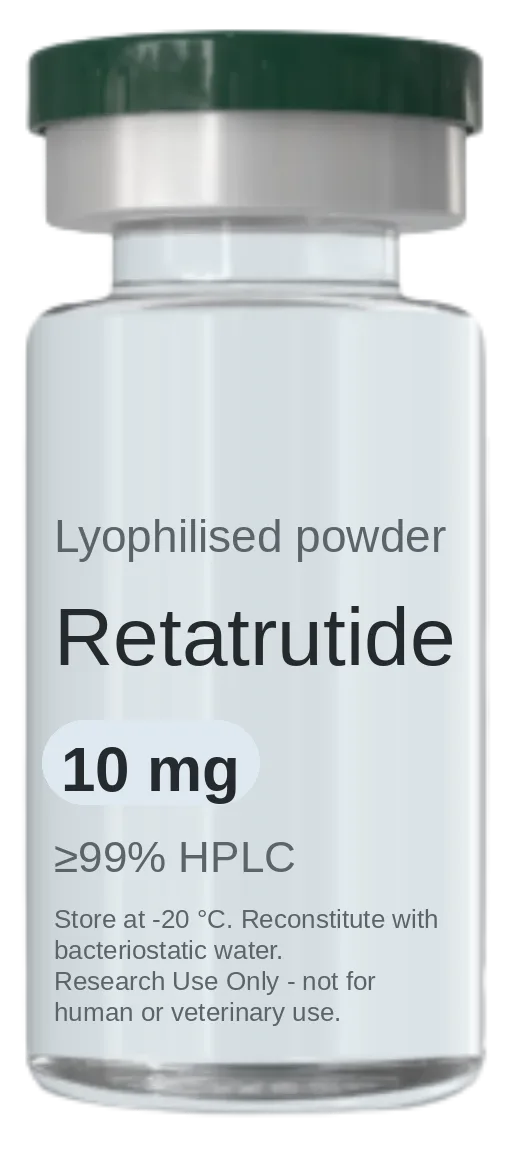
Retatrutide
Triple-agonist metabolic research peptide targeting GLP-1, GIP and glucagon receptors.
- Purity:
- ≥99% HPLC
- Sizes available:
- 10 mg
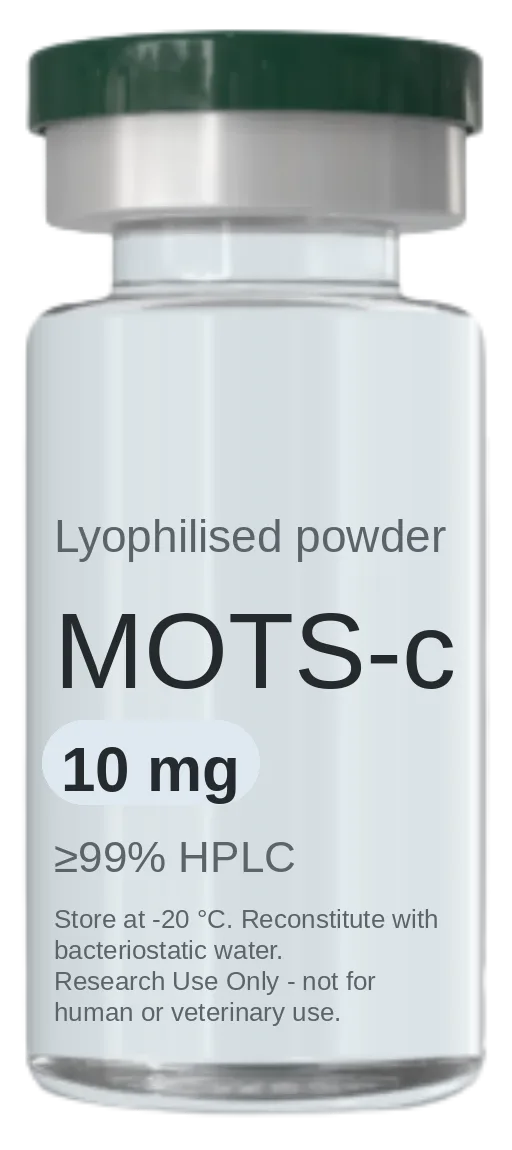
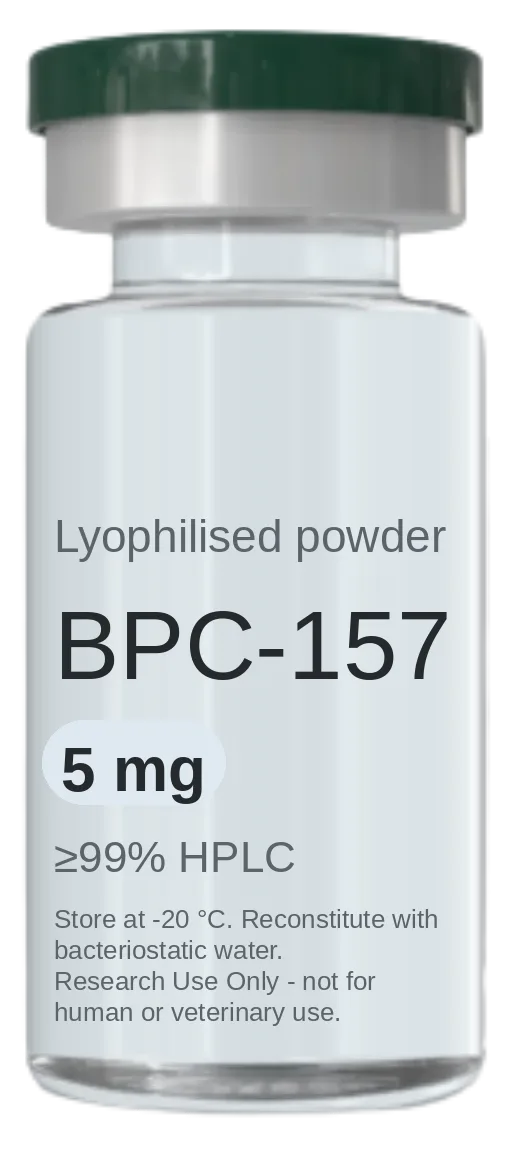
BPC-157 + TB-500
BPC-157 and TB-500 in a single vial — the pairing most studied together in tissue-repair research.
- Purity:
- ≥99% HPLC
- Sizes available:
- 5 mg + 5 mg
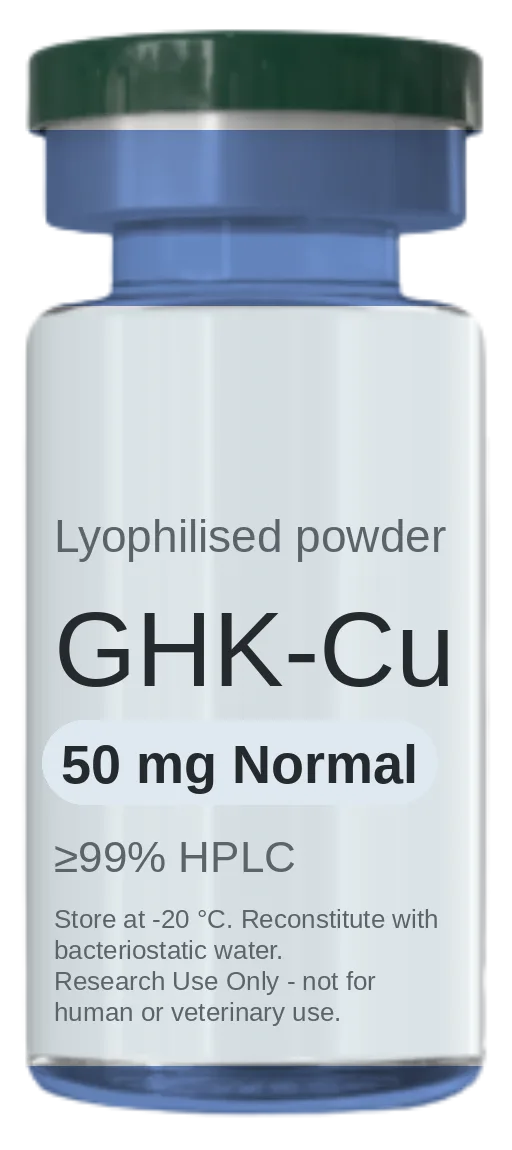
GHK-Cu (Copper Peptide)
Copper-binding tripeptide studied in extracellular matrix and dermal research models.
- Purity:
- ≥99% HPLC
- Sizes available:
- 50 mg Normal – 50 mg Plus
The consultation
One intake that settles goals, history and contraindications alongside compound, quantity, documentation and route — reviewed by a physician before anything ships.
More notes
-
Temporary Import Regime & Peptides
Temporary import covers goods that leave the country again; a research peptide shipment stays and gets used up.
-
Retatrutide vs GHK-Cu: What's the Difference
Retatrutide and GHK-Cu are different molecules studied for different reasons. Here's what each investigates and what documentation backs a batch.
-
Invoiced vs. Unbilled Peptide Suppliers
What changes when a research peptide supplier invoices the transaction versus one that takes payment and leaves no paper trail.