
Note
Why Research Peptides Have No Package Insert
Research peptides are not approved drugs. What ships with a lot is a certificate of analysis from an independent lab, not a package insert.
Research peptides do not come with a package insert because they are not approved drugs. The regulatory classification that governs them — Research Use Only (RUO) — excludes them from the approval process that generates that document. What ships with a lot of RUO material is a certificate of analysis, issued by an independent laboratory and verifiable against its records.
What a package insert is and what generates it
A package insert is a document issued by a regulatory authority — the FDA in the United States, ANMAT in Argentina — as part of drug approval. It contains the authorized indication, dosing schedule, contraindications, and safety data the manufacturer submitted during the regulatory review process.
That document exists because the product completed clinical trials in humans, demonstrated efficacy and safety across the phases the regulator requires, and received authorization to be sold with a specific therapeutic use. Without that authorization, there is no package insert to write. Research peptides have completed none of those steps, and do not claim to have.
What Research Use Only means
Research Use Only is a classification in United States regulation that equivalent international frameworks recognize. It means the material is intended exclusively for preclinical research: in vitro experiments, cell model studies, laboratory work.
The FDA publishes specific guidance on RUO products: they cannot be marketed with clinical indications, cannot be presented as diagnostics or treatments, and do not go through the approval process that applies to drugs. The absence of approval is not a gap — it is what defines the category.
PeptoClinic supplies research peptides to Argentina and other destinations as laboratory reference material, within that regulatory framework.
Why a package insert would be incorrect
A package insert written for an RUO product would be wrong from the first line. It could not declare an approved therapeutic indication because none exists. It could not specify a dosing schedule because that implies use in humans, which RUO does not authorize.
When a supplier attaches a package insert to a research peptide, there are two possibilities: they copied it from the approved analogous molecule — a different compound, with a different formulation, a different purity specification, and a different manufacturing process — or they authored one without backing from any regulatory body. In either case, the document misleads.
The correct alternative is not a more carefully worded package insert. It is a certificate of analysis.
What documentation ships with the material
A certificate of analysis (CoA) reports the results of the methods used to characterize a lot: identity, purity, content. It is issued by an independent analytical laboratory, and the data it contains is verifiable against the task number the laboratory assigns to each analysis.
PeptoClinic works with Janoshik Analytical, a laboratory that specializes in peptide analysis. The retatrutide lot analyzed on April 13, 2026 (task 136921) returned 99.893% purity by HPLC. The MOTS-c lot from the same date (task 136923) returned 99.669%. Both figures are verifiable directly in the laboratory's system.
Those numbers are what matters for a research laboratory. A package insert with a therapeutic indication that carries no regulatory backing does not add information — it replaces verifiable data with something that cannot be checked.
Published certificates for PeptoClinic lots are available in the quality section.
The difference between a studied compound and an approved one
Several compounds in the PeptoClinic catalogue have publications on PubMed documenting preclinical research or early-phase trials. That does not make them approved drugs.
Retatrutide, for example, has published phase 2 trial results in humans. Those trials are part of the research process — they are not its conclusion. A phase 2 trial characterizes a molecule under supervised research conditions, with the specific formulation that was tested and the population that was enrolled. The compound PeptoClinic supplies is laboratory reference material, not the product from that trial.
The distinction matters. RUO material is produced to analytical purity standards, characterized with the methods appropriate to that use, and documented with the CoA that use requires.
For laboratory research only
The material supplied by PeptoClinic is intended exclusively for in vitro and laboratory research. It is not approved for use in humans or animals. It is not a drug, a supplement, or a diagnostic product. No regulatory authority — the FDA, ANMAT, or any equivalent — has evaluated its safety or efficacy for therapeutic use.
PeptoClinic is not a pharmacy, a clinic, or a source of medical guidance. No prescriptions are written or filled. Requests for administration guidance or human-use protocols are declined. For research programmes that need documented material, the catalogue describes what is available.
What makes an RUO supplier reliable
Some suppliers publish no third-party analysis. Others publish reports without a verifiable task number. In the first case there is no way to know what was purchased; in the second, the document cannot be confirmed.
What distinguishes a supplier is not the insert they attach to the vial. It is the quality of the analysis they publish: who ran it, when, by which method, and whether the task number actually resolves to a record in the laboratory's system.
A supplier who attaches a package insert to RUO material does not add credibility. They add a document that is incorrect by definition, placed alongside one they should have verified first.
Frequently asked questions
Is a research peptide without a package insert illegal?
No. The absence of a package insert is the normal condition for RUO material. A package insert requires regulatory approval that research peptides do not have and, while they operate in the RUO category, are not intended to have. The document that should accompany the material is a certificate of analysis from an independent laboratory.
What is the difference between RUO material and an approved drug?
An approved drug has a therapeutic indication authorized by a regulator, completed clinical trials in the relevant population, and a package insert that summarizes those results. RUO material has none of those three things and cannot be marketed as if it did. It is used in laboratories, not in patients.
Why do some suppliers publish package inserts for research peptides?
Because they present research material as if it were a consumer product. In no case does the insert they publish carry regulatory backing — it is text the supplier authored without authorization from any health authority. It may copy the insert from an approved analogous molecule, which is a different compound, or it may simply assert an indication that has no regulatory basis.
Does a CoA replace a package insert for research purposes?
A CoA answers the questions that matter for research: compound identity, purity as measured by HPLC, lot content. A package insert answers different questions — approved indication, patient dosing — that do not apply to RUO material. They are not interchangeable documents. For laboratory material, the CoA is the correct document.
How do I know a lot's CoA is genuine?
Janoshik Analytical assigns a task number to each analysis. With that number, the report can be looked up directly in the laboratory's system and compared against the document received. Task numbers for PeptoClinic lots are published in the quality section of the site.
Does importing RUO material into Argentina require a package insert?
No. The material is imported as laboratory reference material, not as a drug. The documents that accompany a shipment are those appropriate to that customs classification, not those required for a drug registered with ANMAT.
Can PeptoClinic advise on how to use these compounds in humans?
No. PeptoClinic does not advise on protocols, administration, dosing, or use in humans or animals. The material is for laboratory research and inquiries are handled within that scope.
Does every lot in the catalogue have a certificate of analysis?
PeptoClinic publishes available CoAs in the quality section. The declared purity standard for research peptides is ≥99% by HPLC. Each lot analysis is conducted by an independent laboratory and is verifiable with the assigned task number.
Compounds mentioned
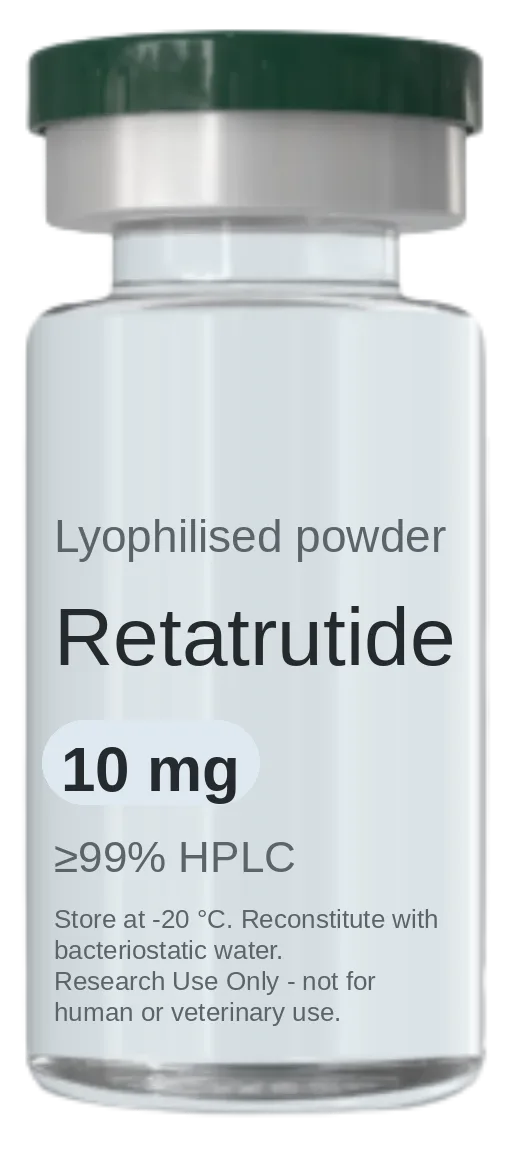
Retatrutide
Triple-agonist metabolic research peptide targeting GLP-1, GIP and glucagon receptors.
- Purity:
- ≥99% HPLC
- Sizes available:
- 10 mg
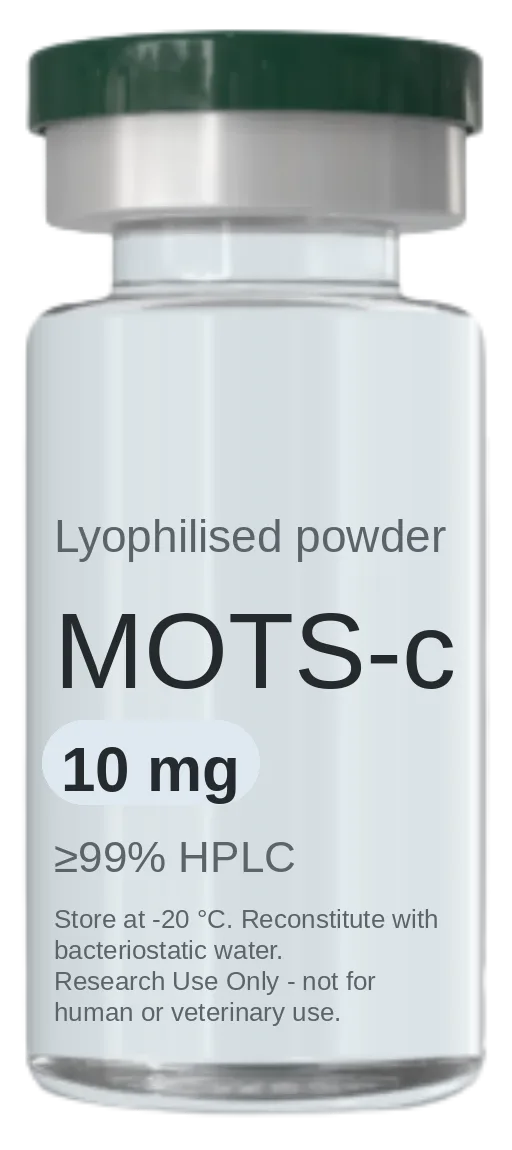
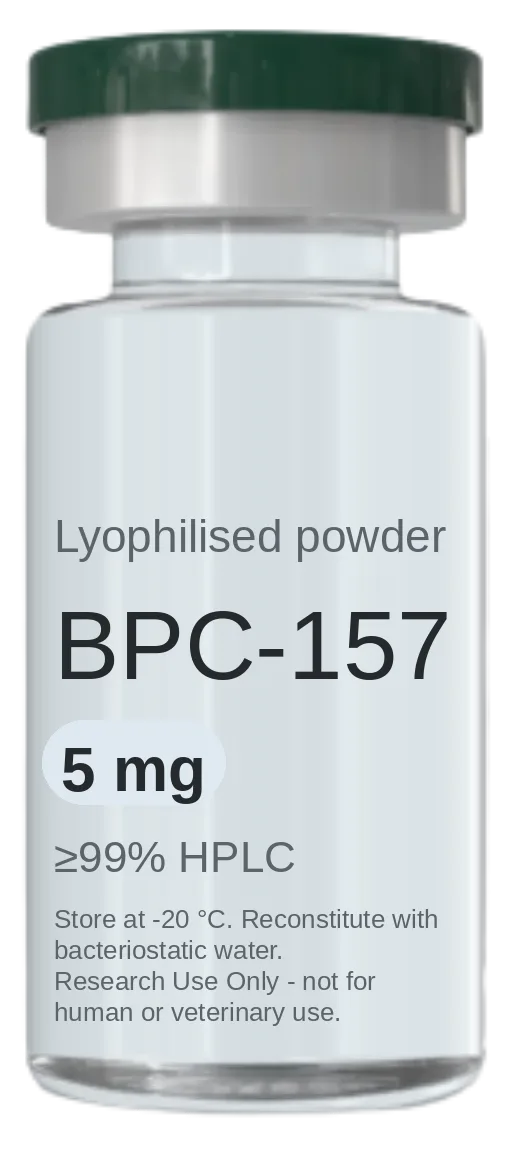
BPC-157 + TB-500
BPC-157 and TB-500 in a single vial — the pairing most studied together in tissue-repair research.
- Purity:
- ≥99% HPLC
- Sizes available:
- 5 mg + 5 mg
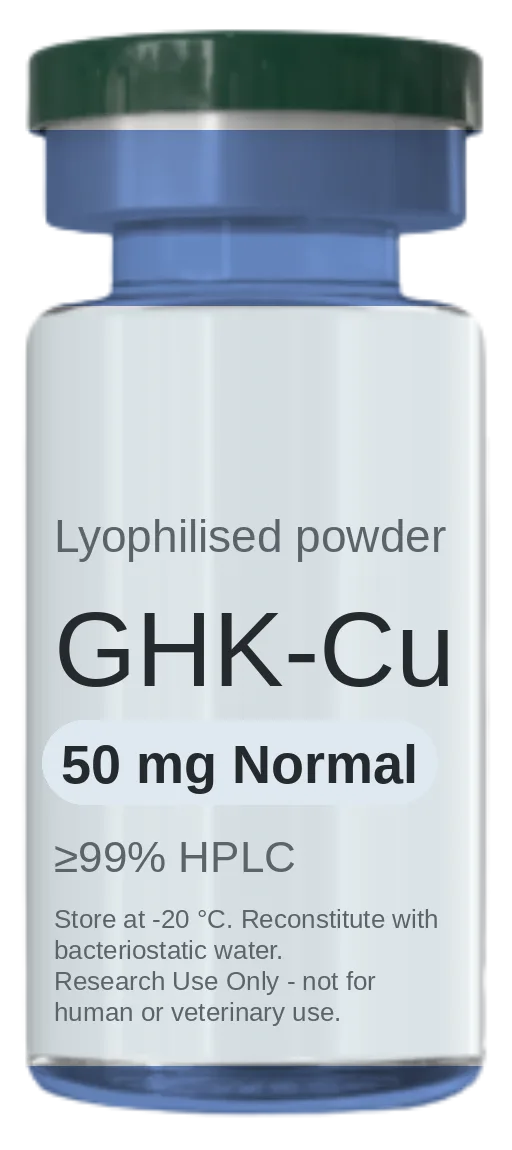
GHK-Cu (Copper Peptide)
Copper-binding tripeptide studied in extracellular matrix and dermal research models.
- Purity:
- ≥99% HPLC
- Sizes available:
- 50 mg Normal – 50 mg Plus
The consultation
One intake that settles goals, history and contraindications alongside compound, quantity, documentation and route — reviewed by a physician before anything ships.
More notes
-
Retatrutide vs CJC-1295: Key Differences
Retatrutide and CJC-1295 no DAC are different research peptide classes, with different mechanisms and different purity reports behind them.
-
Retatrutide vs BPC-157: Key Differences
Retatrutide and BPC-157 are research peptides with different mechanisms, families, and study objectives. Here's why they're not interchangeable.
-
Paying Argentina's Customs Duty on Peptides
How the import duty on a research peptide shipment is paid when it arrives in Argentina, and who actually collects it.