
Note
Bacteriostatic or Sterile Water for Peptides
By the PeptoClinic editorial team · Medically reviewed by Dr. Emily Parker
What separates bacteriostatic water from sterile water when reconstituting a peptide, and which one research protocols actually use.
Most research protocols reconstitute a lyophilized peptide with bacteriostatic water, not plain sterile water. The difference is the 0.9% benzyl alcohol dissolved in bacteriostatic water: it acts as an antimicrobial preservative, which lets the same vial be punctured multiple times over several weeks without becoming contaminated. Sterile water for injection carries no preservative at all, so once the septum is punctured it's considered exposed on the next opening.
Bacteriostatic water vs. sterile water, side by side
| Aspect | Bacteriostatic water | Sterile water for injection |
|---|---|---|
| Composition | Water for injection + 0.9% benzyl alcohol as preservative | Water for injection, no added preservative |
| Function of the preservative | Inhibits bacterial growth between one septum puncture and the next | No such function: each vial opening is sterile for one use only |
| Stability after puncturing the septum | Remains usable for several weeks if the vial stays refrigerated and the septum intact | Meant to be used in the same session the vial is opened |
| Typical use in research protocols | Reconstituting peptides drawn from the same vial across more than one session | One-off dilutions, or protocols requiring the total absence of preservatives |
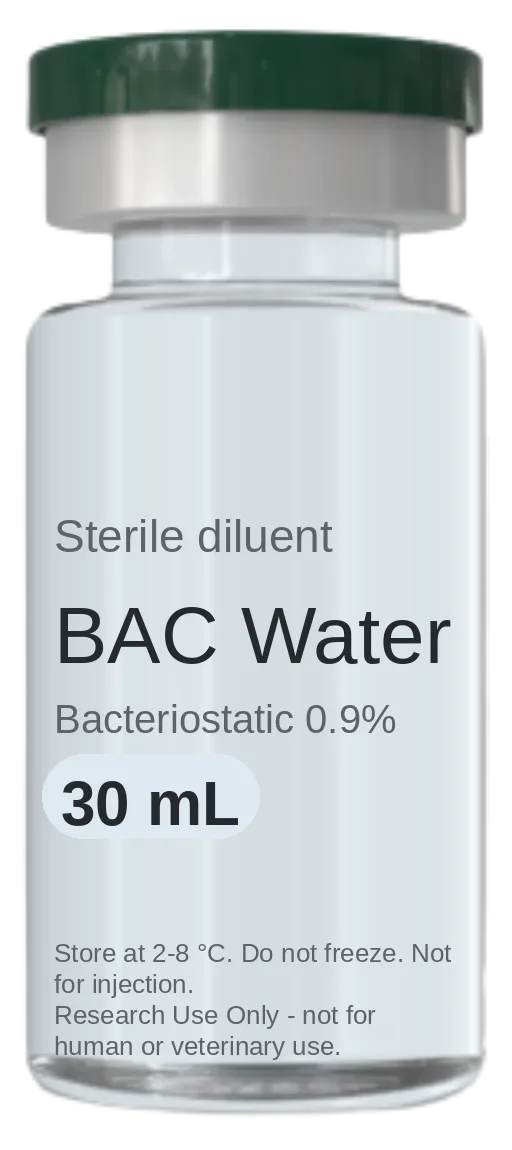
| Availability in PeptoClinic's catalog | Yes, in two concentrations: bac-water and bac-water-plus | Not part of the catalog |
| Compatibility with preservative-sensitive peptides | Some protocols avoid benzyl alcohol for peptides considered particularly reactive to it | Introduces no such risk, since it carries no preservative |
Why the preservative matters when a vial gets reused
A reconstituted lyophilized vial isn't necessarily used all at once. When a research protocol draws from the same vial across more than one session, every puncture of the septum is a potential entry point for airborne microorganisms. The benzyl alcohol in bacteriostatic water exists precisely for that: it slows that growth between one draw and the next, as long as the vial stays refrigerated. Sterile water without a preservative offers no such protection past the first opening, so a protocol using it typically exhausts the vial in a single session.
This isn't guidance on how to prepare a dose — it's the technical reason a lab reaches for one type of water over the other, based on how many times it plans to return to that vial.
When a protocol chooses sterile water without a preservative
There are cases where a protocol prefers preservative-free sterile water over bacteriostatic water: when the vial will be drawn from once and doesn't need to survive weeks in a refrigerator, or when the protocol's design explicitly calls for the absence of any additive besides the peptide itself, to avoid introducing an extra variable into the experiment. In those cases, the longer shelf life the preservative provides doesn't outweigh adding a second compound to the solution.
What water keeps a certified purity reading intact
A lab report from an outfit like Janoshik Analytical certifies the purity of the lyophilized peptide at the moment that specific sample was analyzed — it does not certify what happens to that purity after the vial is reconstituted and spends weeks being opened and closed in a refrigerator. That second part depends on handling: the quality of the water, whether or not it carries a preservative, and how many times the septum gets punctured. Checking a lot against its lab report is the first step, but it doesn't substitute for care after the vial is opened.
Something similar applies to quantification: the standard way to confirm how much peptide is still actually dissolved in a solution is measuring absorbance at 280 nanometers and applying that sequence's molar extinction coefficient, the same principle described by Pace et al., Protein Sci 1995. That figure depends on the amino acid sequence, not the type of water used — but it confirms that what's measured after reconstitution is still the peptide, and not a degradation product.
BPC-157: a peptide that gets reconstituted frequently
BPC-157 is one of the research peptides reconstituted most often in protocols studying musculoskeletal tissue repair, an area reviewed by Gwyer et al., Cell Tissue Res 2019 and, more recently, in a systematic review in sports medicine by Vasireddi et al., HSS J 2025. Because it's often studied with repeated draws from the same vial across a protocol, bacteriostatic water is the more frequent choice for this particular peptide, for the reason already described: it lets the vial stay usable for as long as the sessions run.
BPC-157 is not approved by the FDA in any market. It is a research peptide, not a registered drug, and the available literature corresponds to preclinical studies and reviews, not to approval-grade clinical trials.
What else in the catalog arrives lyophilized
Every compound in PeptoClinic's catalog arrives as lyophilized powder in a sealed vial, not in solution. That includes peptides like retatrutide, which is currently in phase 3 according to its public listing on ClinicalTrials.gov, and which likewise holds no FDA approval for any use. The lyophilized format is exactly what makes the choice between bacteriostatic and sterile water necessary in the first place: a peptide in powder form has no preservative of its own until it's reconstituted, and the water chosen determines how long that vial stays good once it's opened. The handling and verification standards PeptoClinic applies to each lot are described on the quality page.

Medical review
Dr. Emily Parker

Reviews every consultation as it comes in
Frequently asked questions
Are bacteriostatic water and sterile water interchangeable?
Not without consequence: they serve different functions. Bacteriostatic water carries a preservative that allows the same vial to be reopened several times, while preservative-free sterile water is meant for a single opening. Using one in place of the other changes how long the reconstituted vial can remain usable.
Why do most peptide research protocols use bacteriostatic water?
Because most of those protocols draw from the same vial across more than one session over several days or weeks, and the benzyl alcohol in bacteriostatic water is what lets that vial stay free of bacterial contamination between one draw and the next.
Does benzyl alcohol affect peptide structure?
It depends on the particular sequence. Some research protocols choose to avoid benzyl alcohol for peptides considered more sensitive to that preservative, opting instead for preservative-free sterile water despite the shorter usable life of the opened vial.
What's the difference between bac-water and bac-water-plus in PeptoClinic's catalog?
Both are bacteriostatic water, but at different preservative concentrations, intended for protocols with different vial-handling needs. The detail for each is on its own product page, inside the [catalog](/en/catalog/).
Does the purity certified in a Janoshik Analytical report hold up after the peptide is reconstituted?
The report certifies the purity of the lyophilized powder lot at the time of analysis. What happens after the vial is reconstituted — how long that purity holds in solution — depends on subsequent handling: the quality of water chosen, whether it carries a preservative, and refrigeration.
Is there a peptide in the catalog where avoiding the preservative is preferred?
Yes, some protocols prefer preservative-free sterile water for peptides considered more sensitive to it, even though that means the vial has to be used in a single session rather than several.
Are research peptides like BPC-157 approved by the FDA?
No. BPC-157, like the rest of the catalog, holds no FDA approval. These are research compounds, and their regulatory status doesn't change based on the type of water used to reconstitute them.
What happens if a peptide is reconstituted with tap water or non-sterile distilled water?
It loses the sterility guarantee that both bacteriostatic water and sterile water for injection carry, since both are manufactured specifically for laboratory use. Any water that isn't certified sterile introduces a contamination risk that neither of the two water types described here carries.
Compounds mentioned
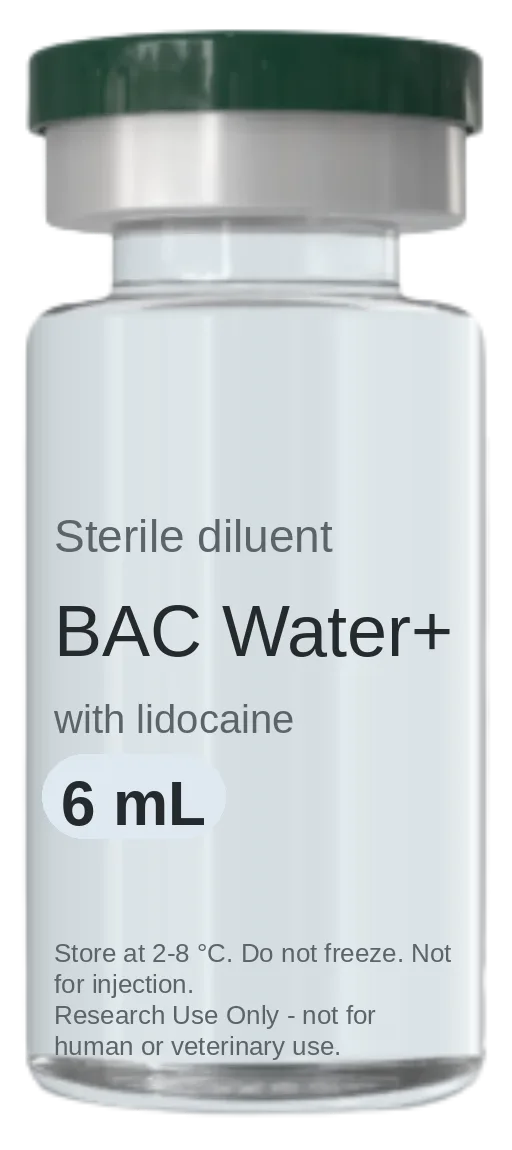
BAC Water+ (6mL con Lidocaína)
Bacteriostatic water with lidocaine, 6 mL, for reconstitution.
- Purity:
- USP grade
- Sizes available:
- 6 mL
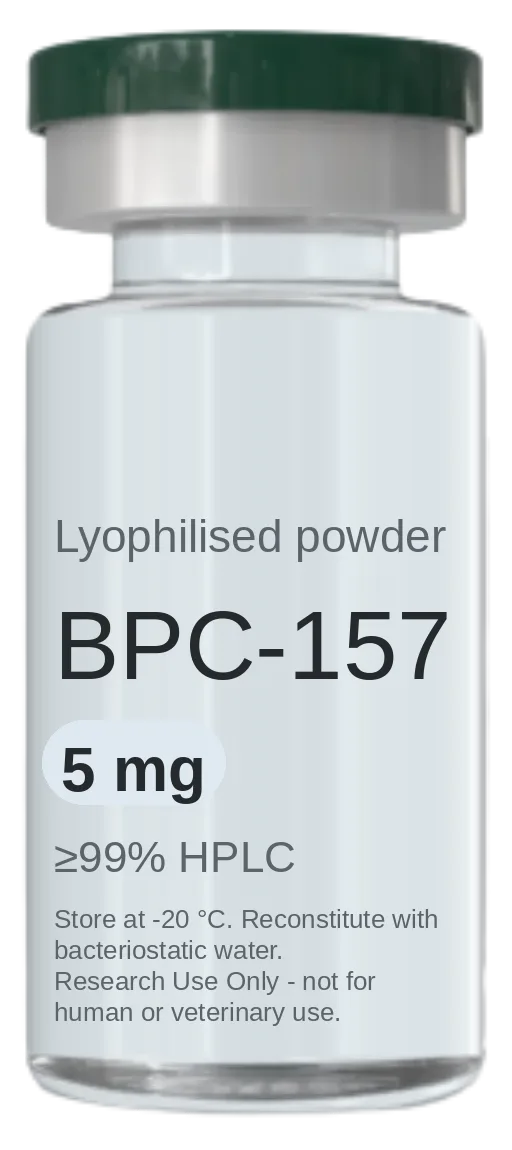
BPC-157 + TB-500
BPC-157 and TB-500 in a single vial — the pairing most studied together in tissue-repair research.
- Purity:
- ≥99% HPLC
- Sizes available:
- 5 mg + 5 mg
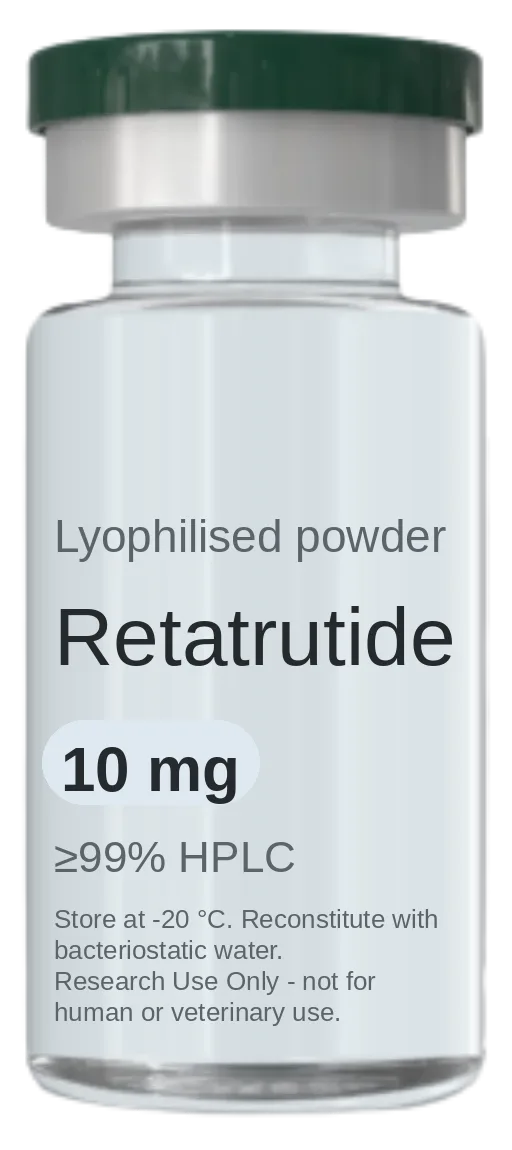
Retatrutide
Triple-agonist metabolic research peptide targeting GLP-1, GIP and glucagon receptors.
- Purity:
- ≥99% HPLC
- Sizes available:
- 10 mg
The consultation
One intake that settles goals, history and contraindications alongside compound, quantity, documentation and route — reviewed by a physician before anything ships.
More notes
-
What Is Lyophilized Peptide Reconstitution
Reconstituting a lyophilized peptide dissolves freeze-dried powder in a compatible solvent. What changes chemically, which solvents, how to verify.
-
Bacteriostatic Water: What It Is Used For
Bacteriostatic water contains 0.9% benzyl alcohol as a preservative. It is the laboratory standard for reconstituting lyophilized peptides and proteins.
-
How to Calculate Peptide Concentration
The concentration of a reconstituted peptide depends on actual vial content from the certificate of analysis, not the nominal label figure.
-
What COA Ships with Retatrutide to Argentina
The Janoshik Analytical report that accompanies retatrutide shipped to Argentina: what it contains, how to read it, and how to verify it.
-
Bacteriostatic Water vs. Sterile Water
The difference between bacteriostatic and sterile water: preservatives, multi-dose vials, and assay compatibility.