
Note
Why BPC-157 and TB-500 Ship Together
The combined BPC-157/TB-500 vial follows the ratio cited in tissue-repair research literature and carries a single certificate of analysis.
BPC-157 and TB-500 ship in the same vial because the research literature on tissue, tendon and ligament repair cites the two compounds together, in a fixed ratio, and a pre-combined vial spares a researcher from weighing, reconstituting and mixing two separate products before preparing a working solution. A combined vial also means the certificate of analysis verifies the mixture as a single sample, under a single lot number, instead of two documents that have to be cross-checked by hand.
Why the research literature cites them as a pair
BPC-157 is a pentadecapeptide derived from a gastric-protective sequence, and TB-500 is a synthetic fragment of thymosin beta-4. They are two distinct molecules with distinct mechanisms, but they share a research area: models studying angiogenesis and the signaling pathways involved in tendon, ligament and connective-tissue repair. When two compounds appear together consistently in that body of research, it is common practice for a supplier to offer them pre-combined at the ratio used in those models, rather than leave each researcher to build the mixture from two separate vials.
This is not a peculiarity of PeptoClinic's catalogue. It is standard practice across research-peptide supply, and it answers a real need on the buyer's side. A lab repeating the same assay with the same ratio between the two peptides gains consistency if that ratio is fixed at the source, instead of depending on every person reconstituting the vial weighing both quantities correctly by hand.
What the certificate for the combined vial verifies
The BPC-157/TB-500 combined vial in the PeptoClinic catalogue has its own laboratory report, analysed by Janoshik Analytical (task 204975, dated 2026-04-13). The report identifies total content at 10 mg, split 5 mg of each peptide. In other words, the document does not describe "one vial of BPC-157 plus one vial of TB-500" — it describes a single sample containing both compounds already present at that ratio, verified as such.
That is the practical difference against buying two separate vials and mixing them after reconstituting each one on its own: with two vials, no outside laboratory ever analyzed the final mixture a researcher ends up using, because that mixture was built after the analysis, not before it. With the combined vial, what the report describes is exactly what is inside the vial that arrives. PeptoClinic's four published reports, this one included, are available on the quality page, along with the laboratory's name and the analysis date for each lot.
Combined vial versus mixing two vials on your own
There are two ways to arrive at the same combination of peptides: order the vial already mixed, or buy each compound separately and combine them after reconstitution. The difference between the two is not about expected outcome — that is not a claim to make here — it is about traceability and about how consistent the lot is:
- A combined vial carries a single lot number and a single laboratory report describing the ratio that was actually analyzed, not the ratio someone attempted to build afterward.
- Mixing two separately reconstituted vials introduces an extra variable: final concentration depends on how much diluent went into each individual reconstitution, and that final ratio between the two peptides never passes through an analysis of its own.
- Import paperwork is simpler with a single product. A combined vial enters the catalog as a single reference with a single report attached, instead of two products that each need to be declared and documented separately.
None of these three points is an opinion about which route is preferable. They are objective differences in how the documentation for each path is generated and how it can be verified.
What to check on the label and the report before accepting a lot
Before accepting a vial labeled as combined BPC-157 and TB-500, there are four specific things to cross-check between the label and the laboratory report:
- That the report names both peptides, not just one. A certificate that only analyzes BPC-157 says nothing about whether TB-500 is present in the correct amount, or present at all.
- That total content and the per-peptide split match what the vial's label states — in this case, 10 mg total with 5 mg of each.
- That the lot number on the certificate matches the one printed on the vial received. A certificate from a different lot, even of the same product, says nothing about the vial in hand.
- That the laboratory's verification link works. A certificate that points to a broken URL is a claim that cannot be confirmed through an independent channel, regardless of what the printed report says.
This same reading standard applies to any product in the catalogue, combined or not. Shipping logistics and what documentation travels with each lot to Argentina and to the other destinations PeptoClinic serves are laid out on the shipping page.
Laboratory research use only
Everything described in this article concerns material supplied strictly for laboratory research (Research Use Only): in vitro and laboratory study. No product in the PeptoClinic catalogue is a medicine, a supplement or a food. None is approved or intended for human or veterinary consumption, diagnosis or treatment, and none of these statements has been evaluated by the FDA, ANMAT or any equivalent authority. PeptoClinic does not provide dosing, administration or protocol guidance, and does not process or require any form of prescription.
Frequently asked questions
Can BPC-157 and TB-500 be ordered separately?
Yes. The combined vial is a catalogue option for researchers who need the fixed ratio described in the laboratory report, but BPC-157 and TB-500 are also available as individual compounds, each with its own product page and its own certificate.
Is the 5 mg / 5 mg ratio always the same?
That is the ratio the laboratory analyzed in the lot published on the quality page, with 10 mg total content. Each new lot has its own report, and the correct way to confirm the exact split for a specific shipment is to read that lot's certificate, not to assume every lot repeats the same figures.
Does the certificate of analysis verify the two peptides together or separately?
It verifies the combined sample as sent: the report describes the vial's total content and how much of it corresponds to each of the two peptides, within that same analyzed sample.
What is the difference between buying the combined vial and mixing two reconstituted vials?
The main difference is documentation. The combined vial has a report that analyzed the final mixture exactly as received, while combining two separately reconstituted vials produces a ratio that no outside laboratory ever analyzed as such.
Is this product approved for human use?
No. It is material supplied for laboratory research (Research Use Only), not approved for human or veterinary use, and none of these statements has been evaluated by the FDA, ANMAT or any equivalent authority.
How is a combined vial checked against its certificate?
By matching the lot number printed on the vial's label against the number on the laboratory report, and confirming that the laboratory name and analysis date match what is published on the quality page.
Does PeptoClinic ship the combined vial to Argentina?
Yes. Argentina is one of the destinations PeptoClinic serves, with documentation prepared for import as laboratory reference material. Details on how that shipment is prepared are on the shipping page.
Why does the report list total content instead of a purity percentage for this vial?
The published report for this lot states total content and the split between the two peptides; it does not carry a purity percentage for the combined sample. Buyers who need that figure for a specific research use should confirm it directly against the certificate for the lot they receive.
Compounds mentioned
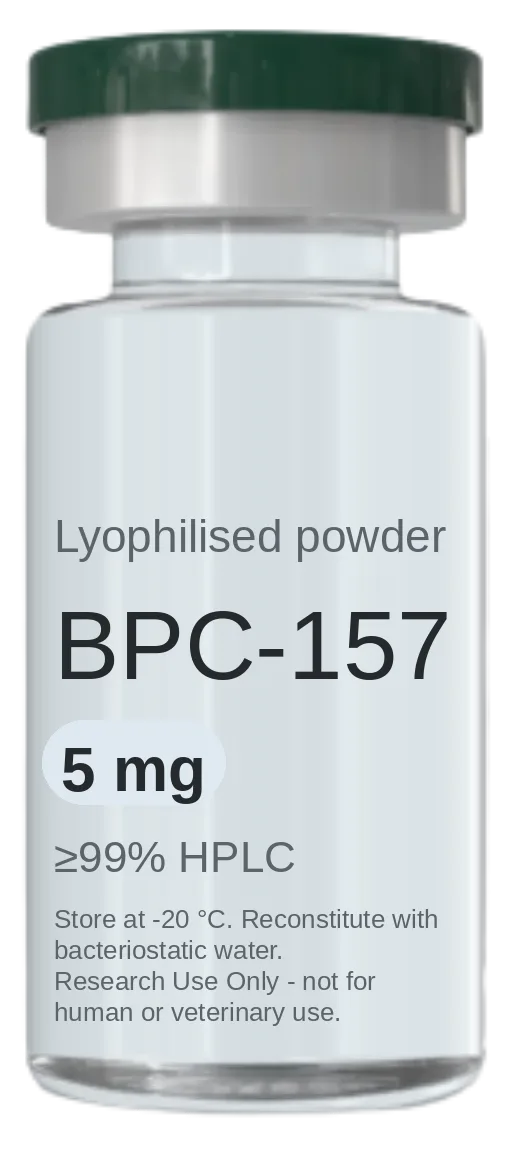
BPC-157 + TB-500
BPC-157 and TB-500 in a single vial — the pairing most studied together in tissue-repair research.
- Purity:
- ≥99% HPLC
- Sizes available:
- 5 mg + 5 mg
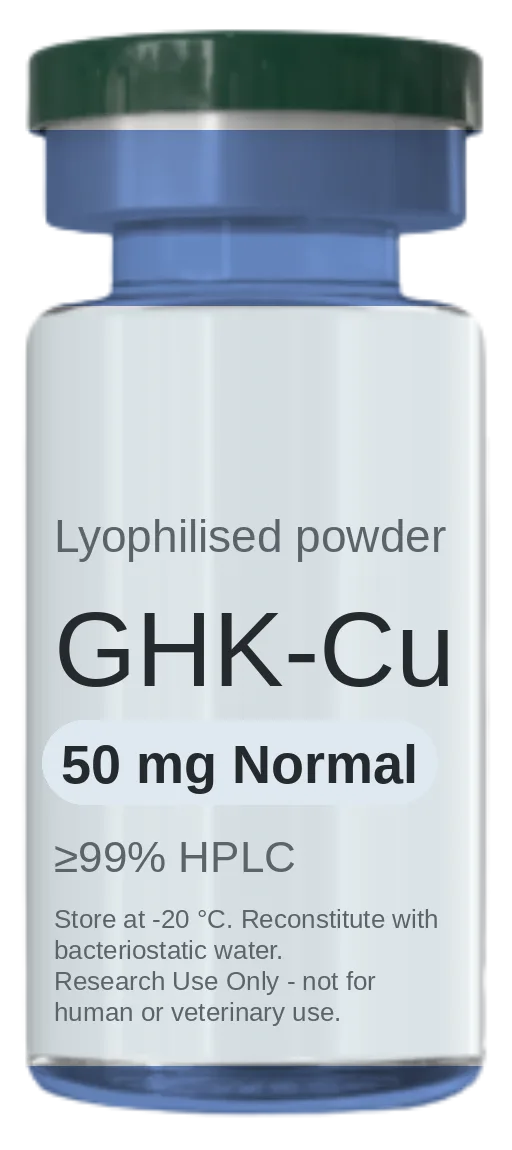
GHK-Cu (Copper Peptide)
Copper-binding tripeptide studied in extracellular matrix and dermal research models.
- Purity:
- ≥99% HPLC
- Sizes available:
- 50 mg Normal – 50 mg Plus
The consultation
One intake that settles goals, history and contraindications alongside compound, quantity, documentation and route — reviewed by a physician before anything ships.
More notes
-
Tesamorelin vs Sermorelin: The Difference
Tesamorelin and sermorelin are both GHRH analogs, but not the same molecule. Here's the structural difference and what the studies on each measure.
-
Peptide Supplier vs. Reseller: What Differs
The real difference is whether someone can name the lab that tested a batch and show the report — or only promise it's pure.
-
MOTS-c or NAD+: What's the Difference
MOTS-c and NAD+ are studied through different mitochondrial pathways; here's what each line of research actually measures.