
Note
Supplier vs Independent Lab Peptide Testing
What a supplier's in-house peptide analysis proves, what an independent lab report proves, and why the difference matters for research documentation.
An analysis run by the supplier measures whatever the supplier chooses to measure, on the supplier's own equipment, and publishes the number without anyone outside the company reviewing it first. An analysis from an independent laboratory is run by a third party that does not sell the peptide, has no commercial stake in the result, and signs the report under its own name and its own method. The difference is not about instrumentation. It is about who has something to gain from the number that comes out at the end.
What an in-house analysis actually measures
A supplier that tests its own batch can own a perfectly calibrated chromatograph and employ an honest technician. That is not the problem. The problem is that there is no external check confirming that the sample analyzed is the same material that ships, that the method was applied the same way across every lot, or that an unfavorable result would have been published as readily as a favorable one. An in-house analysis is a data point the seller reports about its own inventory. It can be accurate. It can also not be, and there is no way to tell one case from the other from outside the company.
This is not a claim that suppliers routinely falsify results — most do not need to, and many simply never run a formal analysis at all. It is a structural point: a number with no external witness cannot be distinguished from a number that was chosen because it looked good.
What an independent laboratory adds
An independent laboratory does not sell the peptide. It receives a sample, applies its own analytical method, and publishes a report under its own name. That changes two concrete things. First, the result no longer depends on whether the seller decides to show it: the report exists with a date and a task number, and the party that signs it is accountable for it. Second, the method is documented — high-performance liquid chromatography (HPLC), in the case of the reports PeptoClinic publishes — and the supplier does not get to decide which parameter gets reported.
None of this turns an analysis into a use guarantee or a regulatory certification. It is simply a figure produced by someone with no commercial interest in the outcome, which makes it verifiable in a way an in-house analysis is not.
The reports PeptoClinic publishes
Four published reports, all run by Janoshik Analytical, an independent laboratory, analyzed on 2026-04-13:
- Retatrutide (task 136921): 99.893% purity against a 10 mg label, with 11.96 mg of measured content. This is the highest purity figure published to date.
- MOTS-c (task 136923): 99.669% purity, with 11.31 mg of measured content.
- GHK-Cu (task 204977): 50 mg label. The report does not list a purity percentage the way the two above do, though the result can be looked up online.
- BPC-157 + TB-500 (task 204975): 10 mg total, 5 mg of each peptide. This report also does not list a purity percentage.
If a single figure has to describe the published standard, the correct one is 99.669%, not the highest. That is the floor, not the best case, and it remains true regardless of which batch gets highlighted on a page at any given moment.
Two of those four reports carry a working verification link back to the laboratory's own site, where the result can be checked against the task number. That is what separates an independent lab report from an internal statement: there is an external location where the data can be confirmed, and that location is not run by the party selling the peptide. You can see all four reports, with their task numbers, on PeptoClinic's quality page.
What neither analysis proves
Neither an in-house analysis nor an independent lab report certifies that a product is fit for human or veterinary use, and neither replaces a regulatory approval. None of the figures in this article have been evaluated by ANMAT, the FDA, or any equivalent authority, and none imply GMP, ISO 17025, or USP status. What a lab report establishes is the purity and content of a sample against a specific analytical method — nothing more. Everything this article references is intended strictly for laboratory research use — in vitro and experimental studies — and is not approved or intended for human or veterinary use, diagnosis, or treatment.
How to read a certificate of analysis
A usable certificate of analysis (COA) has, at minimum, four elements: the name of the laboratory that issued it, the date of analysis, a task or batch number that lets someone locate it, and the method used. If any of those four is missing, what you are looking at is not a verifiable certificate — it is an image with the appearance of one. A green seal drawn in an image editor costs the same effort whether it is accurate or not, and it says nothing about whether the laboratory exists or whether the number corresponds to that sample.
The way to confirm a report is real is not to check whether it looks professional. It is to search for the task number on the site of the laboratory that signed it and see whether it matches. That is the check the two verifiable reports on PeptoClinic's quality page are built to allow.
Why this matters for shipments into Argentina
When an order crosses a border, the source documentation — including the lab report — is part of what accompanies the batch through customs as laboratory reference material. A report that exists only as the seller's own statement does not hold up for that. A report signed by an independent third party has something behind it.
Retatrutide for research in Argentina and MOTS-c for research in Argentina are the two compounds with a purity percentage published by Janoshik Analytical as of this writing. If you're looking at a compound outside that pair, the question worth putting to any supplier is direct: who signed the analysis, and where can it be checked?
What to ask before accepting a supplier's analysis
Before accepting a supplier's analysis as it stands, there are three things worth requesting: the full name of the laboratory (not just a logo), the task or batch number, and a channel — even an email address or a link — where that laboratory confirms the report belongs to it. A supplier who can provide all three is showing you a third-party data point. One who can only produce a PDF with no identifiable signature is showing you their own word formatted to look like a document.
PeptoClinic's catalog lists which compounds have a published lab report and which do not, without conflating the two.
Laboratory research use only
Everything discussed in this article is supplied strictly for research use — in vitro and laboratory studies. None of it is approved or intended for human or veterinary consumption, diagnosis, or treatment, and none of the purity figures cited above should be read as a statement about suitability for any use outside a laboratory setting.
Frequently asked questions
Does a supplier's in-house analysis count for anything?
It works as a preliminary data point from the seller about its own stock, but it does not carry the same weight as a report signed by a third party with no commercial stake in the outcome. The central difference is the independence of whoever performs the measurement, not the quality of the equipment used.
What does it mean for a laboratory to be "independent"?
It means the lab does not sell the product it analyzes and has no commercial relationship tied to the outcome of the report. It receives a sample, applies its method, and publishes the result under its own name, which allows the result to be checked outside the seller's control.
Why is 99.669% the figure to cite instead of 99.893%?
Because 99.669% is the lowest purity among the reports published so far (MOTS-c), and it describes the real published standard more honestly than citing only the best case, which belongs to a different compound (Retatrutide).
What is Janoshik Analytical?
It is the independent laboratory that analyzed the four reports published by PeptoClinic, with an analysis date of 2026-04-13, each identified by a task number.
Does a COA certify that a peptide is fit for human use?
No. A certificate of analysis only reports the purity and content of a sample against a given analytical method. It does not imply regulatory approval or fitness for human or veterinary consumption.
How do I verify whether a certificate of analysis is genuine?
By searching for the task or batch number directly on the site of the laboratory that signed it and confirming that the details match. A report with no identifiable laboratory name and no task number cannot be verified through any external channel.
Do all catalog compounds have an independent lab report?
Not all of them list a purity percentage in the published report. As of this writing, Retatrutide and MOTS-c do; other published reports, such as those for GHK-Cu and BPC-157 with TB-500, list content and label strength without that specific percentage.
Is this material approved for human use?
No. All research material referenced in this article is supplied strictly for laboratory research and is not approved or intended for human or veterinary use, diagnosis, or treatment, nor has it been evaluated by ANMAT, the FDA, or any equivalent authority.
Compounds mentioned
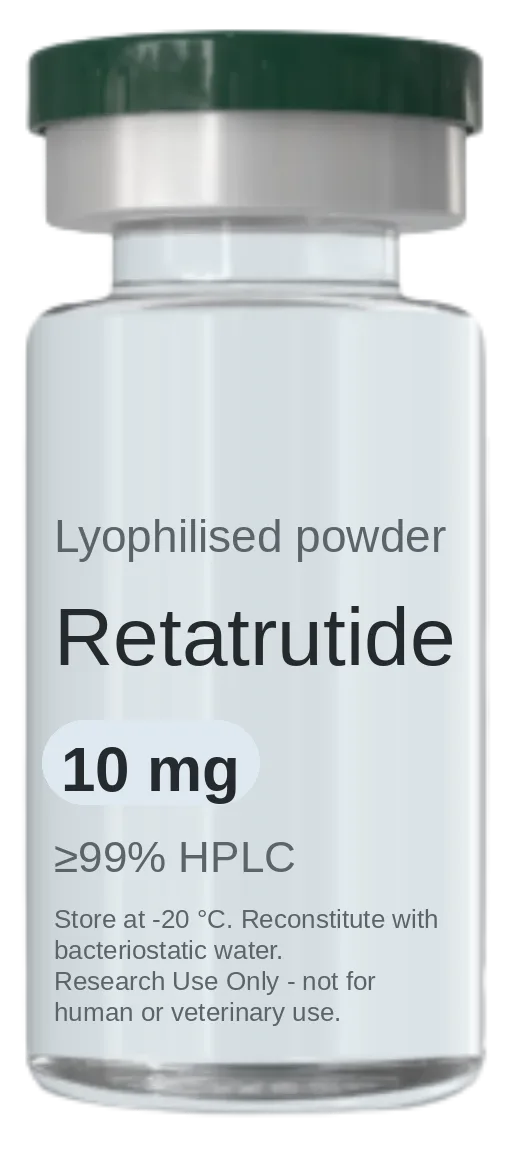
Retatrutide
Triple-agonist metabolic research peptide targeting GLP-1, GIP and glucagon receptors.
- Purity:
- ≥99% HPLC
- Sizes available:
- 10 mg
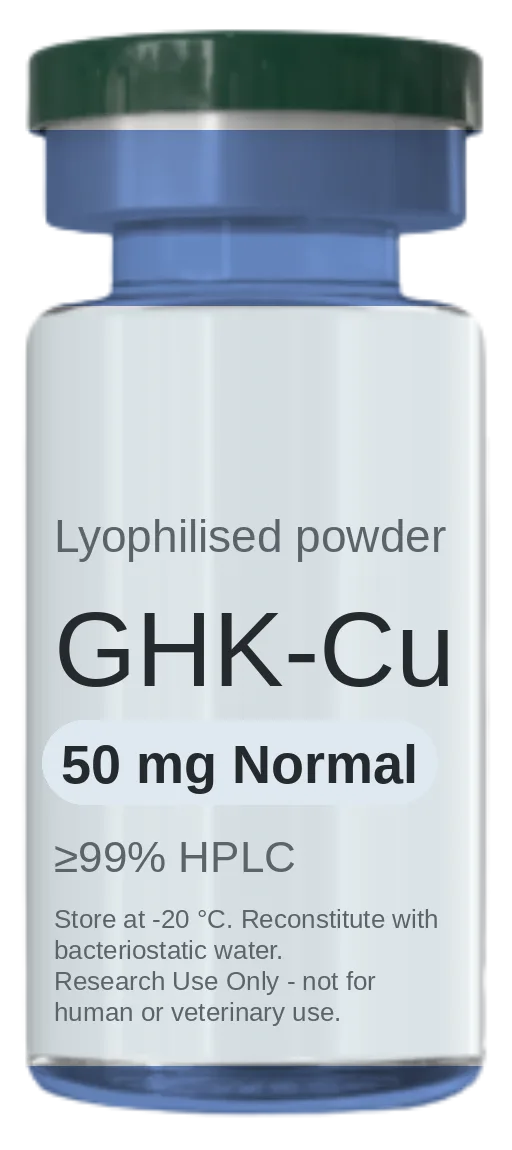
GHK-Cu (Copper Peptide)
Copper-binding tripeptide studied in extracellular matrix and dermal research models.
- Purity:
- ≥99% HPLC
- Sizes available:
- 50 mg Normal – 50 mg Plus
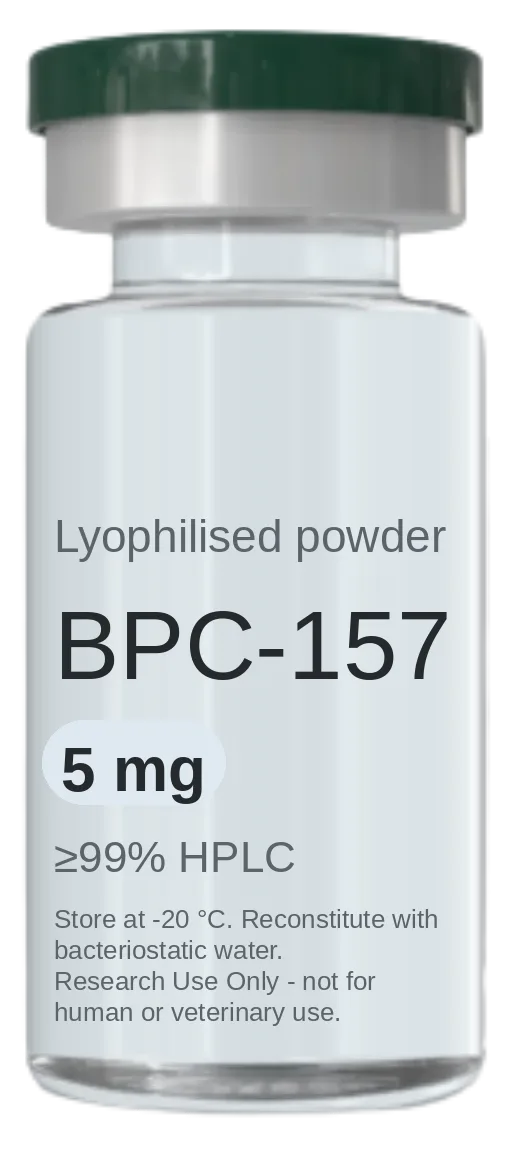
BPC-157 + TB-500
BPC-157 and TB-500 in a single vial — the pairing most studied together in tissue-repair research.
- Purity:
- ≥99% HPLC
- Sizes available:
- 5 mg + 5 mg
The consultation
One intake that settles goals, history and contraindications alongside compound, quantity, documentation and route — reviewed by a physician before anything ships.
More notes
-
Tesamorelin vs Sermorelin: The Difference
Tesamorelin and sermorelin are both GHRH analogs, but not the same molecule. Here's the structural difference and what the studies on each measure.
-
Peptide Supplier vs. Reseller: What Differs
The real difference is whether someone can name the lab that tested a batch and show the report — or only promise it's pure.
-
MOTS-c or NAD+: What's the Difference
MOTS-c and NAD+ are studied through different mitochondrial pathways; here's what each line of research actually measures.