
Note
COA: From the Lab or From the Supplier?
How to tell whether a peptide supplier's certificate of analysis was forwarded from an independent lab or written in-house.
A certificate of analysis forwarded from an independent laboratory carries that lab's own letterhead, its own domain, and a task number you can look up on the lab's website to confirm the result exists there, not only in the PDF you were emailed. A certificate the supplier wrote itself has nobody to ask: the name listed as the analyst is a person who doesn't exist outside that document, and there's no external site where that batch number is on record.
The difference doesn't show up in how polished the PDF looks. It shows up in whether the document points to something that exists outside of it.
What a genuine COA has to show
An independent lab report is identified by elements that don't depend on the supplier at all:
- The laboratory's name and its own domain, not the peptide supplier's domain. If the footer of the PDF reads the same brand as the site selling the vial, that isn't a laboratory — it's the supplier printing its own letterhead.
- A task or report number that can be typed into the lab's own site to reproduce the same result. If that number only appears inside the PDF and doesn't resolve anywhere external, there's no way to confirm it.
- The method used — HPLC, mass spectrometry — and the instrument, because a real lab documents how it arrived at the figure, not just the final number.
- The date of the analysis and the declared content of the vial in milligrams, not only a purity percentage. A 10 mg label that measured 11.96 mg of actual content, for example, is a number only someone who weighed the vial at the time of testing could produce.
We publish our own reports on the quality page, and they come from Janoshik Analytical, a third-party laboratory with no commercial relationship to us beyond analyzing the sample we sent. All four were tested on April 13, 2026, and the full list of compounds tested this way is on the catalog.
Signs the certificate was forwarded exactly as the lab issued it
A genuine COA has one trait that's hard to fake without it showing: the task number matches something the laboratory itself recognizes, and that's something to check against the lab's own site, not the supplier's.
In our case, task 136921 corresponds to the Retatrutide report, at 99.893% purity against a 10 mg label with 11.96 mg of actual vial content. Task 136923 corresponds to the MOTS-c report, at 99.669% purity on 11.31 mg of content. Both task numbers can be checked directly against the laboratory's own records, and that verification path is exactly what a supplier generating its own reports cannot offer, because there's no laboratory on the other end.
One honest caveat, so this doesn't get sold as absolute proof: not every laboratory keeps its online verifier running at all times. Two of our own reports — GHK-Cu (task 204977) and BPC-157 plus TB-500 (task 204975) — carry a real task number, but the lab's own verification tool errors out when you try to open it. That happens, and it doesn't invalidate the report: what matters is that the task number, the letterhead, and the method still belong to the laboratory, not to the supplier. A broken link on a third party's site is that third party's problem. A document that never had a third party behind it is the supplier's problem.
Signs the supplier generated the document itself
A handful of things tend to give away a COA made in-house:
- The footer or logo on the PDF matches the supplier's own brand, not a lab with its own name and its own domain.
- There's no number you can look up outside the document. If you ask "where do I verify this?" and the answer is "trust us," or a link that just redirects back to the supplier's own site, there's no real third party analyzing anything.
- The file format is editable — a Word document, an image with no metadata, or a PDF built with common office software instead of the lab-specific software that usually leaves its own signature in the file.
- The purity numbers are identical, batch after batch. A real analysis shows variation from lot to lot — our own lowest published figure is 99.669%, not a flat 99.9% across every sample — because each batch is a separate synthesis. An identical purity figure repeated across an entire catalog fits a number that was typed in more than an instrument measuring it each time.
- The "laboratory" that signs the report has no site of its own, or its site is a single page with no other clients or public reports.
None of these signs alone is a conviction. Together — and especially the absence of a number that resolves outside the document — they're the fastest way to tell a forwarded report from a fabricated one.
How to check the batch number against the laboratory
The concrete step, before buying anything, is simple: ask the supplier for the laboratory's task or report number, not just the PDF. With that number, search for the laboratory's site independently — don't use the link the supplier gave you, type the domain yourself — and confirm the lab exists, that it has other clients or public reports, and that the task number matches the compound and date you were told.
If the supplier can't produce a task number, or the number they give doesn't lead anywhere outside the PDF itself, the practical conclusion is that there's no way to distinguish that document from one written by the supplier. That conclusion doesn't depend on how clean the PDF looks.
The material is for laboratory research, not for consumption
Everything these reports analyze is material supplied strictly for Research Use Only (RUO): in vitro and laboratory research. None of it is a medicine, a supplement, or a food, none of it is approved or intended for human or veterinary consumption, and none of these statements have been evaluated by the FDA, ANMAT, or any equivalent authority. A certificate of analysis documents the composition of a laboratory sample; it doesn't authorize or suggest any use beyond that.
Frequently asked questions
Does a certificate of analysis replace checking with the laboratory?
No. The PDF is a copy; what confirms it's genuine is that the task or report number it carries can be looked up independently on the laboratory's own site, typing the domain yourself instead of following the link you were sent.
Which laboratory tests PeptoClinic's products?
Janoshik Analytical, a third-party laboratory with no commercial relationship to us beyond testing the sample. The reports are on the [quality page](/en/quality/).
Why does the verification link on some reports return an error?
Because a laboratory's own online verifier can go down temporarily or change address, which has nothing to do with the content of the report itself. What still matters is that the task number, the letterhead, and the method belong to a real third party, not to the supplier.
Does every batch of the same compound test at the same purity?
It shouldn't. Each synthesis is a distinct sample, and a small variation between batches — for example between 99.669% and 99.893% — is consistent with an instrument measuring each one separately. An identical figure across every batch in a catalog fits a copied number better than a repeated analysis.
Which piece of a COA is hardest to fake?
A task or report number that can be verified outside the document. The layout of the PDF, the logo, and even the analyst's name can be written with nothing real behind them; a number a third party recognizes as its own is far harder to invent.
Does milligram content matter as much as the purity percentage?
Yes. A 10 mg label that tests at 11.96 mg of actual content, as in one of our [Retatrutide](/en/argentina/retatrutide/) reports, is a figure that can only come from weighing the sample at the time of analysis. A document that only gives a rounded percentage, with no measured content, leaves less to verify.
Can I ask for the certificate of a specific batch before receiving material?
Yes, that's a reasonable part of any quote request, along with the laboratory's task number so it can be checked independently before confirming anything.
Does this apply to every compound in the catalog?
The principle applies to any compound — [BPC-157](/en/argentina/bpc-157/), [GHK-Cu](/en/argentina/ghk-cu/), or anything else on the [catalog](/en/catalog/). What changes between compounds is the specific report, not the method for checking it.
Compounds mentioned
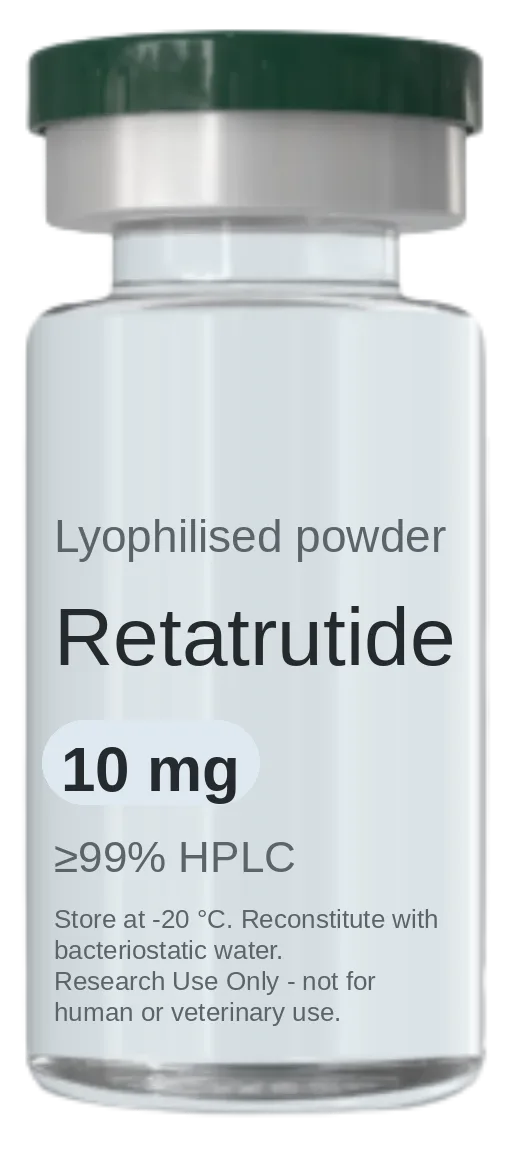
Retatrutide
Triple-agonist metabolic research peptide targeting GLP-1, GIP and glucagon receptors.
- Purity:
- ≥99% HPLC
- Sizes available:
- 10 mg
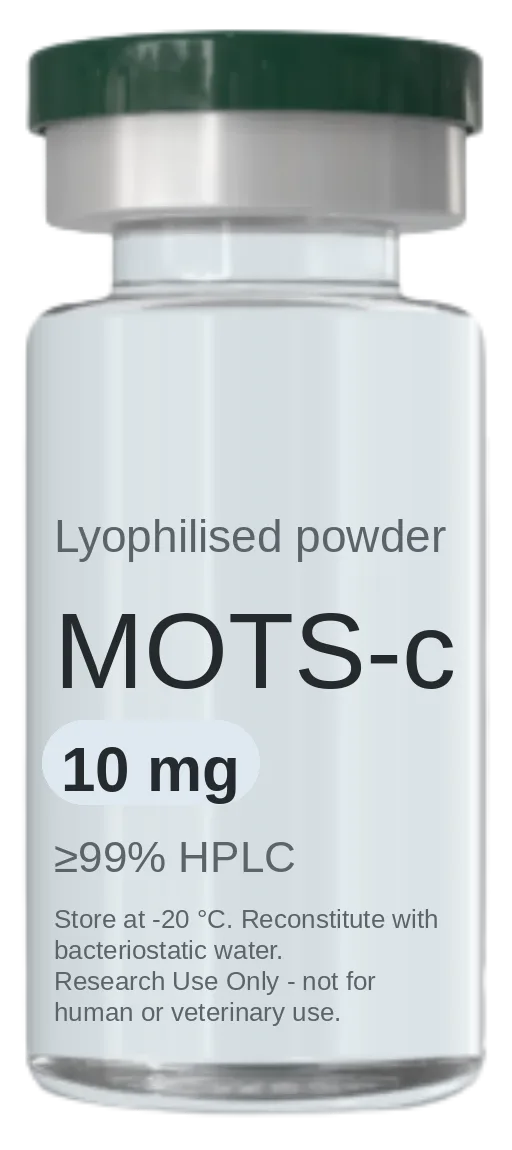
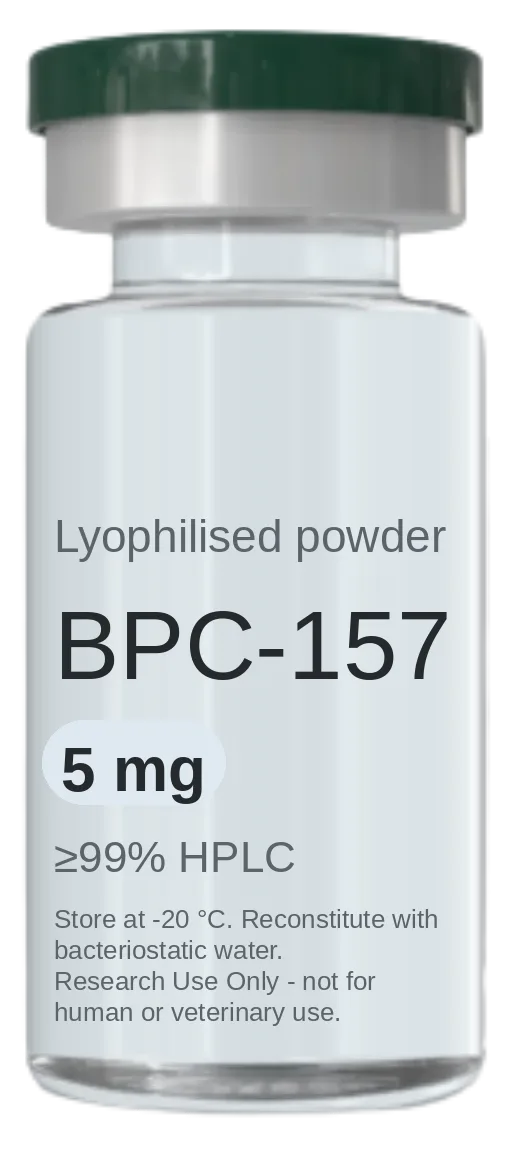
BPC-157 + TB-500
BPC-157 and TB-500 in a single vial — the pairing most studied together in tissue-repair research.
- Purity:
- ≥99% HPLC
- Sizes available:
- 5 mg + 5 mg
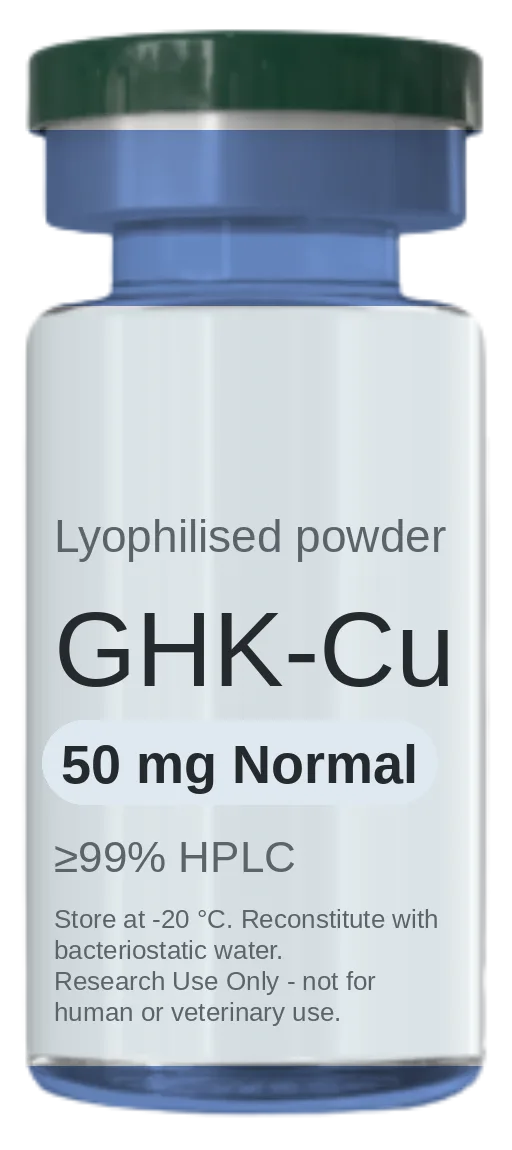
GHK-Cu (Copper Peptide)
Copper-binding tripeptide studied in extracellular matrix and dermal research models.
- Purity:
- ≥99% HPLC
- Sizes available:
- 50 mg Normal – 50 mg Plus
The consultation
One intake that settles goals, history and contraindications alongside compound, quantity, documentation and route — reviewed by a physician before anything ships.
More notes
-
Temporary Import Regime & Peptides
Temporary import covers goods that leave the country again; a research peptide shipment stays and gets used up.
-
Retatrutide vs GHK-Cu: What's the Difference
Retatrutide and GHK-Cu are different molecules studied for different reasons. Here's what each investigates and what documentation backs a batch.
-
Invoiced vs. Unbilled Peptide Suppliers
What changes when a research peptide supplier invoices the transaction versus one that takes payment and leaves no paper trail.