
Note
Compounded Tirzepatide vs Mounjaro
By the PeptoClinic editorial team · Medically reviewed by Dr. Emily Parker
Compounded tirzepatide and Mounjaro share a molecule but not a regulatory status. Here is what separates them.
Compounded tirzepatide and Mounjaro are not the same product. Mounjaro is a brand-name drug that received FDA approval for type 2 diabetes and, under the name Zepbound, for chronic weight management, manufactured by Eli Lilly under a specific formulation and supply chain. Compounded tirzepatide is the same peptide sequence made or obtained outside that approval pathway — by a 503A or 503B compounding pharmacy, or sold as research material — and it does not carry the FDA's review of any finished drug product.
What "compounded" actually means
A compounding pharmacy prepares a drug for an individual patient when a commercially available product does not meet their needs — a different strength, a missing inactive ingredient, a different form. The FDA's guidance on unapproved and compounded GLP-1 drugs addresses tirzepatide and semaglutide directly: compounding is only meant to fill temporary shortages or genuine patient-specific needs, and the agency has flagged specific safety concerns with compounded versions of both molecules, including dosing errors tied to different salt forms and contamination issues reported to poison control centers.
Tirzepatide itself is a dual GLP-1/GIP receptor agonist studied in the SURMOUNT-1 trial (Jastreboff et al., NEJM 2022), which measured weight change in adults with obesity over 72 weeks against placebo. That trial is what supported the molecule's approval pathway — but it was conducted with Lilly's manufactured product, under controlled dosing and a defined formulation. A compounded version has not gone through that same review for any specific batch.
Tirzepatide the molecule vs Mounjaro the product
| Aspect | Compounded tirzepatide | Mounjaro |
|---|---|---|
| Molecule | Same tirzepatide peptide sequence | Same tirzepatide peptide sequence |
| Manufacturer | Varies — compounding pharmacy or research supplier | Eli Lilly, single manufacturer |
| FDA status | Not an approved drug product | Received FDA approval for type 2 diabetes; Zepbound for chronic weight management |
| Trial data behind it | None specific to the compounded batch | SURMOUNT-1 and related Lilly trials |
| Formulation review | No agency review of the specific preparation | Reviewed formulation, concentration, and manufacturing process |
| Legal framework for compounding it | Addressed in FDA bulk drug substances guidance | Not applicable — sold as finished product |
Why the FDA treats these so differently
Approval of a drug like Mounjaro or Zepbound means the agency reviewed clinical trial data, the manufacturing facility, and the specific formulation before it reached a pharmacy shelf. Compounding bypasses that review by design — it exists for cases a commercial product can't cover, not as a parallel supply chain for the same molecule at a different price point. The FDA's bulk drug substances guidance lists specific peptides compounding pharmacies may not use because of safety risk; tirzepatide's compounding status has shifted over time as shortages of the brand product eased, which is itself a sign of how tied compounded access is to supply conditions rather than a stable legal category.
PeptoClinic's tirzepatide vial is not Mounjaro, not Zepbound, and is not approved by the FDA. It is not sold as a compounded pharmacy preparation either — see the quality page for what each lot is tested against before it's listed in the catalog.
What the research actually measured
The SURMOUNT-1 trial that established tirzepatide's weight-related effects reported outcomes in a controlled study population over a fixed duration, using Lilly's manufactured formulation at specified doses. It did not test a compounded version, a different concentration, or a different delivery method. Comparing those published results to a compounded product assumes equivalence that the trial itself never measured. The same caution applies to retatrutide, tirzepatide's successor molecule studied for obesity in Jastreboff et al., NEJM 2023 and in a 2026 phase 3 trial — it remains in development and has not reached any approval decision.
Where purity testing fits
Whatever the regulatory category, the only way to know what's actually in a vial is a third-party laboratory report. PeptoClinic's published certificates of analysis come from Janoshik Analytical, and the lowest purity figure across the four reports published is 99.669%, found in the MOTS-c lot analyzed April 2026. That's the number to check against, not the best one on file — a single high result doesn't describe every batch. Current pricing across the catalog is listed on the pricing page.

Medical review
Dr. Emily Parker

Reviews every consultation as it comes in
Frequently asked questions
Is compounded tirzepatide legal in the United States?
Compounding pharmacies operate under FDA rules that permit compounding specific drugs under specific conditions, outlined in the agency's [guidance on bulk drug substances](https://www.fda.gov/drugs/human-drug-compounding/certain-bulk-drug-substances-use-compounding-may-present-significant-safety-risks) and its [GLP-1 concerns page](https://www.fda.gov/drugs/postmarket-drug-safety-information-patients-and-providers/fdas-concerns-unapproved-glp-1-drugs-used-weight-loss). Whether a specific product or seller falls inside those rules is a separate question from the molecule's legal status, and this isn't legal advice.
Is Mounjaro the same drug as Zepbound?
Both contain tirzepatide, manufactured by Eli Lilly. Mounjaro [received FDA approval](https://www.fda.gov/news-events/press-announcements/fda-approves-new-medication-chronic-weight-management) for type 2 diabetes; Zepbound is the same molecule approved separately for chronic weight management, under a different brand name and indication.
Why would compounded tirzepatide cost less than Mounjaro?
Compounded versions skip the cost structure of brand manufacturing, marketing, and the clinical trial program that led to approval. That difference in cost reflects a difference in what's been reviewed and guaranteed, not just a markup.
Does compounded tirzepatide have the same trial data behind it as Mounjaro?
No. The trials that measured tirzepatide's effects, including [SURMOUNT-1](https://pubmed.ncbi.nlm.nih.gov/35658024/), used Lilly's manufactured formulation. No published trial has tested a compounded batch specifically, so the published results describe the approved product, not a compounded equivalent.
What does PeptoClinic sell its tirzepatide as?
As a research peptide, with a published certificate of analysis for purity, listed on [the catalog](/en/catalog/) and [the tirzepatide product page](/en/product/tirzepatide/). It is not Mounjaro, not Zepbound, and not approved by the FDA.
How is tirzepatide different from semaglutide?
Tirzepatide is a dual GLP-1/GIP receptor agonist, while [semaglutide](/en/product/semaglutide/) acts on the GLP-1 receptor alone. Semaglutide is the molecule behind Ozempic and Wegovy, studied in the [STEP 1 trial](https://pubmed.ncbi.nlm.nih.gov/33567185/) (Wilding et al., NEJM 2021), which also received FDA approval under those brand names.
Has tirzepatide's successor molecule, retatrutide, been approved?
No. Retatrutide remains in clinical development — phase 2 results were published in [Jastreboff et al., NEJM 2023](https://pubmed.ncbi.nlm.nih.gov/37366315/), with phase 3 data following in 2026. It has not received FDA approval as of this writing.
How does PeptoClinic verify the purity of what it sells?
Each lot is tested by Janoshik Analytical, an independent laboratory, with published certificates of analysis. The lowest purity figure on file across current reports is 99.669%. Details on how that testing works are on [the quality page](/en/quality/).
Compounds mentioned
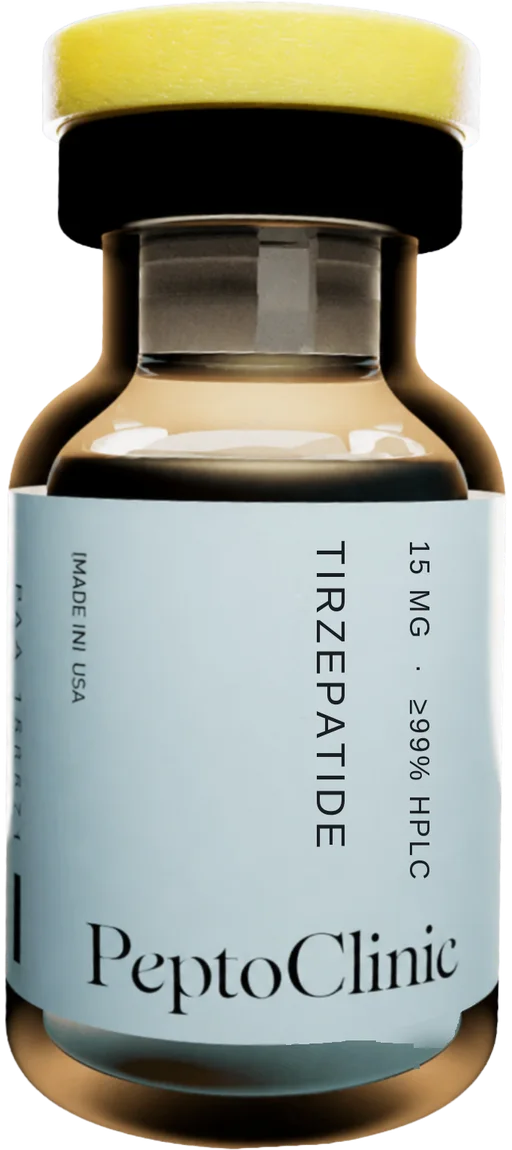
Tirzepatide
Dual GIP and GLP-1 receptor agonist, the molecule in Mounjaro and Zepbound.
- Purity:
- ≥99% HPLC
- Sizes available:
- 15 mg – 30 mg
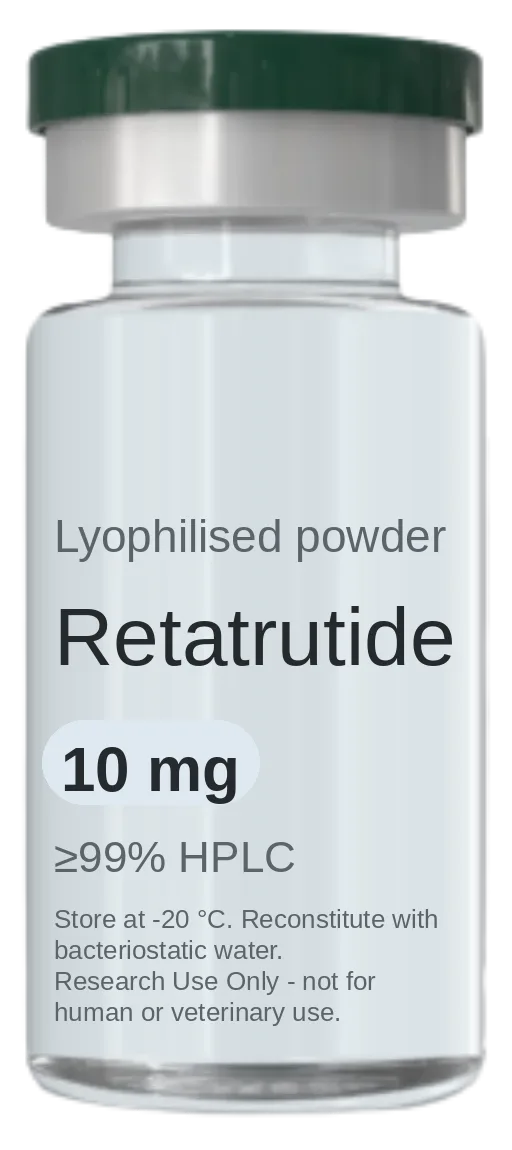
Retatrutide
Triple-agonist metabolic research peptide targeting GLP-1, GIP and glucagon receptors.
- Purity:
- ≥99% HPLC
- Sizes available:
- 10 mg
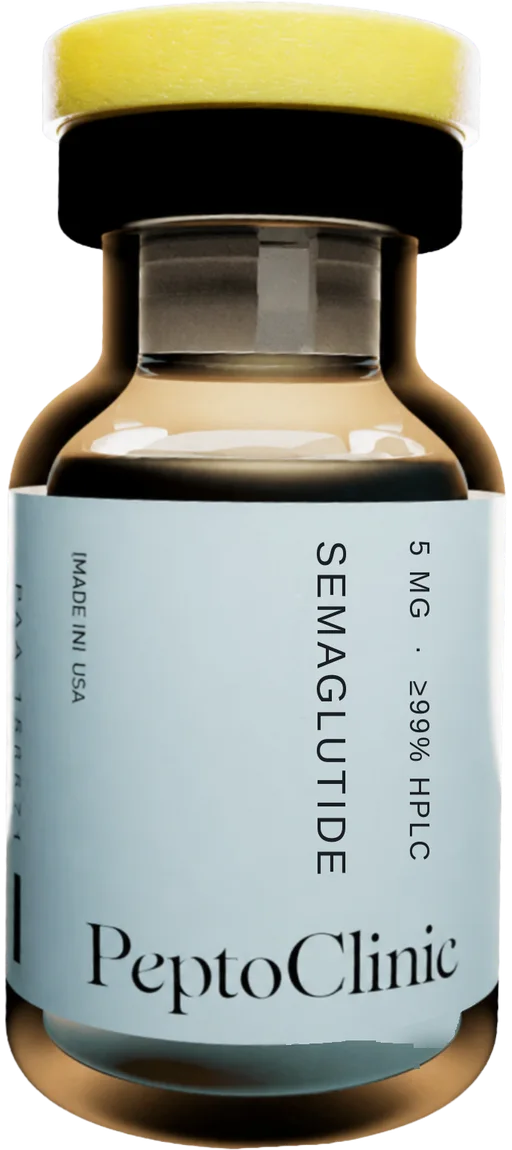
Semaglutide
GLP-1 receptor agonist, the molecule in Ozempic and Wegovy.
- Purity:
- ≥99% HPLC
- Sizes available:
- 5 mg
The consultation
One intake that settles goals, history and contraindications alongside compound, quantity, documentation and route — reviewed by a physician before anything ships.
More notes
-
Tirzepatide vs Semaglutide in the Trials
What SURMOUNT-1 and STEP 1 actually measured for tirzepatide and semaglutide, and how the trial designs differ.
-
Retatrutide vs Wegovy: What's the Difference
Retatrutide is a phase 3 investigational triple agonist, while Wegovy's semaglutide has received FDA approval. Here's how they compare.
-
Retatrutide Phase 3 Trials: What We Know
What retatrutide's phase 2 and 3 trials showed, how it compares to tirzepatide and semaglutide, and where FDA approval stands today.
-
Do You Need a Prescription for Retatrutide?
Retatrutide has no FDA-approved product and no prescription exists for it. Here is what its phase 3 status actually means.
-
CagriSema vs Retatrutide: What Differs
CagriSema combines cagrilintide and semaglutide; retatrutide hits three receptors. Here is what the trials actually measured.