
Note
Do You Need a Prescription for Retatrutide?
By the PeptoClinic editorial team · Medically reviewed by Dr. Emily Parker
Retatrutide has no FDA-approved product and no prescription exists for it. Here is what its phase 3 status actually means.
No. There is no prescription for retatrutide because there is no FDA-approved retatrutide drug to prescribe. A prescription exists for an approved medication — the pharmacist fills it against a product with an NDA number, a label and a dose a physician signs off on. Retatrutide has none of that yet. It is an investigational molecule still moving through clinical trials, and the question "do I need a prescription" assumes a regulatory category that retatrutide hasn't reached.
That is different from saying retatrutide is unregulated, or that anything goes. It means the usual framework — prescribed, dispensed, covered by insurance — simply doesn't apply to a molecule the FDA has not reviewed for approval.
What retatrutide actually is
Retatrutide is a triple agonist: it activates the GLP-1, GIP and glucagon receptors in the same molecule, rather than the one or two receptors that older weight-management drugs target. Jastreboff et al., N Engl J Med 2023 reported the phase 2 obesity trial, and the compound has since moved into phase 3, reported by Jastreboff et al., N Engl J Med 2026. Phase 3 is the stage immediately before a new drug application can be filed — it is not approval, and a trial still running is not a drug on a pharmacy shelf.
The full trial registry, including which sites are enrolling and which outcomes are being measured, is public at ClinicalTrials.gov.
Retatrutide next to the drugs that already have a prescription
Readers searching "prescription for retatrutide" are usually comparing it, at least mentally, to the GLP-1 drugs that already sit behind a prescription pad. The comparison is useful precisely because it shows what retatrutide is missing.
| Retatrutide | Approved GLP-1 / dual agonists (tirzepatide, semaglutide) | |
|---|---|---|
| Mechanism | Triple agonist: GLP-1, GIP and glucagon receptors | Tirzepatide: dual GLP-1/GIP agonist. Semaglutide: single GLP-1 agonist |
| FDA status | Not approved; phase 3 | Approved — tirzepatide as Mounjaro and Zepbound, semaglutide as Ozempic and Wegovy |
| Prescription required | No prescription exists, because there is no approved product | Yes, prescribed and dispensed through a pharmacy |
| Trial evidence published | Jastreboff 2023 phase 2, Jastreboff 2026 phase 3 | Jastreboff 2022, SURMOUNT-1, Wilding 2021, STEP 1 |
| Also studied in type 2 diabetes | Rosenstock 2023, Lancet | Tirzepatide approved for type 2 diabetes as Mounjaro |
Tirzepatide received FDA approval as Mounjaro (diabetes) and later as Zepbound for chronic weight management, and semaglutide received FDA approval as Ozempic and Wegovy. Both are prescription drugs sold under those brand names. Retatrutide has not received FDA approval under any name, and the material PeptoClinic supplies is not Mounjaro, Zepbound, Ozempic, Wegovy or any other approved product.
Why "no prescription" doesn't mean "no regulation"
The FDA has published its concerns about unapproved and compounded GLP-1 drugs sold for weight loss outside the approved brand pathway. That page is specifically about semaglutide and tirzepatide compounded by pharmacies that are not the brand manufacturer — a different situation from retatrutide, which has no approved reference product to compound in the first place. The common thread is the same: a molecule without an approved drug application sits outside the system that prescriptions, insurance coverage and pharmacy dispensing are built on.
This is why "do I need a prescription for retatrutide" doesn't have a simple legal answer beyond the facts above: retatrutide is not a controlled substance, and no prescription mechanism exists for it because no approved product exists to prescribe. That is a statement about where the molecule sits in the FDA's review pipeline, not legal advice about any specific use.
Where PeptoClinic's retatrutide fits
PeptoClinic supplies retatrutide as a lyophilized powder vial, analyzed independently by Janoshik Analytical before it ships. It is not a Zepbound, Mounjaro, Ozempic or Wegovy substitute, and it has not received FDA approval. Every consultation is reviewed by a physician before an order ships, the same as the rest of the catalog. What each lot's independent lab report covers — and how to read one — is explained on the quality page. Pricing for retatrutide and the rest of the catalog is published on the pricing page.

Medical review
Dr. Emily Parker

Reviews every consultation as it comes in
Frequently asked questions
Is retatrutide approved by the FDA?
No. Retatrutide has not received FDA approval. It is currently in phase 3 clinical trials, reported by [Jastreboff et al., N Engl J Med 2026](https://pubmed.ncbi.nlm.nih.gov/42814954/), which is the stage before a new drug application can be filed — not the approval itself.
If retatrutide isn't approved, is it a controlled substance?
No. Retatrutide is not a controlled substance. It is an investigational molecule under FDA review through the clinical trial process, which is a different regulatory category from a controlled substance.
Can I get retatrutide from a pharmacy with a prescription?
No. Pharmacies dispense approved drugs against a prescription written for that specific product. Since there is no approved retatrutide drug, a standard pharmacy cannot fill a prescription for it the way it would for Mounjaro or Wegovy.
Is retatrutide the same as Mounjaro or Zepbound?
No. Mounjaro and Zepbound are brand names for tirzepatide, a dual GLP-1/GIP agonist that received FDA approval. Retatrutide is a different molecule — a triple agonist acting on GLP-1, GIP and glucagon receptors — and has not received FDA approval under any brand name.
What did the retatrutide clinical trials actually measure?
The phase 2 obesity trial by [Jastreboff et al., 2023](https://pubmed.ncbi.nlm.nih.gov/37366315/) and the type 2 diabetes trial by [Rosenstock et al., 2023](https://pubmed.ncbi.nlm.nih.gov/37385280/) reported outcomes in adults with obesity and type 2 diabetes, respectively. The phase 3 results were reported by [Jastreboff et al., 2026](https://pubmed.ncbi.nlm.nih.gov/42814954/). The full set of active and completed trials is listed on [ClinicalTrials.gov](https://clinicaltrials.gov/search?intr=retatrutide).
Where does PeptoClinic's retatrutide come from, and is it tested?
Each lot is analyzed by Janoshik Analytical, an independent laboratory, before it ships. The lab report for each lot is available to verify, and the process is explained on PeptoClinic's [quality page](/en/quality/).
Does PeptoClinic sell retatrutide as a weight-loss drug?
No. PeptoClinic's retatrutide is a vial of lyophilized peptide material, not a Zepbound, Mounjaro or other approved weight-management product, and it is not sold or marketed as one.
Will retatrutide eventually need a prescription?
If retatrutide completes its clinical trials and receives FDA approval, the resulting brand product would be a prescription drug, the same as Mounjaro and Zepbound are today. Until that approval happens, no such prescription exists.
Compounds mentioned
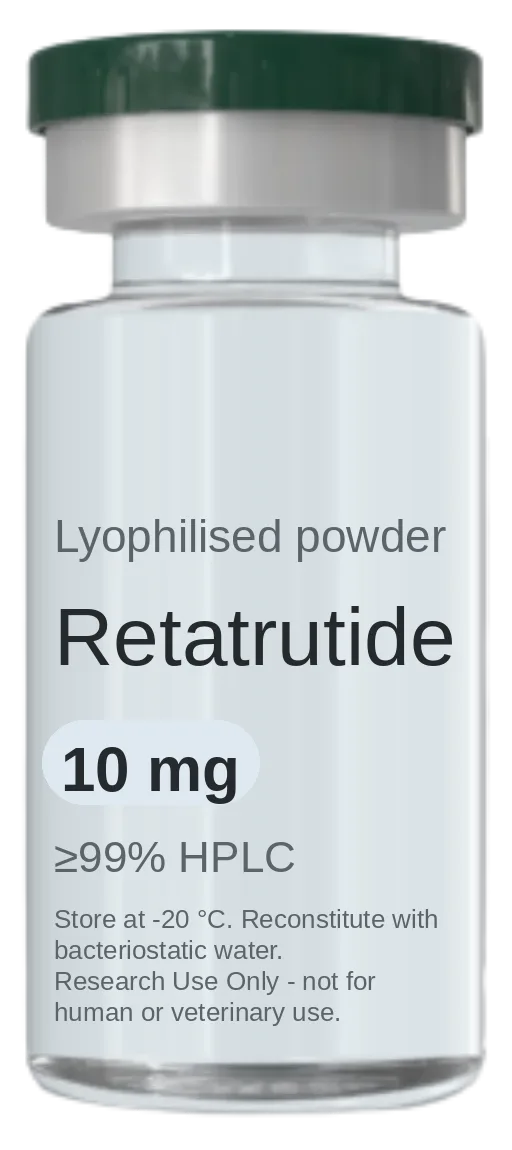
Retatrutide
Triple-agonist metabolic research peptide targeting GLP-1, GIP and glucagon receptors.
- Purity:
- ≥99% HPLC
- Sizes available:
- 10 mg
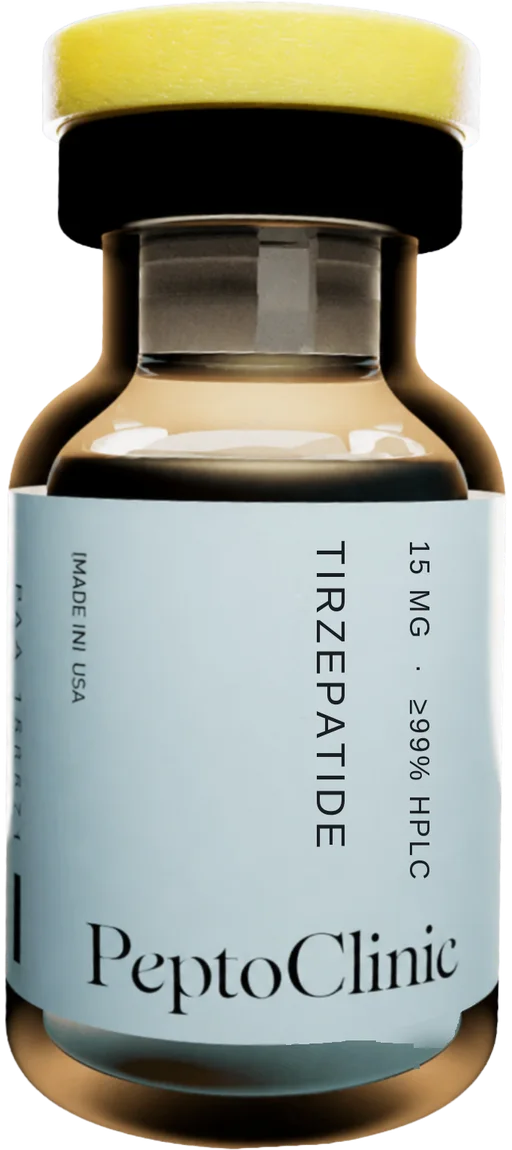
Tirzepatide
Dual GIP and GLP-1 receptor agonist, the molecule in Mounjaro and Zepbound.
- Purity:
- ≥99% HPLC
- Sizes available:
- 15 mg – 30 mg
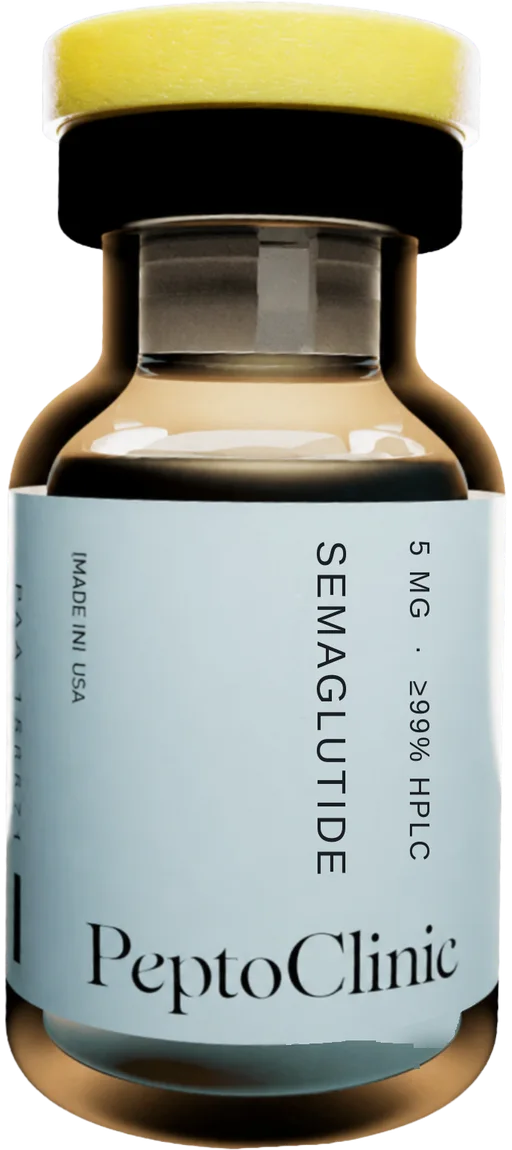
Semaglutide
GLP-1 receptor agonist, the molecule in Ozempic and Wegovy.
- Purity:
- ≥99% HPLC
- Sizes available:
- 5 mg
The consultation
One intake that settles goals, history and contraindications alongside compound, quantity, documentation and route — reviewed by a physician before anything ships.
More notes
-
Retatrutide Phase 3 Trials: What We Know
What retatrutide's phase 2 and 3 trials showed, how it compares to tirzepatide and semaglutide, and where FDA approval stands today.
-
CagriSema vs Retatrutide: What Differs
CagriSema combines cagrilintide and semaglutide; retatrutide hits three receptors. Here is what the trials actually measured.
-
Retatrutide vs Wegovy: What's the Difference
Retatrutide is a phase 3 investigational triple agonist, while Wegovy's semaglutide has received FDA approval. Here's how they compare.
-
GLP-1 Agonist vs. Retatrutide Explained
A GLP-1 agonist activates one receptor; retatrutide activates three. Here's the mechanistic difference and its trial phase.
-
Compounded Tirzepatide vs Mounjaro
Compounded tirzepatide and Mounjaro share a molecule but not a regulatory status. Here is what separates them.