
Note
Is GHK-Cu Legal in the US?
By the PeptoClinic editorial team · Medically reviewed by Dr. Emily Parker
GHK-Cu is not an FDA-approved drug and is on the FDA's list of substances pharmacies cannot compound. It is not a controlled substance.
GHK-Cu is not approved by the FDA as a drug, and it is on the FDA's list of bulk substances that compounding pharmacies may not use because of possible safety risks. It is not a controlled substance under federal law, so possessing it does not carry the same legal exposure as a scheduled drug — but that is different from saying it is cleared for human use, and the two questions get confused constantly in forum threads and product pages that should know better.
What "legal" actually means for a peptide like this
There are three separate questions hiding inside "is it legal," and GHK-Cu answers them differently.
Is it an approved medication? No. No brand-name drug built on GHK-Cu copper peptide has gone through FDA review and come out the other side with an approval letter. That puts it in the same bucket as most of the research peptides sold today: a molecule with a published literature but no regulatory green light.
Can a pharmacy compound it into a prescription? No. The FDA maintains a list of bulk drug substances that present significant safety risks when used in compounding, and GHK-Cu is on it, alongside other research peptides like BPC-157 and MOTS-c. That listing exists precisely because people were asking pharmacies to compound it, and the agency's answer was no — not because the substance is illegal to possess, but because the compounding pathway specifically is closed.
Is it a controlled substance? No. GHK-Cu doesn't appear on any DEA schedule. It isn't regulated the way an opioid or a stimulant is regulated. That distinction matters because a lot of the anxiety around "is this legal" conflates unapproved with illegal, and those are not the same category under US law.
PeptoClinic's material is not any FDA-approved drug and is not approved by the FDA. The honest, complete answer to "is it legal" is the one above: not an approved drug, not compoundable by a pharmacy, not a scheduled substance. That's a fact pattern, not a legal opinion — nothing here is legal advice, and anyone with a specific situation should ask an attorney who actually looks at it.
Why GHK-Cu ended up on the compounding exclusion list in the first place
The FDA's bulk substances list isn't arbitrary. It's built from a Section 503B nomination and review process where the agency, sometimes with input from an outside committee, looks at whether a substance has enough safety data to justify compounding it into a patient-specific prescription. GHK-Cu didn't clear that bar. Neither did a cluster of other peptides that get searched together constantly — tesamorelin in some compounded forms has had a more complicated path, while others on the same list never had an approved drug product to begin with.
That's worth sitting with for a second, because it's the opposite of how most people read a regulatory exclusion. The list doesn't say "this is dangerous." It says "there isn't enough safety and efficacy data in the form the FDA requires to let a pharmacy compound it for a named patient." Those are different claims, and the gap between them is exactly where a lot of marketing copy likes to live — either overselling the research (GHK-Cu has a real, published literature on copper peptide biology) or overselling the risk (being unapproved doesn't make something a banned substance).
What the published research on GHK-Cu actually covers
The literature on GHK-Cu is older and more extensive than most research peptides on the market today, which is part of why it keeps showing up in search queries phrased as if it were already a finished consumer product.
Pickart and Margolina reviewed GHK-Cu in light of genetic expression data, looking at how the peptide's activity maps onto gene signaling pathways tied to tissue remodeling. A separate paper by Pickart et al. examined GHK's role in skin regeneration specifically, cataloging the signaling effects researchers have documented in that tissue context. Neither paper is a clinical trial in the sense that the Zepbound or Wegovy trials were — they're mechanistic and observational work, the kind of literature base a molecule has before anyone files for drug approval, not after.
That's the honest framing: GHK-Cu has decades of mechanistic research behind it, and essentially none of the Phase 1-through-3 clinical trial infrastructure that turns a molecule into an approved drug. Those are two different stages of a pipeline, and GHK-Cu is parked at the earlier one.
How this compares to molecules that DID get approved
It helps to see GHK-Cu next to peptides that actually made it through FDA review, because the contrast is where the regulatory picture gets clearest.
| Aspect | GHK-Cu | Tirzepatide (approved form) |
|---|---|---|
| FDA approval status | Not approved as a drug | Approved as Mounjaro and Zepbound, per the FDA's 2023 announcement |
| Compounding status | On the FDA's bulk substances exclusion list | Was subject to FDA compounding warnings during shortage periods, per the agency's GLP-1 concerns page |
| Clinical trial record | Mechanistic and observational studies | Phase 3 trials published in Jastreboff et al., NEJM 2022 |
| Controlled substance | No | No |
| Form sold by PeptoClinic | Research-grade material, not the approved drug product | Not sold by PeptoClinic in the approved pen form |
The point of that table isn't to flatter tirzepatide — it's to show what "went through the process" actually looks like on paper, so GHK-Cu's status reads as what it is rather than as an insinuation.
What the certificate of analysis tells a buyer, and what it doesn't
A certificate of analysis answers a narrower question than legality: it tells a buyer what Janoshik Analytical found when they tested a specific batch — purity percentage, and whether the labeled content matches what's in the vial. That's a quality claim, not a regulatory one. A clean COA doesn't make a peptide FDA-approved, and a missing COA doesn't make it illegal. They're separate axes, and buyers who conflate them end up either over-trusting a purity number or dismissing it as irrelevant, when it's neither.
PeptoClinic publishes lab reports for its catalogue and lists what's currently in stock in the catalog. Pricing for GHK-Cu and the rest of the lineup sits on the pricing page, separate from the quality documentation — two different questions, two different pages.
Where this leaves a buyer in the US
Nothing above changes by state. The FDA's approval status and its compounding exclusion list are federal, so "is it legal in [my state]" doesn't have a state-specific answer the way, say, cannabis does. What varies locally is enforcement posture and how individual retailers choose to market the substance — some slap a disclaimer on it, some don't, and neither changes the underlying federal classification. For specifics on how an order reaches a US address, see shipping to the United States.

Medical review
Dr. Emily Parker

Reviews every consultation as it comes in
Frequently asked questions
Is GHK-Cu a controlled substance?
No. GHK-Cu does not appear on any DEA schedule, so it is not regulated as a controlled substance the way opioids, stimulants, or similar scheduled compounds are.
Why is GHK-Cu on the FDA's bulk substances exclusion list?
The FDA maintains a list of substances that compounding pharmacies cannot use because the agency determined there wasn't enough safety and efficacy data to support compounding them into patient-specific prescriptions. GHK-Cu is on that list, which you can review on the [FDA's bulk drug substances page](https://www.fda.gov/drugs/human-drug-compounding/certain-bulk-drug-substances-use-compounding-may-present-significant-safety-risks).
Has GHK-Cu gone through any FDA clinical trial process?
Not in the sense of a Phase 1-through-3 drug approval pathway. The published literature on GHK-Cu, including work by [Pickart and Margolina](https://pubmed.ncbi.nlm.nih.gov/29986520/), is mechanistic and observational, documenting signaling effects rather than reporting on a trial designed to win drug approval.
Does an unapproved status mean GHK-Cu is dangerous?
Not necessarily, and that's a separate question from legality. Being unapproved means the FDA hasn't reviewed a formal application establishing safety and efficacy for a specific use — it doesn't by itself mean a substance has been found harmful.
Can a doctor legally prescribe GHK-Cu?
A pharmacy cannot compound GHK-Cu into a prescription because it's on the FDA's exclusion list for compounding. That's distinct from whether a physician can discuss or review it as part of a broader consultation.
Is GHK-Cu the same thing as a cosmetic copper peptide cream?
No. Cosmetic copper peptide formulations sold as skincare are a different product category and regulatory pathway than the research-grade GHK-Cu material discussed here, which is not formulated or sold as a cosmetic.
Where can I check the purity of a specific GHK-Cu batch?
Lab reports from [Janoshik Analytical](https://janoshik.com/) cover batch-specific purity testing. A certificate of analysis addresses quality, not regulatory approval — the two are separate questions.
Does crossing state lines change whether GHK-Cu is legal?
No. The FDA's approval status and compounding exclusion list operate at the federal level, so there isn't a state-by-state legal distinction the way there is for some other substances.
Compounds mentioned
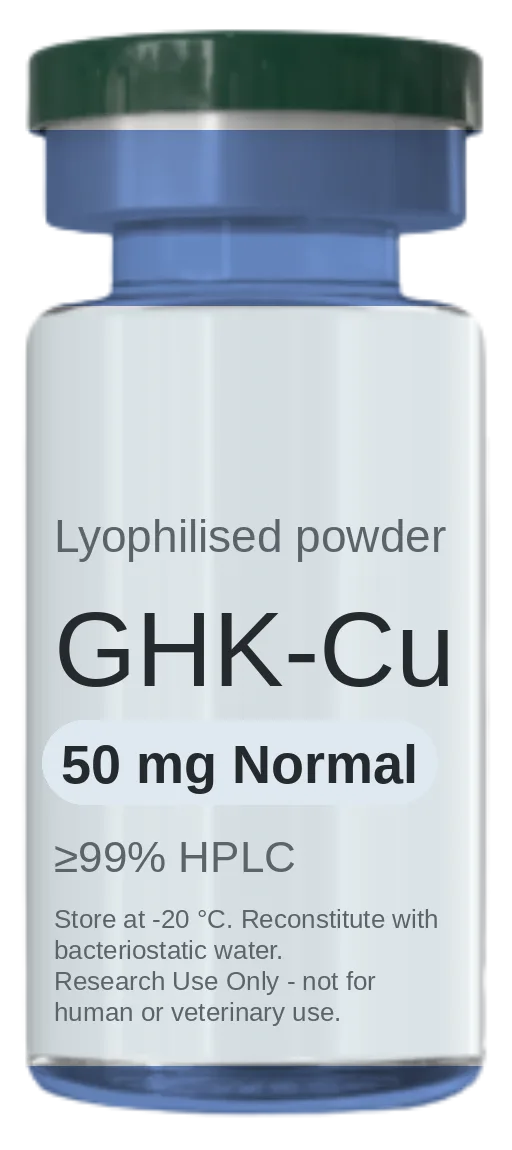
GHK-Cu (Copper Peptide)
Copper-binding tripeptide studied in extracellular matrix and dermal research models.
- Purity:
- ≥99% HPLC
- Sizes available:
- 50 mg Normal – 50 mg Plus
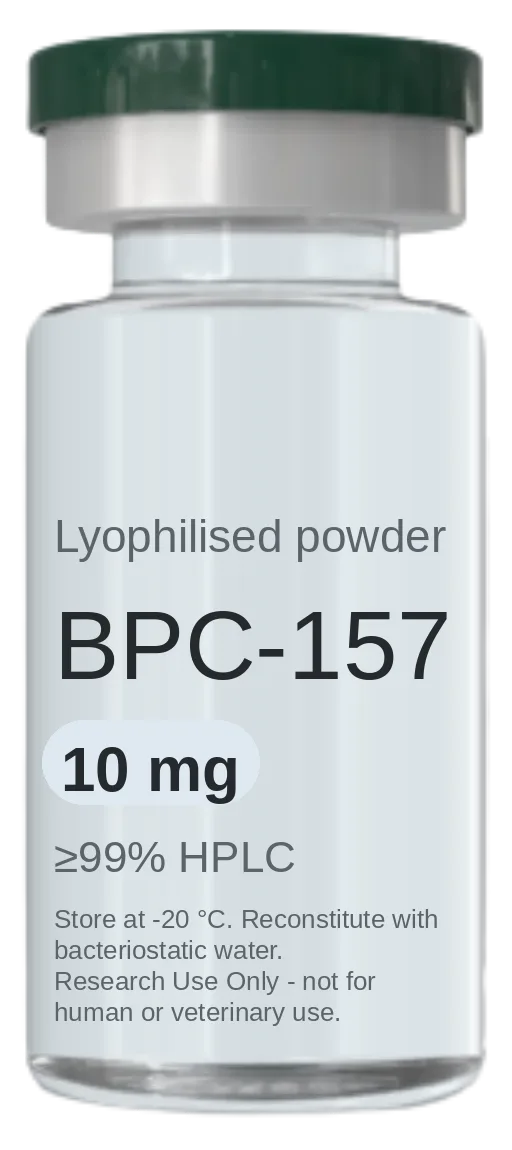
BPC-157 + TB-500
BPC-157 and TB-500 in a single vial — the pairing most studied together in tissue-repair research.
- Purity:
- ≥99% HPLC
- Sizes available:
- 10 mg
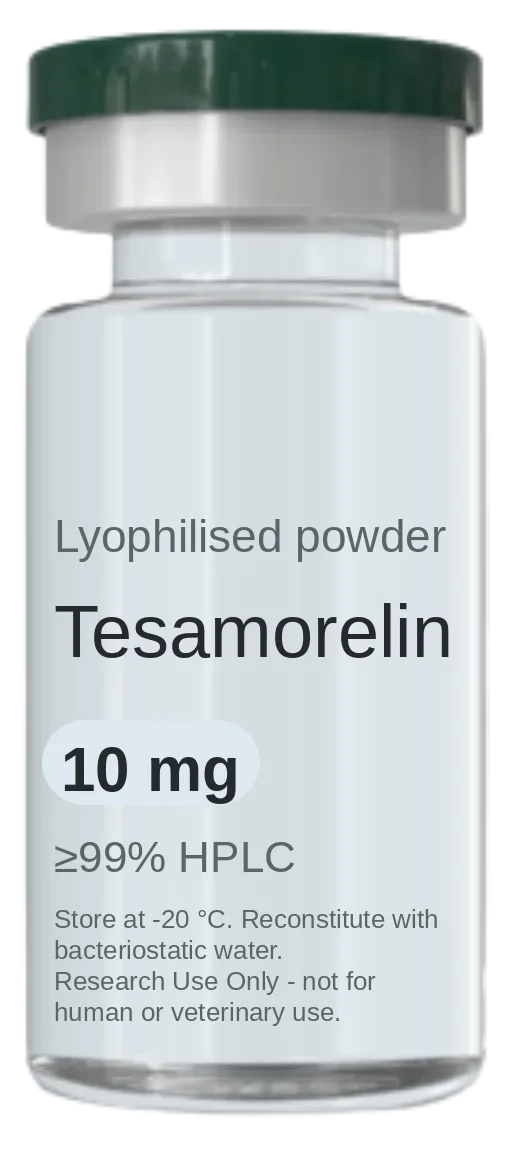
Tesamorelin
Stabilised GHRH(1-44) analogue studied in adipose tissue distribution research.
- Purity:
- ≥99% HPLC
- Sizes available:
- 10 mg – 20 mg
The consultation
One intake that settles goals, history and contraindications alongside compound, quantity, documentation and route — reviewed by a physician before anything ships.
More notes
-
Retatrutide: What It Is and How It Works
Retatrutide is a triple GIP/GLP-1/glucagon receptor agonist with published phase 2 data. PeptoClinic offers it, with a Janoshik Analytical certificate.
-
Retatrutide vs GHK-Cu: What's the Difference
Retatrutide and GHK-Cu are different molecules studied for different reasons. What each investigates, and what documentation backs a batch.
-
TB-500 or GHK-Cu: What's the Difference
TB-500 is a Thymosin Beta-4 fragment and GHK-Cu a copper tripeptide: different origin, structure and what each is researched for.
-
Is TB-500 Legal in the US?
TB-500 isn't approved by the FDA and sits on its bulk drug substance list, which blocks pharmacies from compounding it into a prescription.
-
GHK-Cu: What Is This Copper Complex
GHK-Cu is a copper-chelated tripeptide studied for its activity in tissue remodeling. What it is, what the literature says and its regulatory status.