
Note
Is MOTS-c Legal in the US?
By the PeptoClinic editorial team · Medically reviewed by Dr. Emily Parker
MOTS-c isn't a controlled substance, but the FDA bars pharmacies from compounding it. Here's where it actually stands under US law.
MOTS-c is legal to buy and possess in the United States. It is not a controlled substance under the Controlled Substances Act, and no federal statute bars an individual from purchasing it. What it is not is an approved drug, and the FDA has specifically named it among the bulk substances that pharmacies are barred from using when they compound prescriptions, because the agency found it carries possible safety risks it hasn't fully evaluated (FDA bulk drug substances list). Those two facts don't contradict each other. They describe the same gap that most research peptides sit in: legal to sell and legal to own, but not legal to sell as medicine, and not something a compounding pharmacy can put into a prescription.
Where MOTS-c sits in US drug law
US law sorts a substance into roughly three buckets, and MOTS-c's legal status only makes sense once you know which one it's in.
The first bucket is controlled substances — anything scheduled by the DEA under the Controlled Substances Act, from Schedule I down to Schedule V. MOTS-c has never been scheduled. It carries no abuse classification and no criminal penalty attaches to buying, selling, or holding it.
The second bucket is approved drugs — compounds the FDA has reviewed and cleared to be marketed for a specific use, under a specific brand, at a specific dose. Tirzepatide is in this bucket as Zepbound and Mounjaro, and semaglutide is in it as Ozempic and Wegovy (Jastreboff et al., N Engl J Med 2022; Wilding et al., N Engl J Med 2021). MOTS-c has never been in this bucket. No company has taken it through an FDA approval process, and there is no brand-name MOTS-c drug on the market.
The third bucket is everything else: substances that are neither scheduled nor approved, and whose legality turns almost entirely on how they're marketed and sold rather than on the molecule itself. MOTS-c lives here, alongside most of the research peptide category — BPC-157, ipamorelin, and the rest. Being in this bucket means the chemical itself isn't illegal, but a seller can't claim it treats, cures, or prevents anything, and a pharmacy can't compound it into a patient's prescription.
Why the FDA restricts compounding, specifically
The detail that actually answers "is MOTS-c legal" is narrower than a yes-or-no on the molecule — it's a rule about one specific business practice.
Under Sections 503A and 503B of the Food, Drug, and Cosmetic Act, pharmacies are allowed to compound individualized prescriptions using bulk drug substances, but only ones that haven't been flagged as risky by the FDA. The agency keeps a public list of substances it has evaluated and decided compounders may not use "because of safety risks that have not been adequately addressed." MOTS-c is on that list (FDA bulk drug substances list).
Being on that list is not a ban on the chemical. It's a ban on one channel: a licensed pharmacy turning it into a dispensed, patient-specific drug. The chemical itself can still be manufactured, analyzed, sold, and shipped for other purposes — it just can't be the active ingredient in something a compounding pharmacy hands a patient with directions for use.
That's a meaningfully different situation from a Schedule I drug, where possession itself is the violation, and it's also different from an approved prescription drug, where selling it outside the pharmacy channel is the violation. MOTS-c falls between those two: nothing stops someone from buying the material, and nothing authorizes a pharmacy to compound it into medicine.
What the MOTS-c research actually describes
MOTS-c belongs to a small family of peptides encoded inside mitochondrial DNA rather than nuclear DNA — a detail that made it notable to researchers studying cell metabolism. Lee et al., Cell Metabolism 2015 described MOTS-c as a mitochondrial-derived peptide that regulates metabolic homeostasis, translocating to the nucleus under metabolic stress and influencing gene expression tied to energy use. A broader review of the same peptide family, Lee, Yen, and Cohen, Trends in Endocrinology & Metabolism 2013, situates MOTS-c alongside humanin — the first mitochondrial-derived peptide identified, originally reported by Hashimoto et al., Proc Natl Acad Sci U S A 2001 — as part of a signaling system that links mitochondrial function to the rest of the cell.
None of that research describes a dosing protocol for a person, and none of it constitutes FDA review of MOTS-c as a drug. It's laboratory and preclinical work on a mechanism, and it's the reason MOTS-c appears in the research peptide category at all rather than, say, the supplement aisle. NAD+ is studied in an adjacent area of mitochondrial bioenergetics, for researchers mapping that same territory.
Buying MOTS-c in the United States
PeptoClinic's material ships as lyophilised powder with a physician reviewing each consultation before anything is dispensed. The MOTS-c batch currently sold carries a published certificate of analysis from Janoshik Analytical showing 99.669% purity — the figure that applies to this lot, not a general claim about the molecule. Anyone buying research peptides, MOTS-c included, should expect a seller to publish that kind of lab report rather than ask for trust on faith; the quality page explains how to read one. The full catalog and pricing pages show what's available and at what cost.

Medical review
Dr. Emily Parker

Reviews every consultation as it comes in
Frequently asked questions
Is MOTS-c a controlled substance?
No. MOTS-c has never been placed on a DEA schedule, so no federal law treats buying, selling, or holding it as a criminal controlled-substance offense. Its legal exposure comes from FDA drug law, not from narcotics law.
Does the FDA regulate MOTS-c at all?
Indirectly. The FDA hasn't approved MOTS-c as a drug for any use, and it has formally listed MOTS-c among the bulk drug substances compounding pharmacies may not use because of unaddressed safety risks. That's a specific, narrow restriction on one sales channel, not a blanket prohibition on the chemical.
Can a US pharmacy legally compound MOTS-c into a prescription?
No. Because MOTS-c is on the FDA's bulk drug substance exclusion list, a 503A or 503B compounding pharmacy cannot use it to fill an individualized prescription. That restriction applies to the compounding channel specifically; it doesn't govern sales of the raw material outside that channel.
Is MOTS-c approved for any medical use?
No. There is no brand-name drug containing MOTS-c, and the FDA has not reviewed it for any indication. This is different from molecules like tirzepatide, which exists both as an unapproved research compound and as an approved drug (Zepbound, Mounjaro) — MOTS-c has no approved counterpart at all.
Is it legal to import MOTS-c into the US?
MOTS-c itself isn't a prohibited import because it isn't a controlled substance or an approved drug being diverted from its authorized channel. Customs and FDA import rules still apply to how a shipment is labeled and declared, which is a separate question from the legality of the molecule.
What does being on the "bulk drug substance" list actually mean?
It means the FDA evaluated MOTS-c under the process set up for compounding pharmacies and decided the safety data wasn't sufficient to let compounders use it in patient prescriptions. It's an administrative finding about one regulatory pathway, not a determination that the chemical is dangerous in every context.
Is MOTS-c the same thing as humanin?
No, but they're related. Both are mitochondrial-derived peptides encoded in mitochondrial DNA, and both are studied in the same area of cell metabolism research. Humanin was identified first, in 2001; MOTS-c was characterized later as part of the same peptide family.
How is MOTS-c purity verified before it ships?
Each batch is tested by an independent laboratory, and the certificate of analysis states the purity figure and the methodology used, which a buyer can check against the published report rather than taking a seller's word for it.
Compounds mentioned
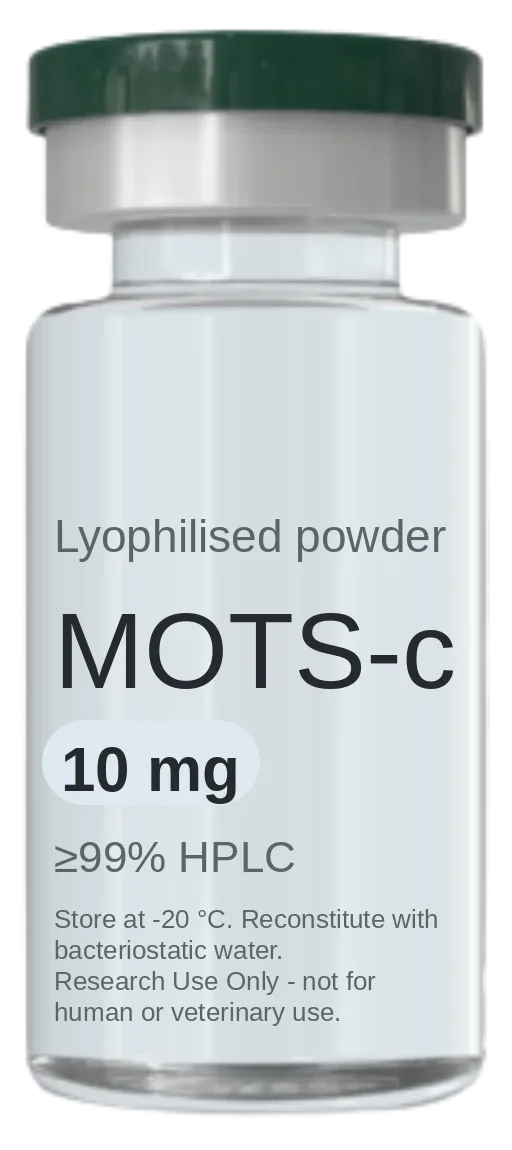
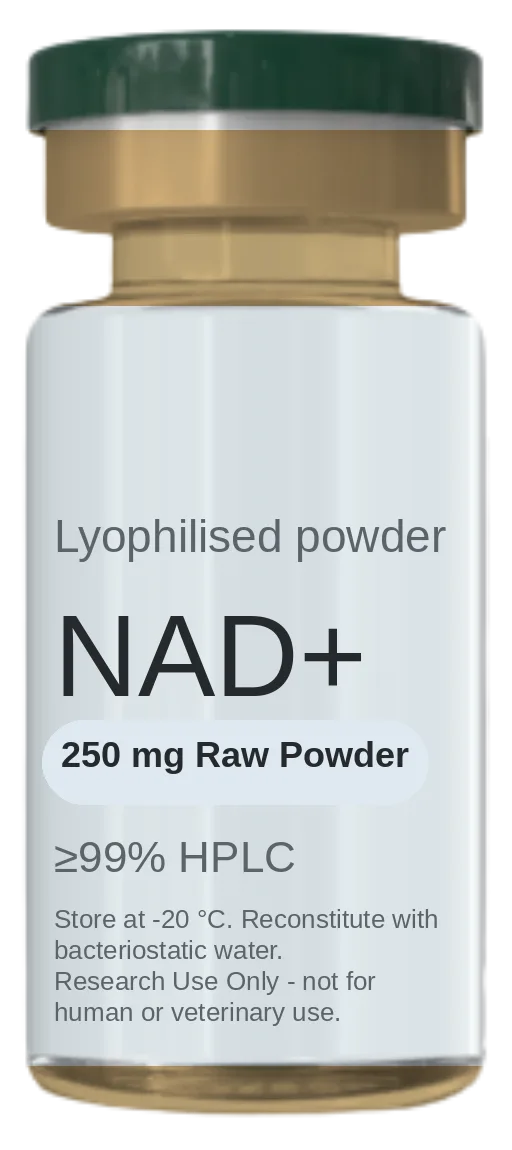
NAD+ (Nicotinamide Adenine Dinucleotide)
Essential redox cofactor central to cellular metabolism and sirtuin research.
- Purity:
- ≥99% HPLC
- Sizes available:
- 250 mg Raw Powder – 300 mg
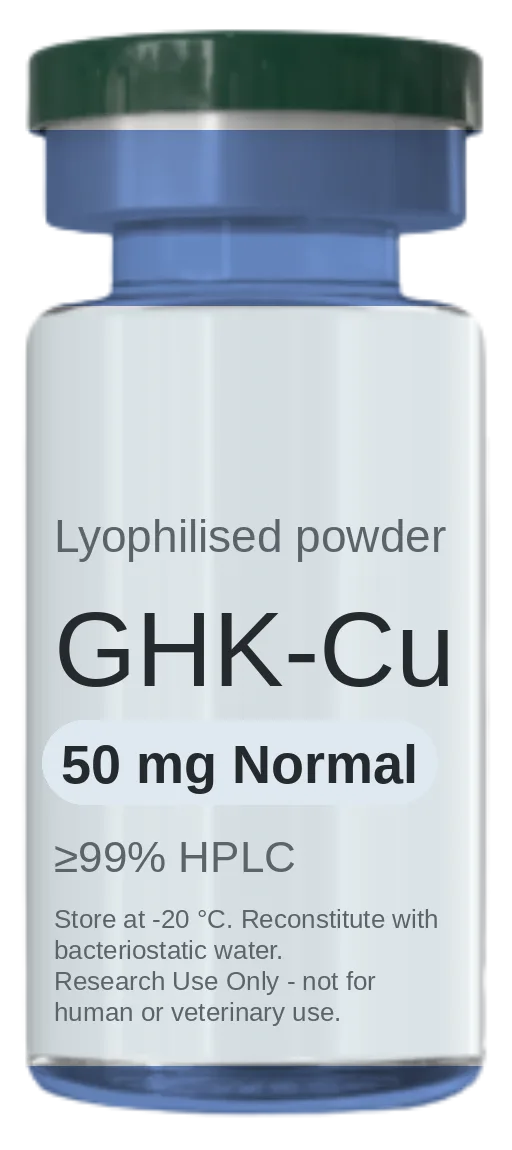
GHK-Cu (Copper Peptide)
Copper-binding tripeptide studied in extracellular matrix and dermal research models.
- Purity:
- ≥99% HPLC
- Sizes available:
- 50 mg Normal – 50 mg Plus
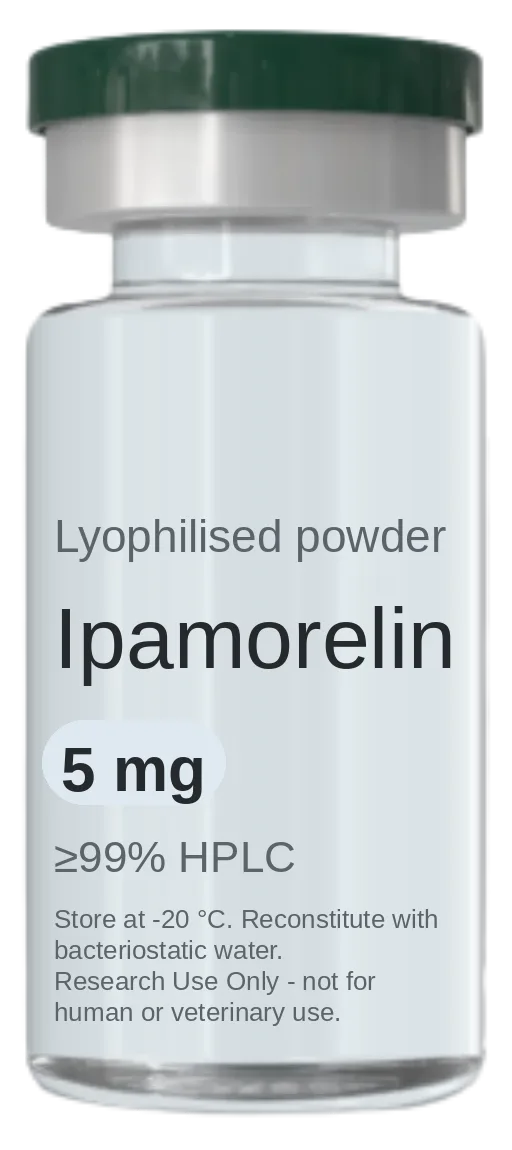
Ipamorelin
Selective ghrelin receptor (GHS-R1a) agonist pentapeptide.
- Purity:
- ≥99% HPLC
- Sizes available:
- 5 mg – 20 mg
The consultation
One intake that settles goals, history and contraindications alongside compound, quantity, documentation and route — reviewed by a physician before anything ships.
More notes
-
Is NAD+ a Peptide or Something Else?
NAD+ is not a peptide — it's a dinucleotide, a coenzyme. Here's the chemical difference and why the two get mixed up.
-
Is GHK-Cu Legal in the US?
GHK-Cu is not an FDA-approved drug and is on the FDA's list of substances pharmacies cannot compound. It is not a controlled substance.
-
Humanin vs MOTS-c: What's the Difference?
Humanin and MOTS-c are distinct mitochondrial peptides—different genes, different receptors, different research focus. Here's how they compare.
-
Is TB-500 Legal in the US?
TB-500 isn't approved by the FDA and sits on its bulk drug substance list, which blocks pharmacies from compounding it into a prescription.
-
MOTS-c or NAD+: What's the Difference
MOTS-c and NAD+ are studied through different mitochondrial pathways; here's what each line of research actually measures.