
Note
What a Physician Review Involves
By the PeptoClinic editorial team · Medically reviewed by Dr. Emily Parker
What happens in PeptoClinic's physician review before a peptide order ships, and why that review exists.
A physician review for peptides is the step between placing an order and having it shipped: a licensed physician looks at what was requested, checks it against the person's health information, and either clears the order, asks a follow-up question, or declines it. It is not a prescription in the traditional sense — most research peptides are not FDA-approved drugs — but it is a real clinical check performed by a real physician, not a checkbox a customer ticks on a form.
Why a review happens at all
PeptoClinic is a clinic, not a storefront that ships on autopilot. A physician reviews each consultation before anything ships. That single fact is what separates a clinic model from a site where anyone can add a vial to a cart and never have a person look at the order.
The reason this matters is that the catalogue includes compounds at very different points in their regulatory life. Some exist today as approved drugs under other names: semaglutide is the active ingredient in Ozempic and Wegovy, both approved by the FDA, and the pivotal trial behind that approval showed sustained weight reduction over 68 weeks (Wilding et al., NEJM 2021). Tirzepatide is the active ingredient in Mounjaro and Zepbound, also approved by the FDA, after a trial that reported comparable results in adults with obesity (Jastreboff et al., NEJM 2022). Tesamorelin is the active ingredient in Egrifta, approved by the FDA for excess abdominal fat in people with HIV-associated lipodystrophy (Falutz et al., NEJM 2007).
PeptoClinic's material is not Ozempic, not Zepbound, not Egrifta, and is not itself approved by the FDA — it is the research compound, not the branded product, and that distinction is exactly the kind of thing a physician review exists to flag. Other compounds in the catalogue, like retatrutide, are still in active clinical trials and have not been approved by the FDA for any use; a phase 3 trial reported results in adults with obesity (Jastreboff et al., NEJM 2026), and a phase 2 trial reported results in type 2 diabetes (Rosenstock et al., Lancet 2023). Still others — BPC-157 among them — have not been evaluated in the same kind of large human trials and are on the FDA's list of substances compounding pharmacies may not use because of possible safety risks. A physician who knows which bucket each compound falls into is the only person positioned to catch a mismatch between what a customer thinks they're ordering and what the order actually is.
What the physician actually looks at
The review is built around three questions, in this order: what is being requested, what the person has disclosed about their health, and whether anything in that disclosure raises a flag for that specific compound.
- The order itself. Which compound, at what label strength, in what format. The catalogue ships as lyophilised powder in sealed vials — not as a pen, and not reconstituted — so the physician is reviewing a specific, verifiable product rather than a vague request.
- Health information provided at consultation. This is self-reported by the customer, not pulled from an external medical record, and the physician reads it for anything that would make a given compound inappropriate to approve.
- Interactions and contraindications relevant to that compound class. A GLP-1-class peptide and a sex-hormone-class peptide raise different questions; the review is specific to the molecule, not a generic rubber stamp applied to every order.
- Whether the request matches what the compound is actually for. If the stated reason for an order doesn't line up with what the physician can responsibly clear, the order gets a question attached to it rather than a shipping label.
What the review does not do is write a dosing schedule, a cycle length, or an administration protocol. That kind of guidance sits outside what a physician review for a research compound is meant to provide, and a clinic that handed out a protocol alongside an unapproved compound would be making a promise it can't back up.
What happens after the review
Three outcomes exist. The order is cleared and moves to fulfillment. The order gets a follow-up question — the physician needs one more piece of information before deciding. Or the order is declined, which happens when the disclosed health information and the requested compound don't line up in a way the physician is willing to sign off on.
None of these outcomes is instant in the sense of being automatic. The review is where a human physician, not a script, makes the call.
Does this make the product FDA-approved?
No, and it's worth being direct about that. A physician reviewing an order is a clinical safeguard on how the order is handled — it is not an FDA approval process, and it does not convert an unapproved compound into an approved one. The FDA's guidance on unapproved GLP-1 drugs and compounded versions is explicit that products outside the approved brand-name pathway carry risks the agency has flagged publicly, and that applies to GLP-1-class compounds regardless of who is reviewing the order. Likewise, a list of substances the FDA has identified as presenting significant safety risks in compounding includes several compounds that show up in the research peptide space. A physician review is a check on the order, not a substitute for FDA approval, and PeptoClinic doesn't claim otherwise.
Where this fits with pricing and ordering
The review happens as part of the consultation process, before an order ships — it isn't an extra step tacked onto checkout, and it isn't something a customer can skip by paying more. Published prices by market are on the pricing page; what isn't listed there is handled through a consultation, which is where the physician review takes place.

Medical review
Dr. Emily Parker

Reviews every consultation as it comes in
Frequently asked questions
Does every order get reviewed by a physician, or only some?
Every consultation is reviewed by a physician before anything ships. The review isn't an optional add-on tied to a particular compound or order size.
Is the physician review the same thing as getting a prescription?
Not in the traditional sense most people mean by "prescription." Most compounds in the catalogue are not FDA-approved drugs, so there's no prescription being written for an approved medication. What happens instead is a clinical review of the order against the health information provided, performed by a licensed physician.
Can the physician decline an order?
Yes. If the disclosed health information and the requested compound don't line up in a way the physician is comfortable clearing, the order is declined rather than shipped. A follow-up question is also possible if more information is needed first.
Does the physician review tell me how to use the compound?
No. The review is a clinical check on whether an order should be cleared — it is not a dosing schedule, administration protocol, or cycling guidance, and PeptoClinic doesn't provide that kind of guidance in connection with research compounds.
Why does a compound like semaglutide need review if it's already an FDA-approved drug under another name?
Because the material PeptoClinic ships is not the approved branded product. Semaglutide is the active ingredient in Ozempic and Wegovy, both approved by the FDA, but the vial a customer receives is not Ozempic or Wegovy — it's the research compound, and the physician review exists partly to make sure that distinction is understood rather than assumed away.
Is retatrutide approved by the FDA?
No. Retatrutide has not received FDA approval and remains in clinical trials; a phase 3 trial in adults with obesity and a phase 2 trial in type 2 diabetes have both been published, but neither constitutes approval. The [ClinicalTrials.gov registry](https://clinicaltrials.gov/search?intr=retatrutide) tracks the current status of ongoing trials.
Where does the physician review happen in the ordering process?
It happens during the consultation, before fulfillment. A customer requests a compound, provides health information, and the physician review is the step that decides whether that specific request moves forward.
Does PeptoClinic publish prices, or is everything quoted individually?
Prices by market are published on the [pricing page](/en/pricing/). Compounds or quantities not listed there are handled through a consultation, which is also where the physician review takes place.
Compounds mentioned
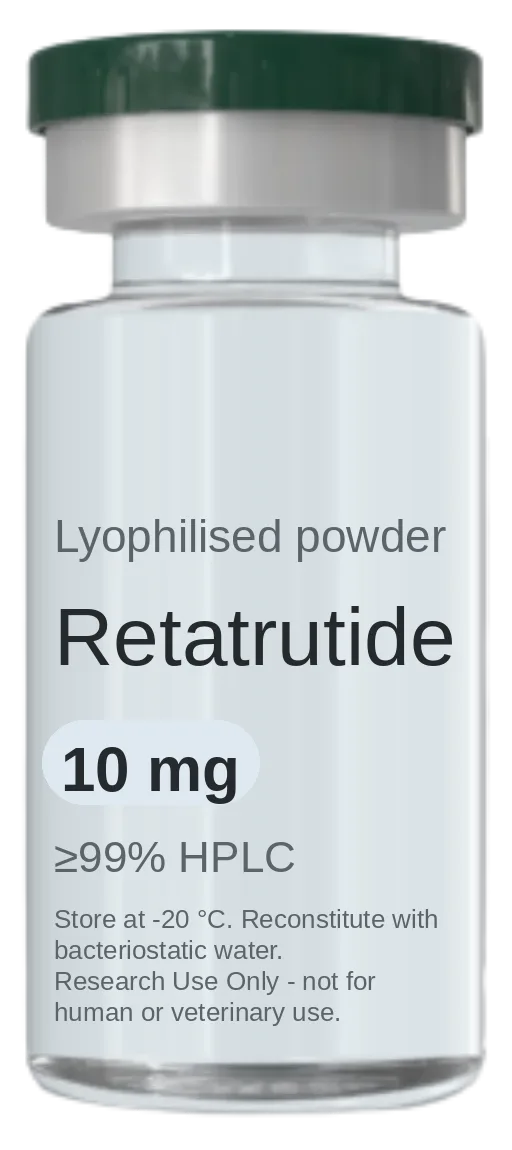
Retatrutide
Triple-agonist metabolic research peptide targeting GLP-1, GIP and glucagon receptors.
- Purity:
- ≥99% HPLC
- Sizes available:
- 10 mg
BPC-157 + TB-500
BPC-157 and TB-500 in a single vial — the pairing most studied together in tissue-repair research.
- Purity:
- ≥99% HPLC
- Sizes available:
- 10 mg
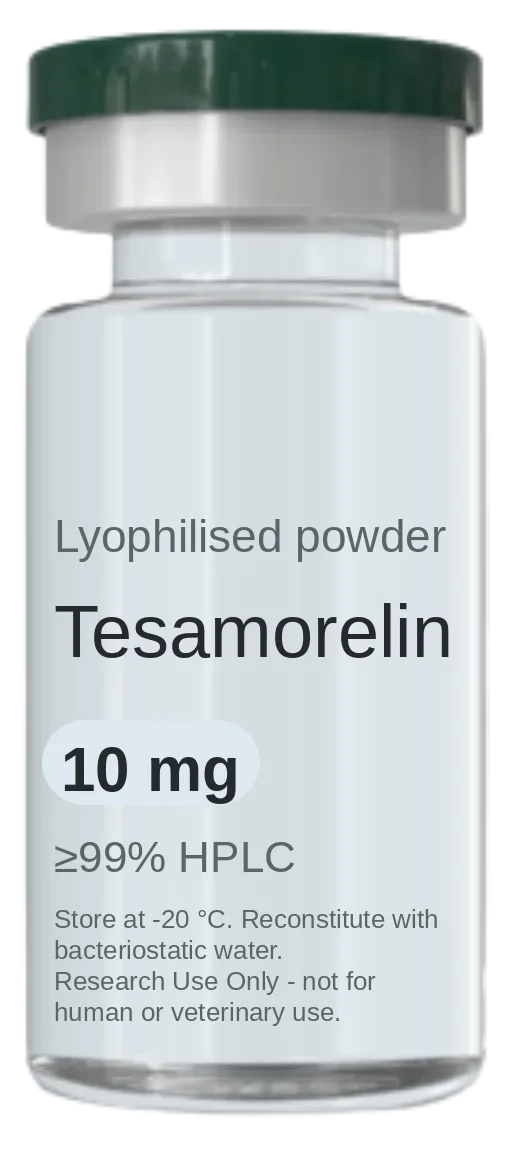
Tesamorelin
Stabilised GHRH(1-44) analogue studied in adipose tissue distribution research.
- Purity:
- ≥99% HPLC
- Sizes available:
- 10 mg – 20 mg
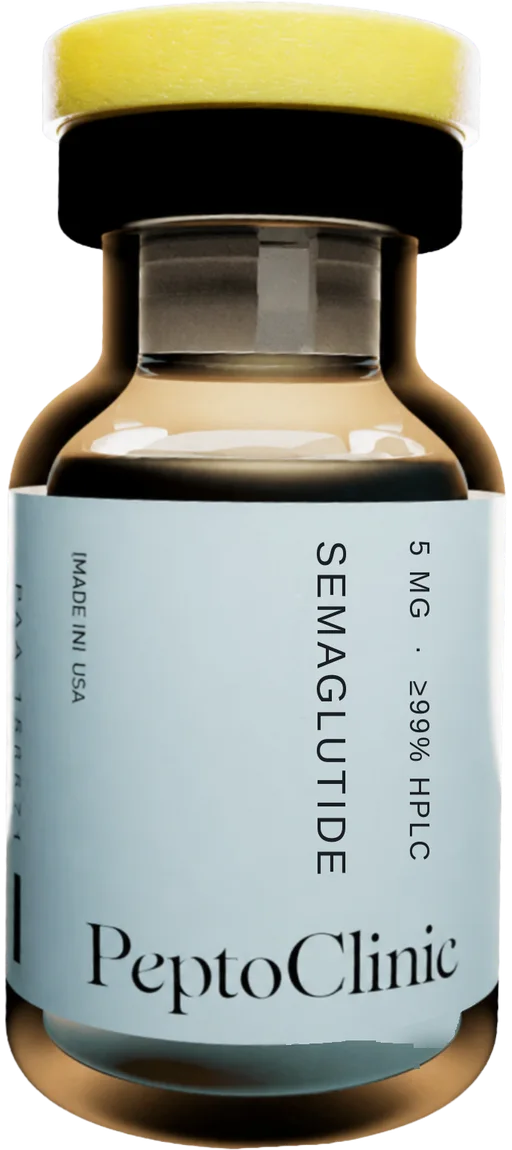
Semaglutide
GLP-1 receptor agonist, the molecule in Ozempic and Wegovy.
- Purity:
- ≥99% HPLC
- Sizes available:
- 5 mg
The consultation
One intake that settles goals, history and contraindications alongside compound, quantity, documentation and route — reviewed by a physician before anything ships.
More notes
-
Retatrutide: The Triple Agonist Explained
What retatrutide is, which receptors it activates, and why research literature calls it a triple GLP-1/GIP/glucagon agonist.
-
TB-500 or GHK-Cu: What's the Difference
TB-500 is a Thymosin Beta-4 fragment and GHK-Cu a copper tripeptide: different origin, structure and what each is researched for.
-
What is peptide stability and how it's tested
Peptide stability: what it is, what breaks it down, and how HPLC and mass spectrometry measure it. With COA data from Janoshik Analytical.
-
What Is Lyophilized Peptide Reconstitution
Reconstituting a lyophilized peptide dissolves freeze-dried powder in a compatible solvent. What changes chemically, which solvents, how to verify.
-
What 99% Purity Means in a Peptide
What the purity percentage in a peptide actually measures, how HPLC calculates it, and how to verify that a CoA number is real.