
Note
What Is Ipamorelin and What Is It Used For?
By the PeptoClinic editorial team · Medically reviewed by Dr. Emily Parker
Ipamorelin is a synthetic GH secretagogue studied mostly in animals; what the research found and its regulatory status in the US.
Ipamorelin is a synthetic pentapeptide that works as a selective growth hormone (GH) secretagogue: it binds the ghrelin receptor and triggers the release of GH from the pituitary gland without meaningfully activating other hormones such as cortisol or prolactin. It is one of the compounds in PeptoClinic's catalog, where pureza and format are listed alongside the lab report for each batch.
How it was discovered and what sets it apart
Ipamorelin was identified in the 1990s as the first GH secretagogue with real selectivity against other hormonal axes. Raun et al., Eur J Endocrinol 1998 described a peptide that released GH potently and consistently without the side effect on cortisol and prolactin seen with earlier secretagogues in the same drug class, the GHRP family. That selectivity is the reason the literature treats ipamorelin as a reference compound within its category.
The molecular mechanism behind this family of peptides was established when Howard et al., Science 1996 identified the growth hormone secretagogue receptor (GHS-R) in the pituitary and hypothalamus — the same receptor later confirmed as the endogenous receptor for ghrelin, the stomach-derived peptide that stimulates GH release. Ipamorelin acts on that same receptor, which is why it is grouped together with GHRP-6 and other ghrelin-receptor analogues under the secretagogue label.
What the research has actually studied
Most of the published evidence on ipamorelin comes from animal models, with a particular focus on the GH/IGF-I axis and bone development. Johansen et al., Growth Horm IGF Res 1999 studied the effect of ipamorelin administration on longitudinal bone growth in rats and found the peptide stimulated the process in a manner consistent with the rise in circulating GH it produced.
These studies sit inside basic research on the somatotropic (GH-IGF-I) axis, a field where secretagogues like ipamorelin function as tools for understanding how pulsatile GH secretion is regulated — not as evidence of an approved therapeutic use in people.
How it compares to CJC-1295
CJC-1295 is the compound most often cited alongside ipamorelin in this literature, and the two act on different receptors of the same hormonal pathway. PeptoClinic's CJC-1295 page for the Argentine market lays out the same mechanism in more detail.
| Aspect | Ipamorelin | CJC-1295 |
|---|---|---|
| Mechanism | Ghrelin receptor (GHS-R) agonist | GHRH analogue acting on the GHRH receptor |
| Hormonal selectivity | High: little reported effect on cortisol/prolactin (Raun et al., 1998) | Sustains elevated GH and IGF-I over a longer window |
| Receptor | GHS-R, the ghrelin receptor | GHRH receptor |
| Reported half-life | Short, pulsatile action | Extended (hence the "DAC" formulations) |
| Regulatory status | Not approved by the FDA for any use | Not approved by the FDA for any use |
| Common pairing in studies | Investigated alongside GHRH analogues for a combined effect | Investigated alongside secretagogues like ipamorelin |
That pairing — a GHRH analogue combined with a ghrelin-receptor secretagogue — is the logic behind why the two compounds are so frequently cited together in basic research on the GH axis, each acting on a different receptor of the same hormonal pathway.
The broader family of GH secretagogues
Ipamorelin is not the only peptide that acts on the ghrelin receptor. The receptor work from Howard et al. and the studies that followed place it alongside GHRP-6 and GHRP-2 as part of the same pharmacological family, distinguished mainly by its selectivity profile and by the absence of a strong orexigenic (appetite-stimulating) effect that some other members of that family show.
Sermorelin follows yet another route: it is a GHRH analogue, the same receptor class as CJC-1295, rather than a ghrelin-receptor agonist like ipamorelin.
Tesamorelin, by contrast, is a different story altogether: it is a GHRH analogue that did receive regulatory approval, under the brand name Egrifta in the United States, for excess abdominal fat in people with HIV and lipodystrophy. Anyone trying to see the full picture of compounds that act on the GH axis — one approved, the rest not — can look at the tesamorelin page for that contrast.
Regulatory status in the United States
Ipamorelin is not approved by the FDA for any use in people. There is no authorized clinical indication and no registered drug product built around ipamorelin as its active ingredient. The FDA also includes ipamorelin on its list of substances that compounding pharmacies may not use, because of the safety risk the substance presents, as stated on the FDA's bulk drug substances page. That listing does not make ipamorelin a controlled substance, but it does make clear that it is neither a prescription drug nor something a pharmacy can legally compound.
All of the evidence cited above comes from animal studies or basic mechanistic research on the ghrelin receptor. No late-phase human clinical trial of ipamorelin appears among the sources reviewed for this article.
Purity and batch verification
Every batch PeptoClinic offers is analyzed by an independent laboratory, Janoshik Analytical, and the report is available for verification with its own key. Anyone who wants to understand how to read one of these reports before evaluating a compound can check the quality page, which explains what each section of a certificate of analysis measures.
The full list of research peptides PeptoClinic carries, including ipamorelin, is on the catalog page.

Medical review
Dr. Emily Parker

Reviews every consultation as it comes in
Frequently asked questions
Is ipamorelin the same thing as growth hormone?
No. Ipamorelin is not GH itself: it is a peptide that acts on the ghrelin receptor (GHS-R) to stimulate the release of endogenous GH from the pituitary, per the mechanism described by [Howard et al., Science 1996](https://pubmed.ncbi.nlm.nih.gov/8688086/). They are two distinct molecules with different modes of action.
Why is it described as "selective"?
Because the original studies showed it stimulates GH release without meaningfully raising other pituitary hormones, such as cortisol or prolactin, unlike what was reported with earlier secretagogues in its class. That is the central finding of [Raun et al., 1998](https://pubmed.ncbi.nlm.nih.gov/9849822/).
Are there human studies on ipamorelin?
The most robust and most cited evidence on ipamorelin comes from animal models, including the rat bone-growth study from [Johansen et al., 1999](https://pubmed.ncbi.nlm.nih.gov/10373343/). No late-phase human clinical trial surfaced among the sources reviewed for this article.
Is ipamorelin approved by the FDA?
No. The FDA has not approved any drug product with ipamorelin as its active ingredient, and it appears on the agency's list of bulk substances that compounding pharmacies cannot use due to safety concerns.
How does it differ from GHRP-6?
Both act on the same receptor, the GHS-R described by [Howard et al.](https://pubmed.ncbi.nlm.nih.gov/8688086/), but ipamorelin is described in the literature as more hormonally selective, with a smaller reported effect on cortisol and prolactin than what has been observed with GHRP-6.
Is it studied together with other peptides?
Yes, it is commonly cited alongside GHRH analogues such as CJC-1295, which act on a different receptor (the GHRH receptor rather than the GHS-R). Basic research on the GH axis tends to describe the two acting on two different points of the same hormonal pathway.
How do I know a batch is pure?
Every batch PeptoClinic distributes carries a report from [Janoshik Analytical](https://janoshik.com/) that can be verified with its own key. The detail of how to read those reports is on the [quality page](/en/quality/).
Is ipamorelin legal to buy in the United States?
It is not a controlled substance, but it is also not an FDA-approved drug, and it sits on the list of substances compounding pharmacies may not use for safety reasons, per the [FDA's bulk drug substances page](https://www.fda.gov/drugs/human-drug-compounding/certain-bulk-drug-substances-use-compounding-may-present-significant-safety-risks).
Compounds mentioned
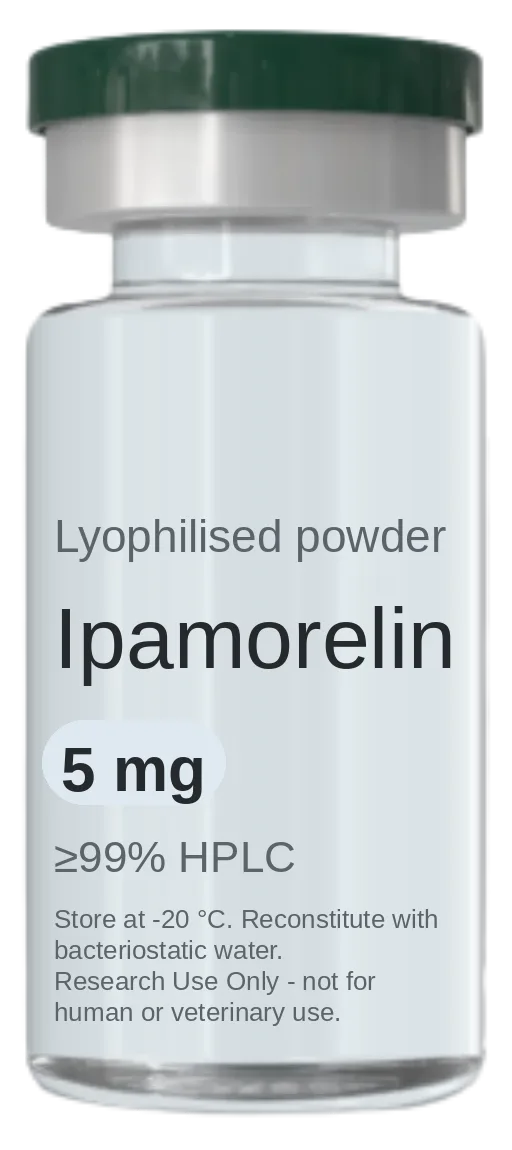
Ipamorelin
Selective ghrelin receptor (GHS-R1a) agonist pentapeptide.
- Purity:
- ≥99% HPLC
- Sizes available:
- 5 mg – 20 mg
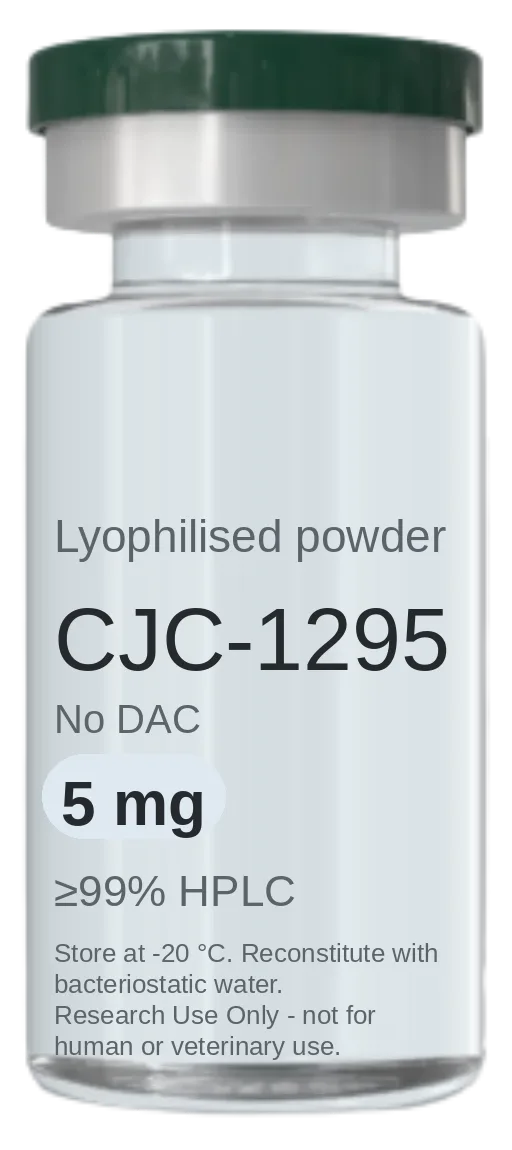
CJC-1295 (sin DAC)
Modified GRF(1-29) tetrasubstituted analogue without drug affinity complex.
- Purity:
- ≥99% HPLC
- Sizes available:
- 5 mg – 20 mg
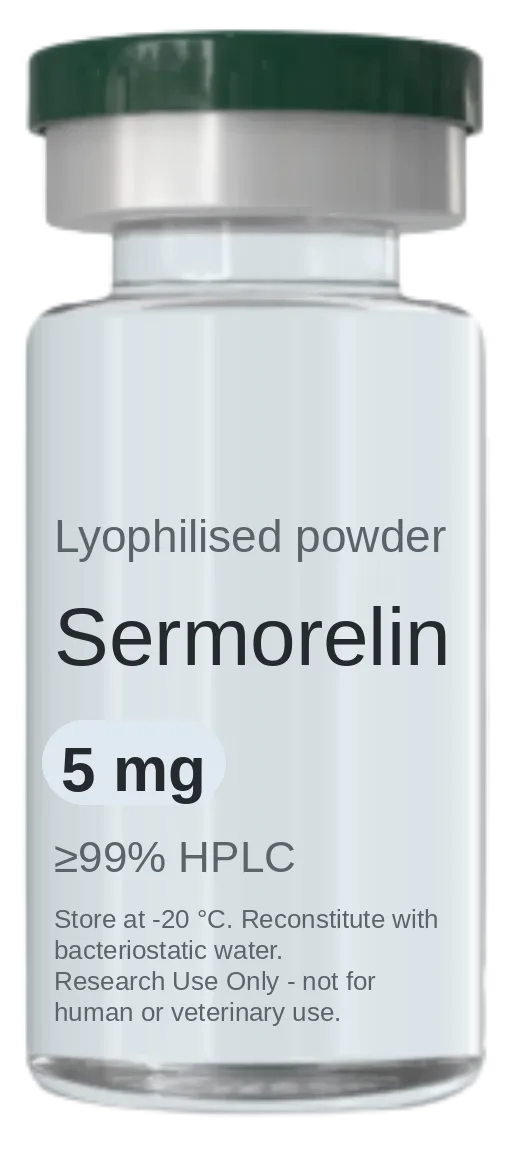
Sermorelin
Growth hormone-releasing hormone analogue used in endocrine signalling research.
- Purity:
- ≥99% HPLC
- Sizes available:
- 5 mg – 20 mg
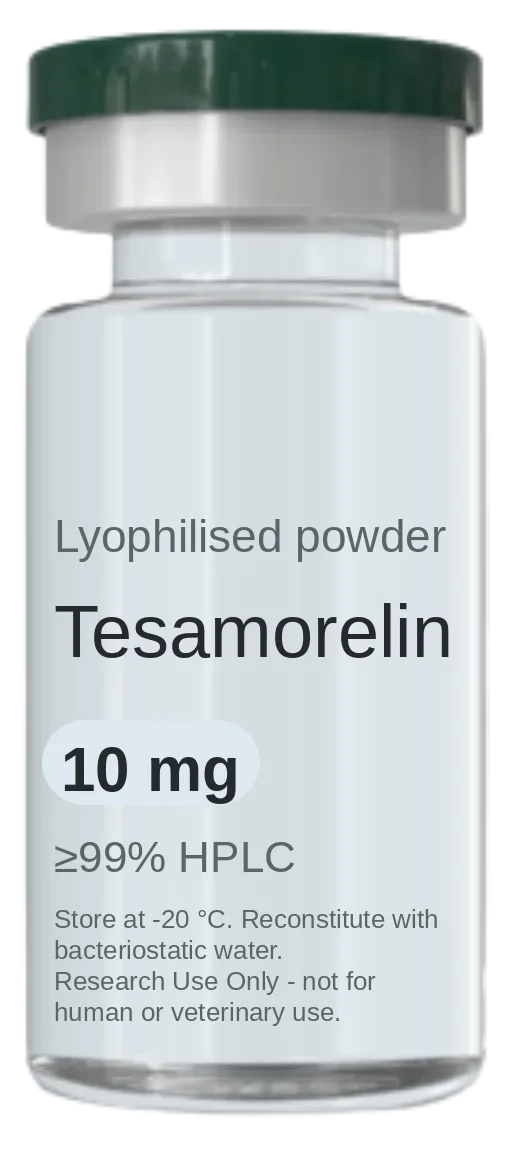
Tesamorelin
Stabilised GHRH(1-44) analogue studied in adipose tissue distribution research.
- Purity:
- ≥99% HPLC
- Sizes available:
- 10 mg – 20 mg
The consultation
One intake that settles goals, history and contraindications alongside compound, quantity, documentation and route — reviewed by a physician before anything ships.
More notes
-
CJC-1295 or Tesamorelin: what each shows
What published research shows on CJC-1295 and tesamorelin: mechanism, differences, and which compound has more clinical data.
-
Sermorelin or CJC-1295: What Research Says
A comparison of published research on sermorelin and CJC-1295 without DAC: mechanisms, key studies, and structural differences.
-
Growth Hormone Secretagogues: What They Are
Growth hormone secretagogues are peptides that trigger the pituitary to release its own GH. Two families, two mechanisms, one axis.
-
Mod GRF 1-29 vs Ipamorelin: Differences
Mod GRF 1-29 and ipamorelin are peptides with different mechanisms: one activates the GHRH receptor, the other the ghrelin receptor.
-
CJC-1295 vs Ipamorelin: The Difference
CJC-1295 binds the GHRHR; ipamorelin binds GHS-R1a. Two distinct peptide families, independent signaling pathways, documented synergy.