
Note
What Is KPV Used For?
By the PeptoClinic editorial team · Medically reviewed by Dr. Emily Parker
KPV is a tripeptide fragment of alpha-MSH studied for its effect on inflammatory signaling in skin and gut tissue.
KPV is a three-amino-acid fragment (lysine-proline-valine) derived from the C-terminal end of alpha-melanocyte-stimulating hormone (alpha-MSH), and it is studied for its effect on inflammatory signaling, mainly in skin and gut tissue models. It does not carry the pigmentation or appetite effects of the full alpha-MSH molecule — researchers isolated this fragment specifically because it appeared to retain the anti-inflammatory activity without the rest of the hormone's effects.
Where the research on KPV comes from
The tripeptide's anti-inflammatory profile was characterized in work on alpha-MSH and its fragments, including KPV, in the context of skin inflammation. Elliott et al., J Invest Dermatol 2004 examined how alpha-MSH and the KPV fragment modulate inflammatory pathways relevant to dermatologic conditions, looking at cytokine signaling and the activity of transcription factors involved in the inflammatory cascade.
That paper is the foundational citation for KPV specifically, as distinct from the broader alpha-MSH literature. It describes KPV's activity on NF-κB signaling, a pathway central to how cells initiate and sustain inflammatory responses, and reports that the fragment reduced markers of inflammation in the models tested without requiring the melanocortin receptor binding that drives alpha-MSH's pigmentation effects.
What "anti-inflammatory" means in this research context
The research interest in KPV sits in the same general space as other short peptides studied for localized inflammatory and tissue-repair signaling, such as BPC-157, which has its own separate literature on musculoskeletal repair pathways reviewed by Gwyer et al., Cell Tissue Res 2019. KPV and BPC-157 are structurally and mechanistically distinct peptides — they are not interchangeable, and a researcher choosing between them is choosing between different signaling targets, not two versions of the same tool.
KPV's specific angle is the melanocortin-pathway connection: because it derives from alpha-MSH, researchers have used it as a tool to probe which parts of the alpha-MSH molecule drive which downstream effects, separating the receptor-binding, pigmentation-related activity from the inflammatory-modulation activity.
Is KPV approved by the FDA?
No compound in PeptoClinic's catalogue is a product that has received FDA approval, and KPV is no exception. KPV itself is also named specifically on the FDA's list of bulk drug substances that compounding pharmacies may not use because of possible safety risks — meaning a licensed compounding pharmacy in the United States cannot legally formulate it into a prescription product, regardless of the research interest in the molecule. That is distinct from FDA scheduling as a controlled substance: KPV is not a controlled substance. It is simply a peptide that has not gone through the drug approval process and, per the FDA's compounding guidance, cannot be substituted into compounded prescriptions as a workaround.
This is a different regulatory position from compounds like semaglutide and tirzepatide, which exist as approved brand drugs (Ozempic, Wegovy, Mounjaro, Zepbound) and separately show up in unapproved compounded versions the FDA has warned about. KPV was never a brand drug to begin with — there is no approved product version of it to compare against, in contrast to something like tesamorelin, which is sold as the approved product Egrifta for a specific indication studied by Falutz et al., N Engl J Med 2007.
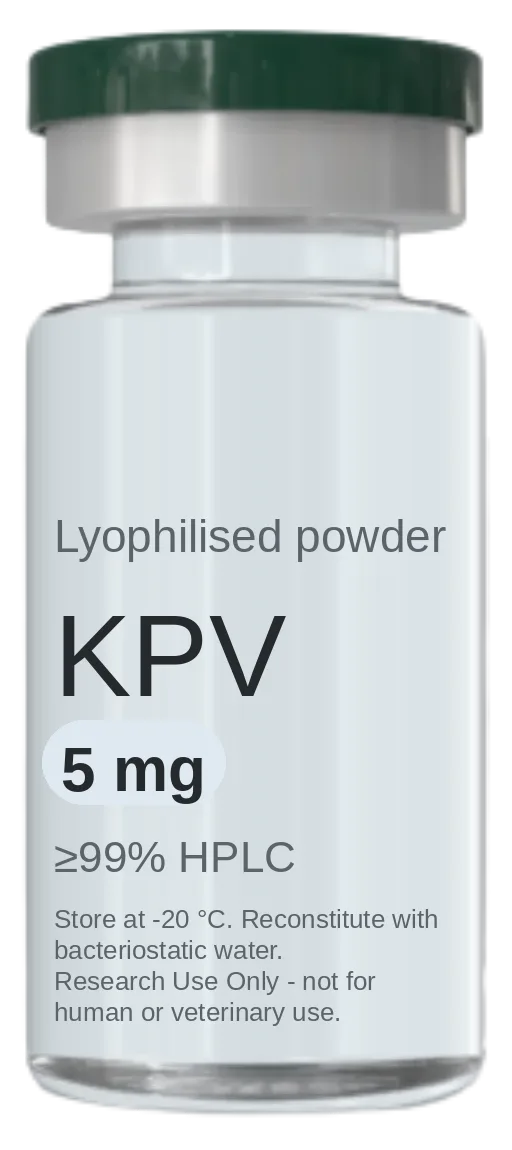
PeptoClinic's KPV vial is a research compound, not an approved drug, and the catalogue entry should be read in that context — see the KPV product page for the specification sheet and lab documentation.
How KPV fits alongside other peptides researchers study together
KPV is sometimes studied alongside other short regulatory peptides in work on tissue signaling and inflammatory modulation, though each has a distinct literature base. GHK-Cu, a copper-binding tripeptide, has its own separate body of research on skin regeneration and gene-expression effects, reviewed by Pickart and Margolina, Int J Mol Sci 2018 and Pickart et al., Biomed Res Int 2015. Researchers comparing KPV to GHK-Cu are comparing an alpha-MSH-derived inflammatory modulator to a copper-peptide complex studied for a different set of regenerative signaling pathways — the two are not substitutes for each other in a research design, even though both are short peptides sold in the same general research category.
For a lab assembling a panel of short-sequence peptides to study inflammatory and signaling pathways, understanding which mechanism each compound engages matters more than grouping them by size or by category label. The full catalogue lists each compound with its molecular target where published literature establishes one.
What determines whether a KPV vial is what the label says
Any peptide ordered for research needs independent verification that the vial contents match the label — purity and identity are not things a buyer can verify by eye. PeptoClinic publishes laboratory reports from Janoshik Analytical for its catalogue, and the lowest purity figure published across those reports is 99.669%, from the MOTS-c analysis (task 136923). That is the number to look at when assessing what "high purity" means across the catalogue, rather than quoting the best result from a single batch. The quality page explains how to read a certificate of analysis and what each field on the report means.
What a research order involves
PeptoClinic reviews each consultation with a physician before anything ships, and material is supplied as lyophilized powder in a sealed vial — it does not travel in a cold chain, since dry powder is stable at room temperature. Current pricing for the catalogue, including KPV, is listed on the pricing page. Shipping to US addresses is covered on the United States shipping page.

Medical review
Dr. Emily Parker

Reviews every consultation as it comes in
Frequently asked questions
Is KPV the same as alpha-MSH?
No. KPV is a three-amino-acid fragment taken from the C-terminal end of alpha-MSH. [Elliott et al., 2004](https://pubmed.ncbi.nlm.nih.gov/15102092/) studied it specifically because it appeared to carry the inflammatory-signaling activity of alpha-MSH without the receptor-binding effects tied to pigmentation, which is a separate part of the full hormone's activity.
What pathway does KPV research focus on?
The published research centers on NF-κB signaling, a pathway cells use to coordinate inflammatory responses. [Elliott et al., 2004](https://pubmed.ncbi.nlm.nih.gov/15102092/) reported that KPV modulated this pathway in the models studied, which is the basis for its classification as an anti-inflammatory research peptide.
Is KPV legal to buy in the United States?
KPV is not a controlled substance, but it is named on the FDA's list of [bulk drug substances that present safety risks for compounding](https://www.fda.gov/drugs/human-drug-compounding/certain-bulk-drug-substances-use-compounding-may-present-significant-safety-risks), which means licensed pharmacies cannot compound it into prescription products. It has not gone through FDA drug approval. This is general regulatory information, not legal advice.
Does KPV have the same effects as BPC-157?
No. They are structurally distinct peptides studied through different mechanisms. KPV's literature centers on alpha-MSH-pathway inflammatory signaling, while [BPC-157's](/en/product/bpc-157/) literature, reviewed by [Gwyer et al., 2019](https://pubmed.ncbi.nlm.nih.gov/30915550/), centers on tissue-repair signaling in musculoskeletal models. A researcher would choose between them based on which pathway the study design targets.
How is KPV purity verified?
PeptoClinic publishes third-party laboratory reports from Janoshik Analytical for its catalogue. The reports include the analyzed purity percentage and, where available, a verification key to check the result directly with the laboratory. The [quality page](/en/quality/) walks through how to read a certificate of analysis.
Does KPV cause pigmentation changes like alpha-MSH analogs?
The research interest in isolating the KPV fragment specifically was to separate the melanocortin-receptor-driven effects of alpha-MSH, which include pigmentation, from the inflammatory-signaling effects. [Elliott et al., 2004](https://pubmed.ncbi.nlm.nih.gov/15102092/) is the reference describing that distinction in the models studied.
Has KPV been studied in humans?
The foundational published work on KPV's mechanism, [Elliott et al., 2004](https://pubmed.ncbi.nlm.nih.gov/15102092/), is a laboratory and model-based study of inflammatory pathway activity. It is not a clinical trial establishing a human outcome, and KPV has not gone through FDA drug approval.
How does PeptoClinic ship KPV?
As a lyophilized powder in a sealed vial, shipped at ambient temperature rather than in a cold chain, since dry powder is stable without refrigeration. Details on reaching a US address are on the [shipping page](/en/shipping/united-states/).
Compounds mentioned
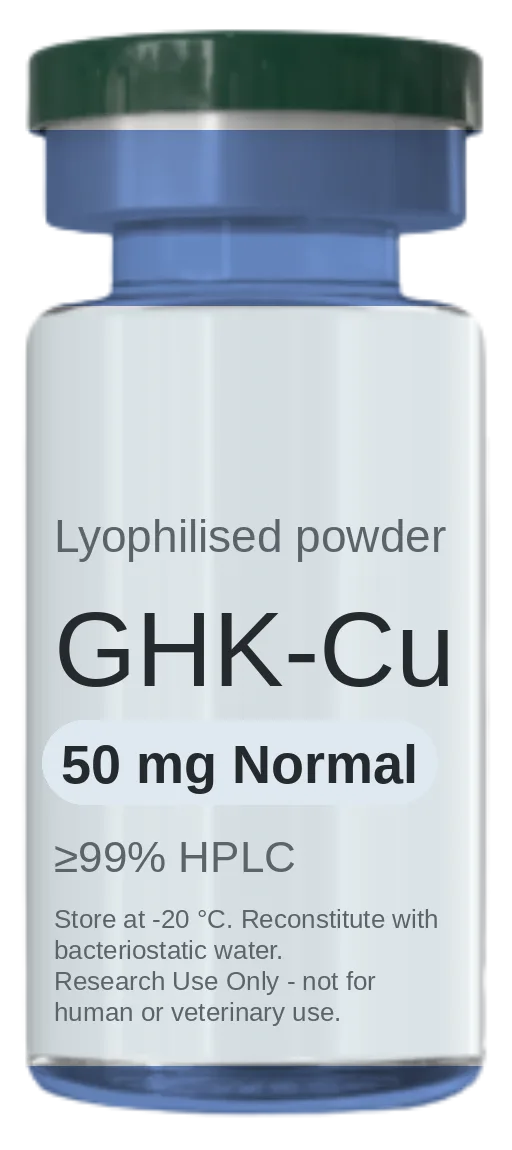
GHK-Cu (Copper Peptide)
Copper-binding tripeptide studied in extracellular matrix and dermal research models.
- Purity:
- ≥99% HPLC
- Sizes available:
- 50 mg Normal – 50 mg Plus
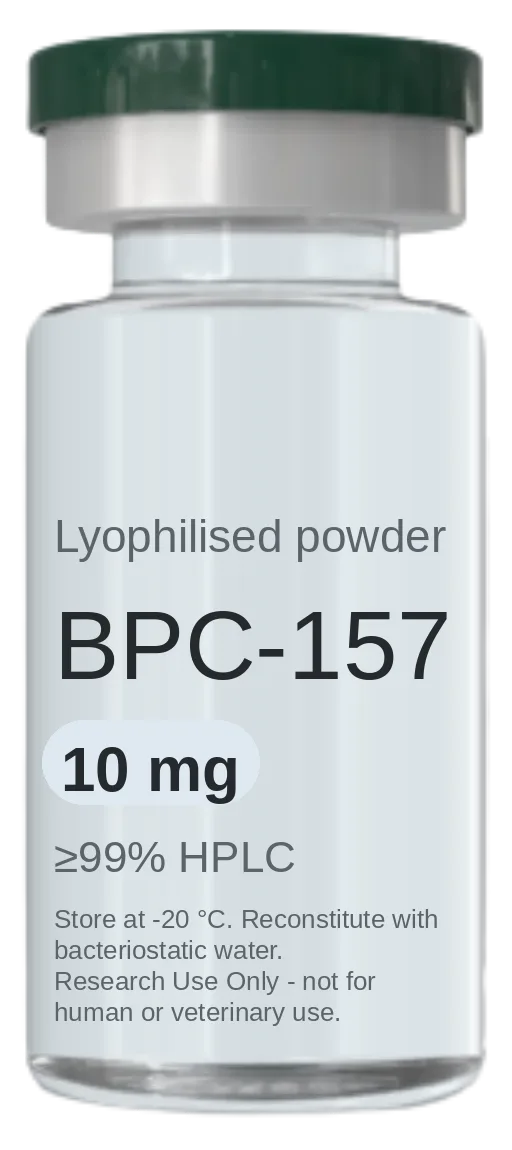
BPC-157 + TB-500
BPC-157 and TB-500 in a single vial — the pairing most studied together in tissue-repair research.
- Purity:
- ≥99% HPLC
- Sizes available:
- 10 mg
The consultation
One intake that settles goals, history and contraindications alongside compound, quantity, documentation and route — reviewed by a physician before anything ships.
More notes
-
What Is BPC-157 Used For?
What research on BPC-157, a synthetic pentadecapeptide, investigates in animal models, and how PeptoClinic documents the lot it supplies.
-
GHK-Cu: What Is This Copper Complex
GHK-Cu is a copper-chelated tripeptide studied for its activity in tissue remodeling. What it is, what the literature says and its regulatory status.
-
KPV vs GHK-Cu: What's the Difference?
KPV and GHK-Cu are distinct peptides with different sequences and mechanisms — how to tell them apart and verify batch purity.
-
LL-37: what it is and how it is studied
LL-37 is the only human cathelicidin peptide. Studied for antimicrobial activity, immunomodulation, and its role in innate immunity.
-
GHK-Cu vs KPV: What Sets Them Apart
GHK-Cu is a copper-binding peptide studied in skin research; KPV is a metal-free fragment of alpha-MSH studied in inflammation models.