
Note
What a Peptide CoA Without Purity Data Means
A peptide CoA without a purity figure is incomplete. What that absence actually means, and what every complete batch report must include.
A peptide certificate of analysis that does not list a purity percentage is an incomplete document. That absence does not mean the compound is pure — it means the measurement was not performed, was not disclosed, or was replaced by a different kind of analysis. Those three possibilities are not equivalent, and distinguishing between them is the practical skill in evaluating supplier documentation.
What a complete certificate of analysis contains
A certificate of analysis (CoA) is the document a third-party laboratory issues after subjecting a sample to chemical testing. For research peptides, a complete CoA includes four required elements:
- Compound identity: confirmation that the substance analysed matches the declared compound. Established by mass spectrometry or chromatography.
- Chromatographic purity: the percentage of the sample corresponding to the compound of interest, measured by HPLC. This is the central figure in the report.
- Lot number and analysis date: the reported purity applies to that specific lot on that specific date, not to the compound in the abstract or to the production line in general.
- Laboratory identification: name, signature and, where the platform supports it, a verification key that allows the report to be checked directly against the laboratory's servers.
If any of those four elements is missing, the document is incomplete. If the missing element is purity, the most consequential number in the report is absent.
Why some certificates do not report purity
Three situations explain a CoA that carries no purity figure.
The first: the analysis commissioned was an identity analysis, not a purity analysis. An identity analysis confirms that the compound has the expected molecular sequence or structure. It does not quantify what proportion of the sample corresponds to that compound versus the impurities present. It is faster and less expensive. Some suppliers commission only an identity analysis and then present the resulting document as though it were a complete purity certificate.
The second: purity was measured but the result is not published. If a lot returns 85% or 90% purity by HPLC, the supplier can omit that figure from the version of the certificate shared with the buyer. The document is technically still a CoA; it simply withholds the most relevant number.
The third: the document was not produced by an independent external laboratory. Some suppliers issue their own certificates internally, without third-party involvement. Those documents do not carry the same evidentiary weight as an external laboratory report. In many cases they are not structured to report purity at all, because no HPLC analysis was ever performed.
Why HPLC purity is the number that matters
High-performance liquid chromatography (HPLC) separates the components of a sample and quantifies what proportion corresponds to the target compound. For research peptides, it is the standard method for detecting related impurities: synthesis fragments, truncated peptides, sequence variants and manufacturing contaminants.
A certificate that reports identity but not purity tells a researcher that the compound is present in the sample. It does not say at what relative concentration, or what accompanies it.
For in vitro research, the difference between a lot at 85% purity and one at 99.7% is not trivial. It affects the reproducibility of experiments, the interpretation of results and the comparability between studies conducted with different lots. Impurities that are invisible to an identity analysis may produce confounding effects or mask the activity of the target compound.
The Janoshik Analytical reports and what they state
Janoshik Analytical is the laboratory that analysed the lots available in PeptoClinic's catalogue. Their reports include HPLC purity as the central data point and assign a verification key that allows each report to be checked directly against their servers.
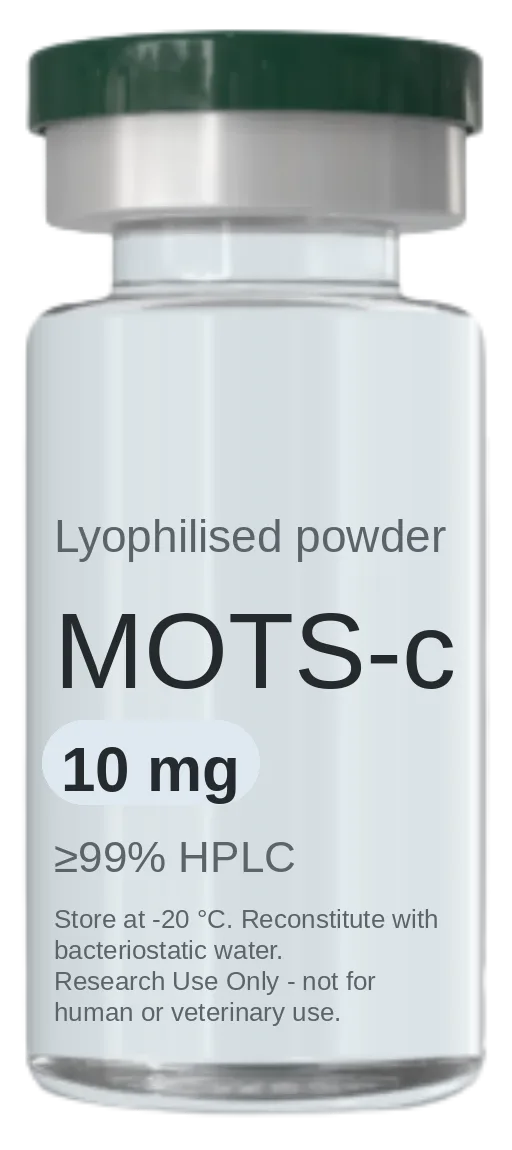
For retatrutide, the lot analysed on 13 April 2026 recorded a purity of 99.893% on a 10 mg vial with 11.96 mg of actual content. For MOTS-c, the same analysis found 99.669% — 11.31 mg of actual content in a 10 mg labelled vial.
The reports for GHK-Cu and BPC-157 + TB-500, also issued by Janoshik with the same analysis date, do not declare a purity percentage in the published documents. PeptoClinic records that absence on the quality page rather than inferring a number not explicit in the report. The standard applied is: do not state what the document does not say.
The lowest purity figure that appears in any of PeptoClinic's published reports is 99.669%, the result for MOTS-c. That is the number PeptoClinic uses as a reference floor in public communication — not the highest result, because a headline built on the best lot fails the moment a batch with a lower figure is published.
Signs of an incomplete or unreliable certificate
When reviewing a supplier's documentation, these elements indicate a problem:
- No purity percentage appears. Only identity confirmation or a qualitative description of the compound is present.
- The reported figure is exactly round. A real HPLC analysis does not return results like 99.00% or 100.00% as exact figures. It returns values like 99.667% or 98.841%. A round number generally means the figure was manually assigned, not measured chromatographically.
- No lot number. Without an identified lot, the analysis cannot be attributed to any specific shipment or checked against what the researcher actually received.
- The signing laboratory is the same as the supplier. A self-issued report is not an independent report and does not carry the same evidentiary weight.
- The analysis date is missing or inconsistent. A certificate without a date allows no inference about the condition of the compound at the time of shipment.
- The online verifier returns an error or does not exist. Two of the four reports published by PeptoClinic carry a verification address that does not respond. PeptoClinic does not link those addresses because a broken verifier neither confirms nor refutes the content of the report.
Laboratory research use only
The peptides PeptoClinic supplies are research materials for Research Use Only (RUO), intended for in vitro applications and controlled laboratory research environments.
They are not medicines, supplements or foods. They are not approved or intended for human or veterinary consumption, diagnosis or treatment. Nothing on this site constitutes medical, dosing or administration guidance. Requests for human-use protocols are not processed.
For information about compounds available with batch documentation, contact [email protected].
Frequently asked questions
Is a certificate of identity the same as a certificate of purity?
No. A certificate of identity confirms that the compound has the expected molecular sequence or structure. A purity certificate by HPLC quantifies what proportion of the sample corresponds to that compound. The first says "this is retatrutide"; the second says "this sample is 99.8% retatrutide and 0.2% other substances." For reproducible research, the percentage is the number that matters.
What does it mean when a CoA declares "100%" or an exactly round figure?
A real HPLC analysis does not produce exactly round results. When a certificate declares 100% or 99% without decimal places, it generally means the number was not produced by a chromatographic analysis but was assigned manually or reflects a qualitative assessment. Independent laboratory reports consistently include three or more decimal places in their purity figures.
Why do the GHK-Cu and BPC-157 + TB-500 reports from PeptoClinic not declare purity?
Those two Janoshik Analytical reports do not include a purity percentage in the published documents. PeptoClinic records that absence on the quality page without inferring any figure. The declared standard for the catalogue is ≥99% HPLC; the two reports with an explicit purity figure — retatrutide at 99.893% and MOTS-c at 99.669% — are both above that threshold.
How can I verify that a Janoshik report is genuine?
Janoshik Analytical publishes all its reports on its platform and assigns a verification key to each one. Entering that key in the laboratory's tool retrieves the original report. In some cases the verification address returns an error; PeptoClinic does not link those addresses because a broken verifier neither confirms nor refutes the content of the analysis.
Can a supplier fabricate a purity figure in a certificate?
Yes. Nothing prevents a supplier from printing any number on a document they issue themselves. That is why the value of a certificate depends on two conditions: the analysis was conducted by an external, independent laboratory, and that laboratory allows the result to be verified directly — without intermediaries or documents of uncertain provenance.
How many lots in PeptoClinic's catalogue have published Janoshik reports?
Four lots, all analysed on 13 April 2026: retatrutide (99.893%), MOTS-c (99.669%), GHK-Cu and BPC-157 + TB-500. All four documents are available on PeptoClinic's quality page before any consultation, without registration or a prior quotation request.
What is the lowest purity figure in PeptoClinic's published reports?
The lowest declared value is 99.669%, corresponding to the MOTS-c lot analysed by Janoshik Analytical. PeptoClinic uses that figure as the reference floor in public communication, not the highest value, because a headline built on the best result breaks the first time a lower-purity lot is published.
How do I request batch documentation alongside a quotation?
When submitting a quotation request to [email protected], the analysis documentation available for the relevant lot is included as part of the technical information. Published reports are accessible on the quality page before any consultation, without requiring registration or an initial quotation request.
Compounds mentioned
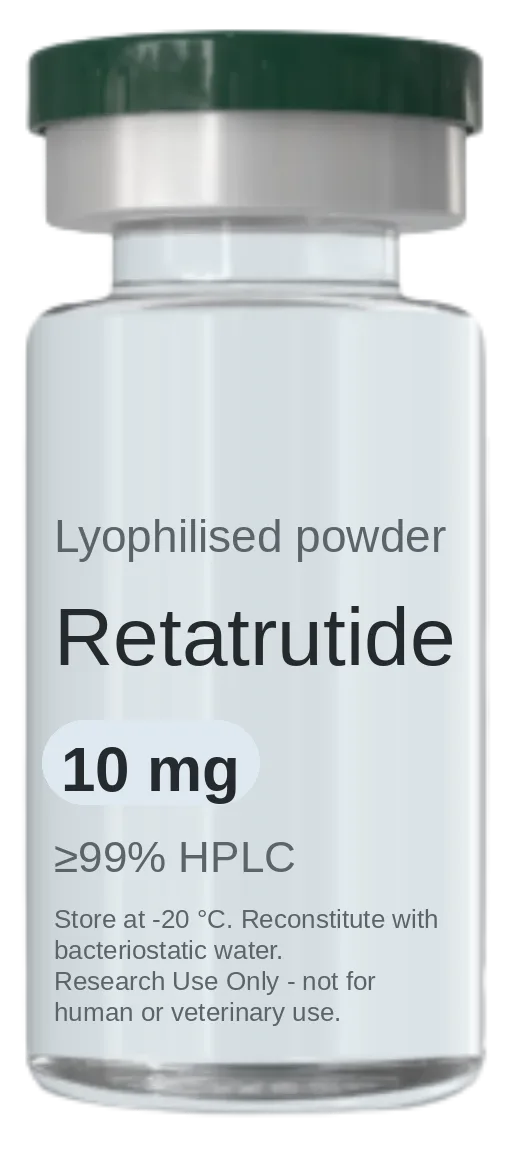
Retatrutide
Triple-agonist metabolic research peptide targeting GLP-1, GIP and glucagon receptors.
- Purity:
- ≥99% HPLC
- Sizes available:
- 10 mg
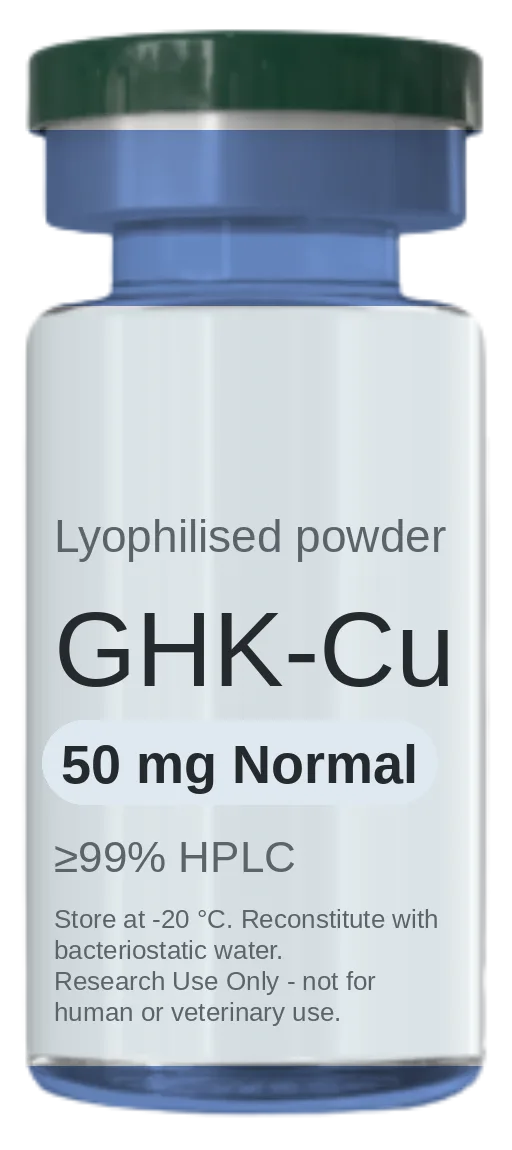
GHK-Cu (Copper Peptide)
Copper-binding tripeptide studied in extracellular matrix and dermal research models.
- Purity:
- ≥99% HPLC
- Sizes available:
- 50 mg Normal – 50 mg Plus
BPC-157 + TB-500
BPC-157 and TB-500 in a single vial — the pairing most studied together in tissue-repair research.
- Purity:
- ≥99% HPLC
- Sizes available:
- 5 mg + 5 mg
The consultation
One intake that settles goals, history and contraindications alongside compound, quantity, documentation and route — reviewed by a physician before anything ships.
More notes
-
Tesamorelin vs Sermorelin: The Difference
Tesamorelin and sermorelin are both GHRH analogs, but not the same molecule. Here's the structural difference and what the studies on each measure.
-
Peptide Supplier vs. Reseller: What Differs
The real difference is whether someone can name the lab that tested a batch and show the report — or only promise it's pure.
-
MOTS-c or NAD+: What's the Difference
MOTS-c and NAD+ are studied through different mitochondrial pathways; here's what each line of research actually measures.