
Note
What to ask a peptide supplier before you buy
Five questions that separate a supplier with verifiable documentation from one with green shields on its homepage.
Before closing any transaction with a research peptide supplier, there are five points you need to verify independently. If any one of them cannot be verified, the certificate on your screen does not prove what the supplier says it proves.
The certificate of analysis: per batch, not per compound
The most important document in any research peptide purchase is the certificate of analysis (CoA). The standard trap is that "we have a CoA" says nothing about the specific batch you are about to receive.
A certificate issued against a different sample than the current batch does not report the purity or content of what is being dispatched. Batches vary: different synthesis processes, different starting material suppliers, and different storage conditions produce different results. A certificate that is accurate for one synthesis run may not reflect the next one from the same supplier.
The right questions are:
- What is the task number on the certificate?
- Does that number correspond to the batch being dispatched to me?
- Can I verify the certificate directly on the laboratory's website?
PeptoClinic publishes batch reports on its quality page with task number, analysis date, and content per vial. If a supplier cannot answer all three questions with documents in hand, move on to the next.
The laboratory: who signed it and whether verification works
The laboratory name on a certificate needs to be independently verifiable. Janoshik Analytical, for example, has an online verification system where you can enter the task number and confirm that the report exists and matches what the supplier provided.
Ask:
- Which laboratory issued the certificate?
- Does that laboratory have active online verification?
- Does the verification link work right now?
The third point matters more than it sounds. Some laboratories have verification portals that return an error when opened. A certificate that cannot be confirmed at the source is not independent verification — it is a PDF. The four reports published by PeptoClinic, issued by Janoshik Analytical on April 13, 2026, each carry an identifiable task number. Two of the four have working verification links at the time of publication; the other two carry the task number but no active portal address, a distinction noted on the quality page rather than obscured.
Purity: method and exact number
"99% pure" appears on nearly every research peptide supplier's site. The question that separates those who have the document from those who copied the phrase is: what analytical method was used?
The reference standard in research peptides is HPLC (high-performance liquid chromatography). The result is expressed as a percentage of peak area. That number is reproducible and comparable across laboratories.
Ask:
- Was purity measured by HPLC?
- Is the result expressed as peak area?
- Does the certificate include the chromatogram?
The last question has a purpose. A chromatogram shows the full peak profile of the sample — not only the area assigned to the target compound, but any visible impurities alongside it. A certificate that states a purity number without the underlying chromatogram cannot be independently checked. The chromatogram is what a reviewer uses to confirm the figure.
The lowest purity result published by PeptoClinic across its four reports is 99.669%. That is the number to use when discussing minimum purity, not the highest result in the series. A supplier that avoids publishing specific results and settles for "≥99%" may be accurate — but without the per-batch certificate showing the exact figure, there is no way to confirm it.
Customs documentation for shipments to Argentina
For shipments to Argentina, there is a point not every supplier is aware of: how the import is classified determines which customs pathway it follows. Laboratory reference material enters through a different channel than a consumer product. The distinction affects both inspection procedures and duties.
A supplier who has not shipped research material through Argentine customs before is unlikely to know which classification applies, and the consequences of guessing wrong fall on the buyer, not the supplier. A package that arrives without the correct documentation as a reagent or research material can be held — and a hold the supplier did not anticipate is one the supplier will not know how to resolve.
The question to ask before purchasing is whether the supplier prepares customs documentation so the shipment enters as a reagent or research material. For compounds with specific demand in the Argentine market — such as retatrutide or BPC-157 — the supplier should know the tariff classification that applies to the material as a laboratory reagent rather than as a supplement or medicine.
Cold chain and what happens with delays
Lyophilized peptides are relatively stable at room temperature when properly sealed and kept away from moisture and light. The picture changes in a customs warehouse, where temperature and humidity may not be controlled and a hold can last days or weeks. Storage recommendations also vary by compound: conditions appropriate for one peptide may not be appropriate for another.
Ask:
- Does the shipment include a coolant or gel pack?
- What storage temperature do you recommend for this specific compound?
- What is your protocol if the package is held at customs?
The answer to the third question says a great deal about the supplier's actual experience on that route. A supplier without a concrete answer has probably not shipped to that destination with any regularity. PeptoClinic's shipping terms are available on the shipping page.
For laboratory research only
This is not a legal formality. It defines what a supplier can offer and what it cannot.
Research peptides are supplied exclusively for in vitro laboratory use. They are not medicines. They are not approved for human or veterinary use by any regulatory authority — not the FDA, not ANMAT, not any equivalent body. No certificate of analysis, however detailed, changes that classification. Purity results report the composition of the sample; they say nothing about safety or suitability for administration in a living organism.
A supplier that states this framework plainly is not adding friction — it is being precise about what it sells. A supplier that sidesteps the question, implies clinical applications, or offers administration protocols is operating outside the framework it claims to hold.
The direct question is: is the material sold exclusively for laboratory research? The answer has to be yes, without qualification.
The five questions in order
Before contacting any supplier, be clear on which specific compound you need and for what research purpose. A technical supplier will ask exactly that, and if the answer is vague, the guidance will not be specific.
The five minimum questions:
- Do you have a per-batch certificate of analysis for that compound?
- Which laboratory issued it, and does it have active online verification?
- What was the HPLC purity result for that specific batch?
- How do you classify the material in customs documentation for Argentine shipments?
- Is the material sold exclusively for laboratory research?
If all five answers are clear and documented, there is something to work with. If any one is not, the supplier has not finished answering.
Frequently asked questions
What is the difference between a generic certificate and a per-batch certificate?
A generic certificate is issued once for a compound and reused across subsequent orders. A per-batch certificate is issued against the specific sample from the dispatch. Synthesis results vary between batches, so the only certificate that reports the purity of the material you will receive is the one that corresponds exactly to that batch.
Is Janoshik Analytical the only acceptable laboratory for certifying research peptides?
No. There are other analytical laboratories that issue verifiable certificates. Janoshik Analytical is a frequent reference in this sector because it offers online verification by task number, which allows you to confirm a report directly at the source without relying on what the supplier says.
Does a high HPLC purity result mean the material is suitable for human use?
No. HPLC purity measures the proportion of the target compound in the sample. It does not evaluate sterility, absence of endotoxins, manufacturing conditions, or suitability for administration in living organisms. These are distinct properties that require distinct analyses.
What does it mean for a supplier to operate under the RUO framework?
RUO means Research Use Only. It is the framework under which synthetic peptides can be supplied without being registered medicines. An RUO supplier cannot offer administration guidance, protocols, or claims about effects in people. A supplier that does is operating outside the framework it claims to hold.
Why do some suppliers not publish certificates directly on their site?
Reasons vary. Some cite confidentiality of the synthesis supplier. The practical distinction is whether the supplier can deliver the certificate on request — with a verifiable task number — before the transaction closes. If it cannot, the reason does not change the risk the purchase carries.
How do I confirm that the certificate corresponds to the material I will receive?
By comparing the batch number or task number on the certificate with the one in the dispatch documentation. If they match, the certificate corresponds to that shipment. If the supplier cannot show that correspondence before payment, the certificate does not report anything specific about the material being sent.
When should I request documentation — before or after paying?
Always before. A supplier that only delivers the certificate after payment cannot guarantee anything about the batch before you acquire it. The correct sequence: request the documentation, verify the task number at the source, then close the transaction.
What if the supplier says the certificate is "available on request" or "being finalized"?
You need to see it before buying. A certificate the supplier will obtain after the order is placed is not a guarantee about the batch — it is a promise. Documentation needs to exist for the batch being dispatched before the transaction closes.
Compounds mentioned
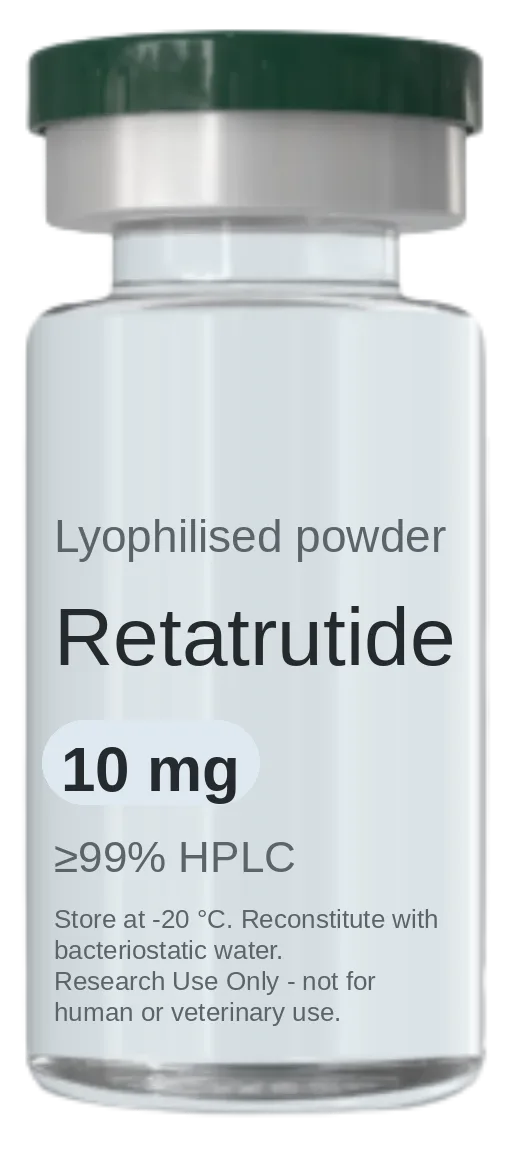
Retatrutide
Triple-agonist metabolic research peptide targeting GLP-1, GIP and glucagon receptors.
- Purity:
- ≥99% HPLC
- Sizes available:
- 10 mg
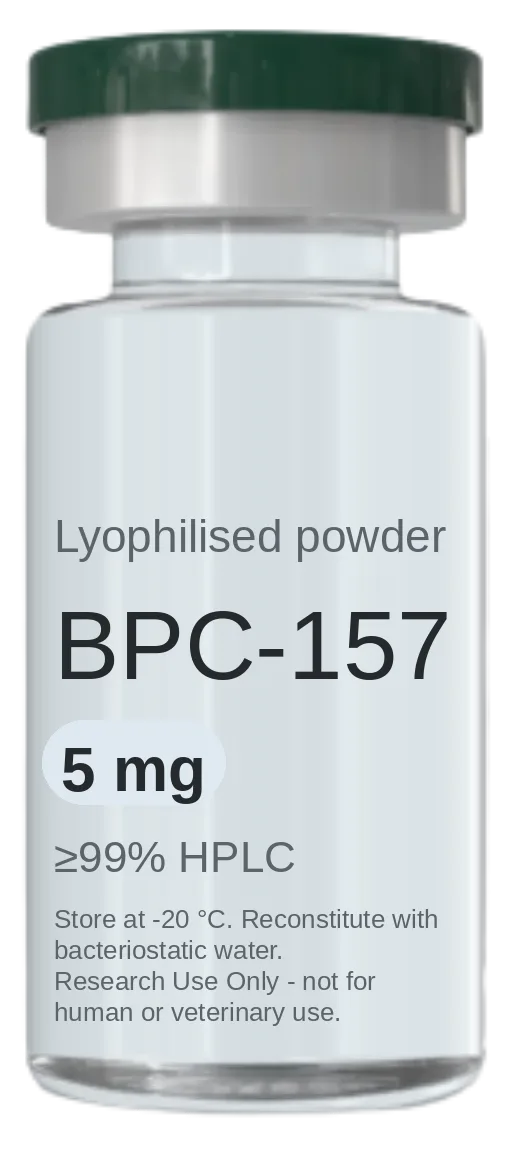
BPC-157 + TB-500
BPC-157 and TB-500 in a single vial — the pairing most studied together in tissue-repair research.
- Purity:
- ≥99% HPLC
- Sizes available:
- 5 mg + 5 mg
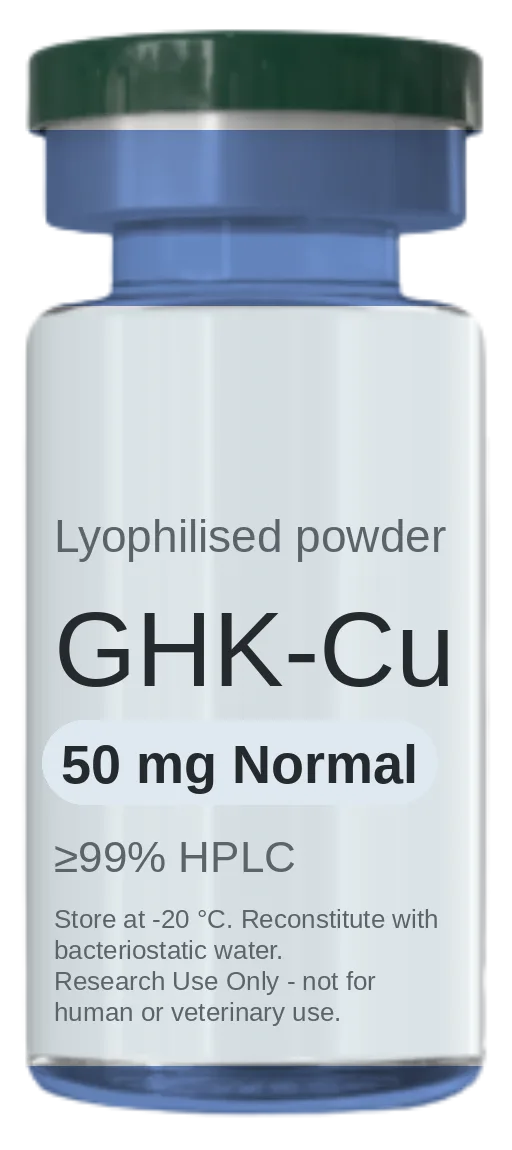
GHK-Cu (Copper Peptide)
Copper-binding tripeptide studied in extracellular matrix and dermal research models.
- Purity:
- ≥99% HPLC
- Sizes available:
- 50 mg Normal – 50 mg Plus
The consultation
One intake that settles goals, history and contraindications alongside compound, quantity, documentation and route — reviewed by a physician before anything ships.
More notes
-
Tesamorelin vs Sermorelin: The Difference
Tesamorelin and sermorelin are both GHRH analogs, but not the same molecule. Here's the structural difference and what the studies on each measure.
-
Peptide Supplier vs. Reseller: What Differs
The real difference is whether someone can name the lab that tested a batch and show the report — or only promise it's pure.
-
MOTS-c or NAD+: What's the Difference
MOTS-c and NAD+ are studied through different mitochondrial pathways; here's what each line of research actually measures.